During our first year in China, we visited Kunming for a short trip, but sadly never made it to the stone forest when we were there. Instead, we saw The West Hills, which was spectacular in its own way.
It was a lovely day spent up high, surrounded by trees and beauty.
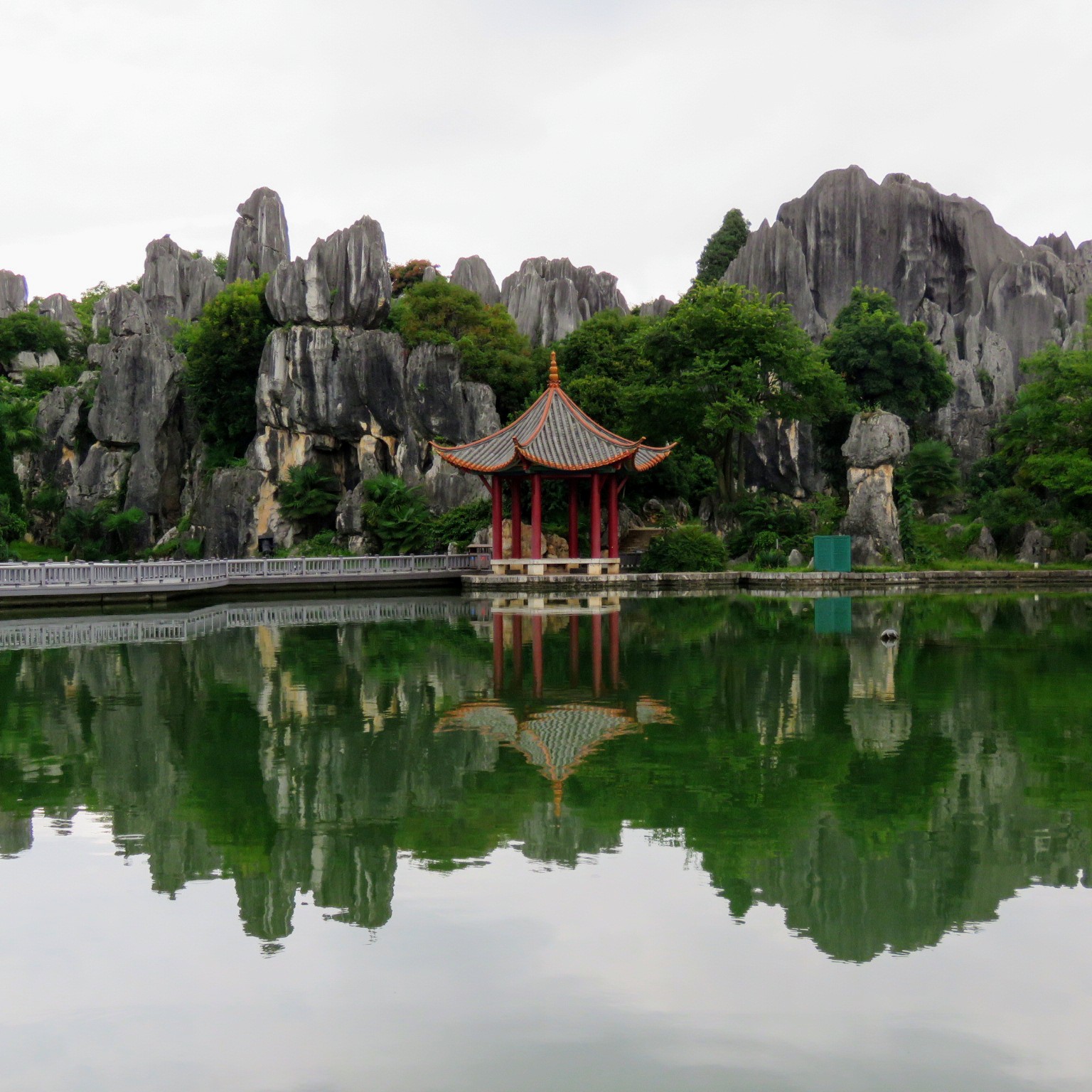
I’d always regretted not seeing the stone forest, so we planned it into this trip. The Stone Forest is a geological formation that was created about 270 million years ago. It started at the bottom of a lake, and gradually, wind and water carved this limestone into what it is today.
And today, it’s beautiful!I got this shot just as we entered the park. The little boy was quite far away from the stones, but it can still see the way they tower over him. This entire area was the product of nature. Is amazing what a bit of rain and water can do!!
The Stone Forest is an easy day trip from Kunmimg city. We booked tickets at the wrong train station, which added an hour to our journey, but if you take the high speed train from Kunmimg Station, which is centrally located, it only takes 60 minutes to get to Xilin, the closest station to the park. From there, take bus 99 for about an hour, until you reach the Stone Forest.
There are a few packages that include circus and dolphin shows and I was prepared to put up a fight if they tried to push us into paying for them (#emptythetanks!!!!), But it wasn’t actually even mentioned to us. In total, it cost less than 100rmb per person to see the park, including the shuttle bus to the entrance gate.
The Greater Stone Forest is a labyrinth. We walked around for several hours, climbing up and down, checking out all the different viewpoints. Some sections of the park made me feel quite claustrophobic. The formations are so high and the paths are quite narrow in those parts.
I didn’t get pictures in the worst parts because I just wanted to get out. Picture this, but not being able to see the other side…. Just a never ending path that gets much more narrow in some parts.
We saw some really cool stuff in the stone forest, including some beautiful birds, cacti, and greenery.
We walked through the park, of course, and took our time appreciating all the lovely things there is to see. It was pretty warm by the time we made it to the other side, and we were pretty tired from all the walking, so we decided to take the shuttle back to the front of the park. We realized on the shuttle that we were surrounded by people who had never actually gone into the park. They ‘oohed’ and ‘ahhhed’ at some of the more basic formations. It’s good to know that people with disabilities can still see the park this way, but if you have the choice, definitely go in!
We were quite high up in this part of the park. We had to climb a lot of jagged rocks to get to the viewpoint. There were other viewpoints that were surely more accessible, but they were also crowded so we avoided them. This was my favorite shot in the minor stone forest. This part of the park isn’t as grand as the major stone forest, but it certainly has some beautiful areas. I loved the contrast between plant and stone.
The only complaints I had were the crowds, and the incessant notices that kept blasting all over the park. It felt like it could be such a peaceful place, if the space were just respected more. Instead, there was a lot of the usual Chinese tourism stuff: screaming children, adults shouting at each other from across the park and incessant announcements reminding everyone to be “safe”.
It looks empty because I’m patient and will wait for an area to empty so I can get a photo (and I’m quick, so I get it before others come along), but it was really quite crowded.
I did like the Stone Forest a lot, but I don’t think I’d dare go there during peak season. I’m sure it’s pure mayhem.
At least there doesn’t seem to be too much damage from tourism. The park is well maintained.
Next up, I have some posts about lovely Lijiang, which is also in Yunnan! Check back soon!
Sichuan’s geography varies depending on the area you’re in. In the eastern part of the province, you’ll find agriculture. In the west, there are beautiful mountains. For our final day in Sichuan, we headed south-west.
Mount Emei is located just west of the Leshan Buddha. You can take the high-speed train there. Book your ticket to Emei Shan, and then either hop on a bus, or hire a car to get to the next part of the mountain.
Unlike the rest of our trip so far, this activity wasn’t about learning or museums. This activity was purely scenic. Even from the parking lot, Mount Emei is stunning!
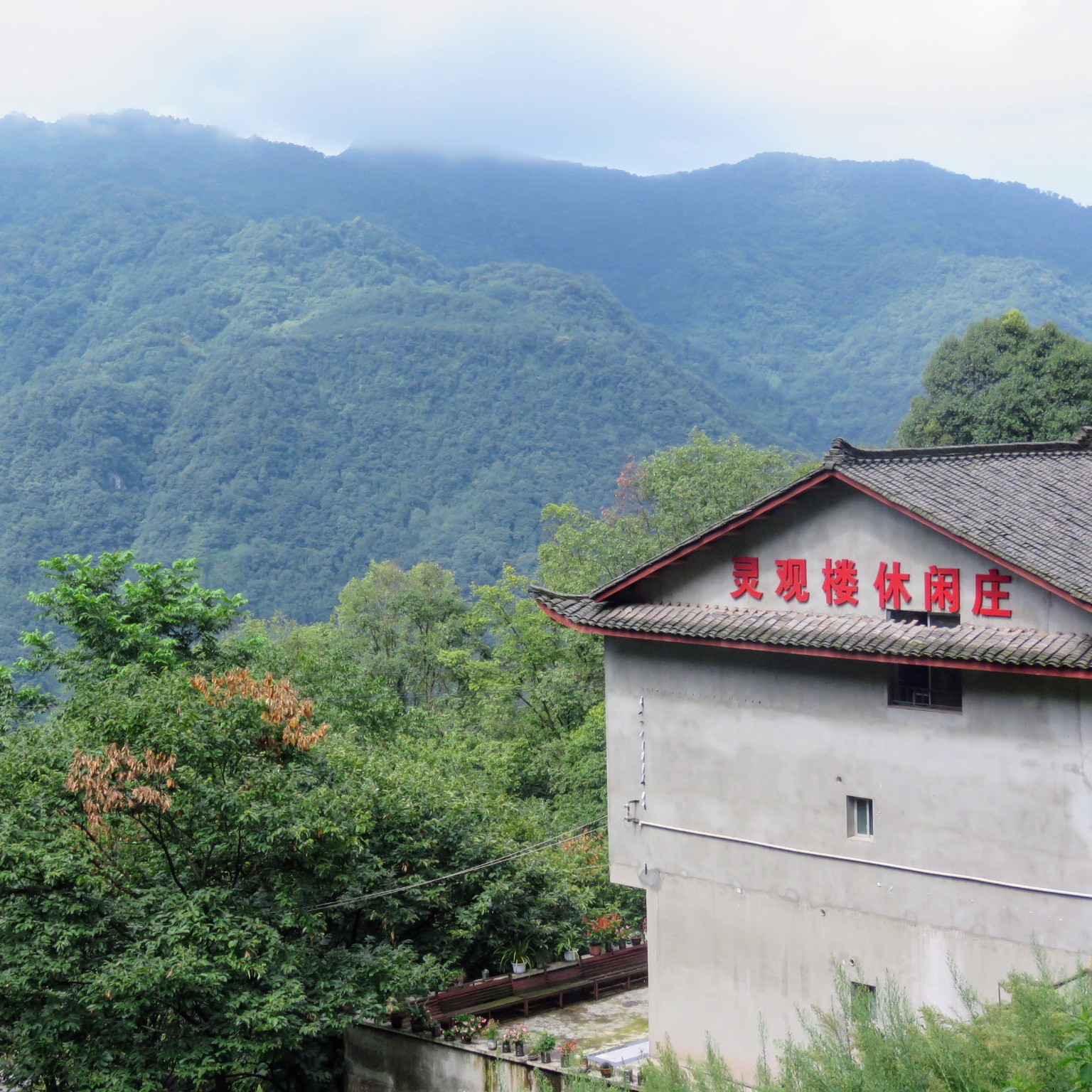
We decided to go about 1/3 of the way up the mountain, mostly because we didn’t want want to spend 5 hours in a car to get all the way to the top of this very high mountain. Maybe if we’d had more time we would have traveled to the summit, but even 1000m gave us a gorgeous view!We chose to go as far as Wannian Temple. The peak itself is above the clouds. We both want to come back and go all the way to the summit on our next trip to Sichuan.
Once more, my leg stopped us from doing any hiking (hiking in China is just climbing stairs, which is especially hard for my leg), but the up side is that we took the cable car up and down the mountain and got quite the view!
A 10 minute ride up the mountain and we didn’t even have to share the car! It was hot in the cable car, and I was happy I had my fan with me
At the end of the cable car, we took a little walk and enjoyed the clean air and beautiful scenery. It wasn’t long before we came across a beautiful area.
This wasn’t quite a temple. It was more like a place where people could write wishes or prayers and hang them. There was writing on every piece of wood.
After following a lovely, green path, we found the temple we were seeking. Wannian might just be the nicest temple I’ve seen in China!
The stairs going up to the templeOne of the many beautiful Buddha’s thereSo much colour!!Beauty everywhere!!
The grounds were immaculately maintained by the monks that live there full time. Everything was pristine!
Beautiful trees everywhere. The whole area is so clean!!I just loved all the colors!!!Beautiful! Everywhere you turned, there was something beautiful to see!
Eventually, we made our way back down the mountain, and on the way, the sun finally came back out again!!
Blue skies!!!Beautiful sights on the way down!Can’t get tired of this scenery!!!
After making it back down this part of the mountain, we took a shuttle bus to Baoguo temple for some more sites, and some dinner (we booked a late train back). Baoguo has a little town, as well as the temple, and there was plenty to see there.
Carvings into rockGorgeously carved muralsA lovely bell tower
We got there too late for the museum, but we had a half hour to see the temple before it closed. I’m really glad we did too, because this temple was also incredibly beautiful!!
And this time we had blue skies adding to the color!We were a bit rushed but managed to get some photosTemples are all about gardening!Prayer candles. One thing every religion seems to have in common, is the ceremonial value of candles.
We enjoyed hot pot for our final dinner in Sichuan, and then the following night, we were off to Kunming, Yunnan!!
Everyone knows about the Great Wall of China and most people know about the terracata warriors in Xi’an, but ancient Chinese wonders don’t stop there. If the Leshan Buddha is the cultural masterpiece of ancient Sichuan, Dujianyang is the engineering masterpiece.
It might not look like much, but let me explain!
2200 years ago, this area of Sichuan was flooding badly. Huge amounts of water were coming down the mountains, and would get trapped in a slow moving area that had a lot of silt. The area couldn’t be dammed because it was an important route for trade. So they came up with an alternative plan: they created a levee… By hand.
I forgot to take a photo, so I had to steal this one from the internet. Thanks internet!!!
It took 10s of thousands of people 4 years to construct this levee. They did it by filling bamboo weaved baskets with rocks held up by 3 giant pieces of wood. They created a diversion in the water sending some of it down a canal dug out by heating and cooling stones until they cracked (this was done before dynamite!). After the rocks cracked, workers removed them by hand… One by one.
They slowly chipped away at the rocks to allow the water to move into a new area.
This levee did 2 awesome things. #1: it stopped the flooding that the area was experiencing. #2: it turned this area of Sichuan into the largest food-producing area of land in the country. The diverted water helped create and improve farmland. A true win-win!!!
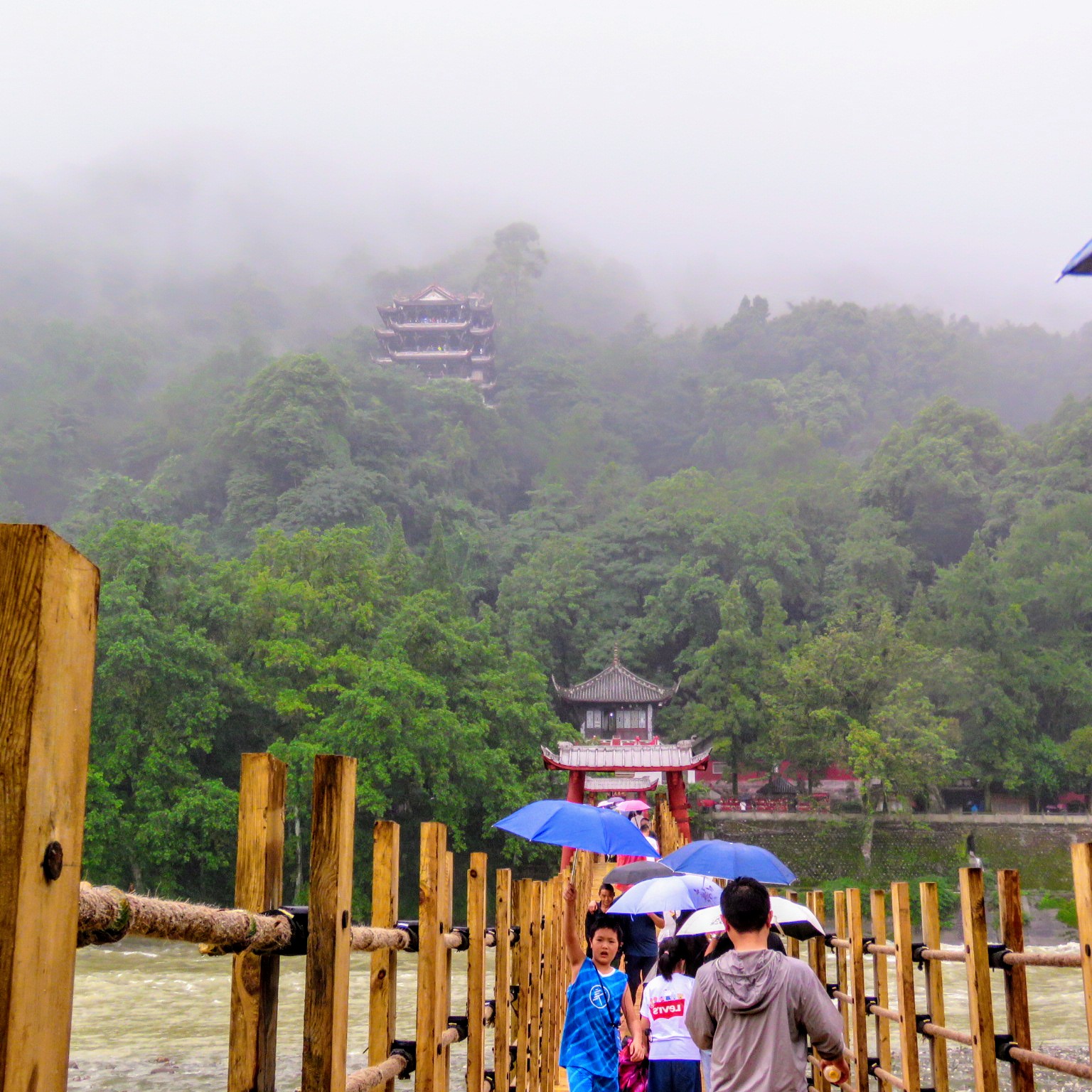
It was raining, but we were prepared with our rain jackets!
The whole area is beautiful and we were lucky enough to finally experience some clear weather later on in the day. That’s when we really got to enjoy our day.
The rain DID give the area a very misty and surreal feel… But we were happy for the sun to come out!It turns out there are beautiful grounds surrounding the leveeThere were plenty of beautiful trees to admire, as well as koi ponds and gardensIn the distance, there were pagodas, and of course, the river itself is beautiful (and VERY fast!!)
This was the first bit of nice weather we’d had on the trip so far, so we were pretty happy with it!
The raincoats came off!
We eventually found our way out of the park and ended up seeing a beautiful bridge that led us to a great little market.
That huge arch is actually the entrance to the bridge!For a small donation, we got to take photos with the Monkey KingThe market was full of Chili’s, beef jerky and some well priced souvenirs. When you’re used to East Coast prices, it’s a nice surprise when things cost less than you expect!
A tour of an irrigation area may not seem like all that much fun, but given that this structure is still here and being used 2200 years later (with some very good upgrades, of course…) – it’s probably worth a visit! Dujianyang is yet another incredible example of ancient Chinese brilliance!
And even in the rain… It’s a beautiful place to be!
I have 1 more post for Sichuan, and then we move onto Yunnan!!
Leshan was somewhere I knew we had to go when I was reading about Sichuan. I’ve seen a lot of Buddhas during our time in Asia, but I knew this one was special.
After seeing Buddha growing out of a tree in Ayutthaya, I figured there wasn’t much left to impress me.
Leshan is located about an hour outside of Chengdu via bullet train. The town itself is a lot more developed than I was expecting, and had I known, we would have booked 1 night there and saved the time going to Emei (which is just 30 minutes past Leshan). Still, it was a beautiful train ride and not long enough to be a big deal.
The bullet train route from Chengdu to Emei
Didi’s (Chinese Ubers) can’t take you all the way to the mountain, so you get dropped off at the entrance of the park. It’s about 1km from the entrance to the ticket office. You get to walk through a lovely town though, and you can stop for food or drinks along the way. It’s a really nice walk!
The town itself is beautiful and well maintained. I suppose with COVID, fewer people were traveling, so we basically had the place to ourselvesWe stopped for some food in town, and got this delicious dessert that we used to get in Guizhou all the time. It had a clear jelly in it, with a brown sugar sauce of some sort, and there are peanuts and dried fruit in it too. It’s very refreshing and very tasty!!Lots of beautiful buildings to admire on your walk to the ticket office
Because my leg still causes me quite a few problems when it comes to ramps and stairs, we decided to skip climbing up the mountain to the top of the Buddha, and instead took a boat to see it from the front. Whether you want to take a boat or enter the park to climb the mountain, you’ll need to get tickets. For the boat, it was about 80rmb ($16 Canadian).
Low season = nap time!
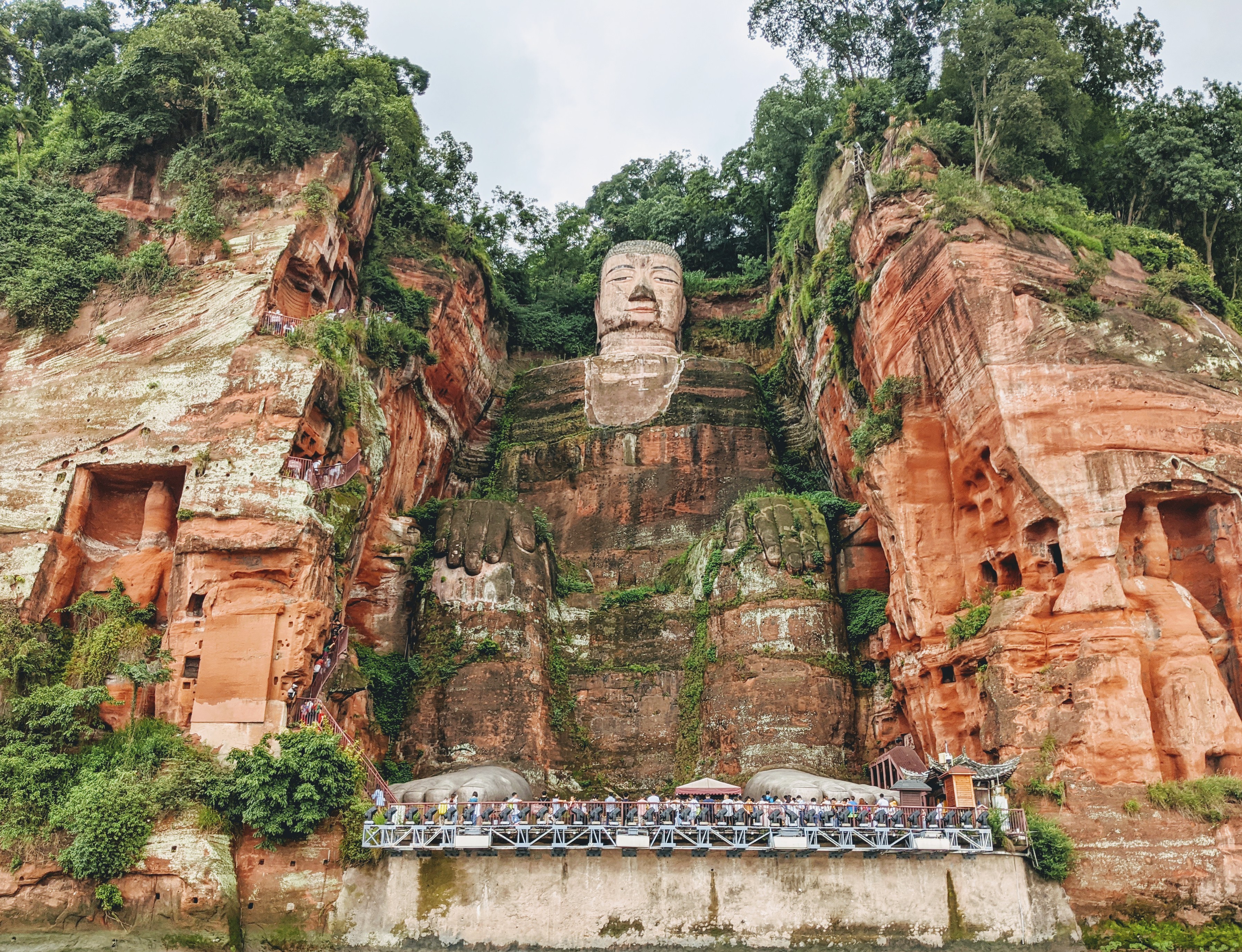
The view from the boat was spectacular! We were blown away by the size of the Leshan Buddha carving and the level of detail in it as well. The way you come up on it by the boat is truly something to see. Even if you want to hike the mountain, I’d suggest you do the boat tour as well.
This was created 1300 years ago, and took 100 years to complete. You can see tourists walking around the Buddha to get a sense of scale
After marveling at this incredible feat of artistry and engineering, we wanted to learn more about its history and construction, so we walked back towards to museum that can be found near the entrance to the park.
There is so much to see in this museum, including art, reconstructions, photography and even a display showing all the different ticket designs for the park over the last 50 years.
At the museum, you can learn about the construction of the Buddha, as well as the maintenance that has been done to it over the last 1300 years. There were some great visuals there to help people understand the amount of work that went into this grand carving, and I left there with a better appreciation for the Leshan Buddha. We learned there is a Buddha carving in Hangzhou as well (though not as big) so we’re planning to visit that one next.
The three men who headed this 100 year long project.
I don’t think anyone should leave Sichuan without taking a trip to this beautiful mountain town, to see its incredible giant Buddha.
And while you’re at it… Take a lovely walk through a sweet little village
I’ll be back soon with more about some incredible engineering from ancient China!!!
We’ve been seeing a lot of rain on our trip, so on our second day of holidays, we decided to stay indoors and visit some museums.
I enjoy museums immensely.
The Jianchuan museum cluster is where we headed. It’s a unique little area with more than a dozen museums, all put together by one guy.
The museum has photography, sculptures and even pigs on display (more on that in a bit). (don’t worry… The pig is alive….)
The museum is divided into 4 themes: WW2, The 2008 Sichuan Earthquake, Cultural History and the Great Revolution. There are 15 museums within these huge grounds, and it’s a very affordable way to spend the day. It only cost about $12 Canadian for each of us, and was well worth the price.
We started with the WW2 era exhibits, because it’s something we both always wanted to learn more about. Everyone in Canada learns about the Holocaust, Pearl Harbour and D Day, but we don’t really learn about what happened in the far East.
FYI…. It wasn’t any better in China than it was in Europe….
China’s part in WW2 actually started earlier than the rest of the war, and in fact, they don’t even call it WW2. Here, it’s called The Second Sino-Japanese War. Japan brutalized China from 1937-1945, killing millions, raping women and using biological warfare that caused disfigurement and death.
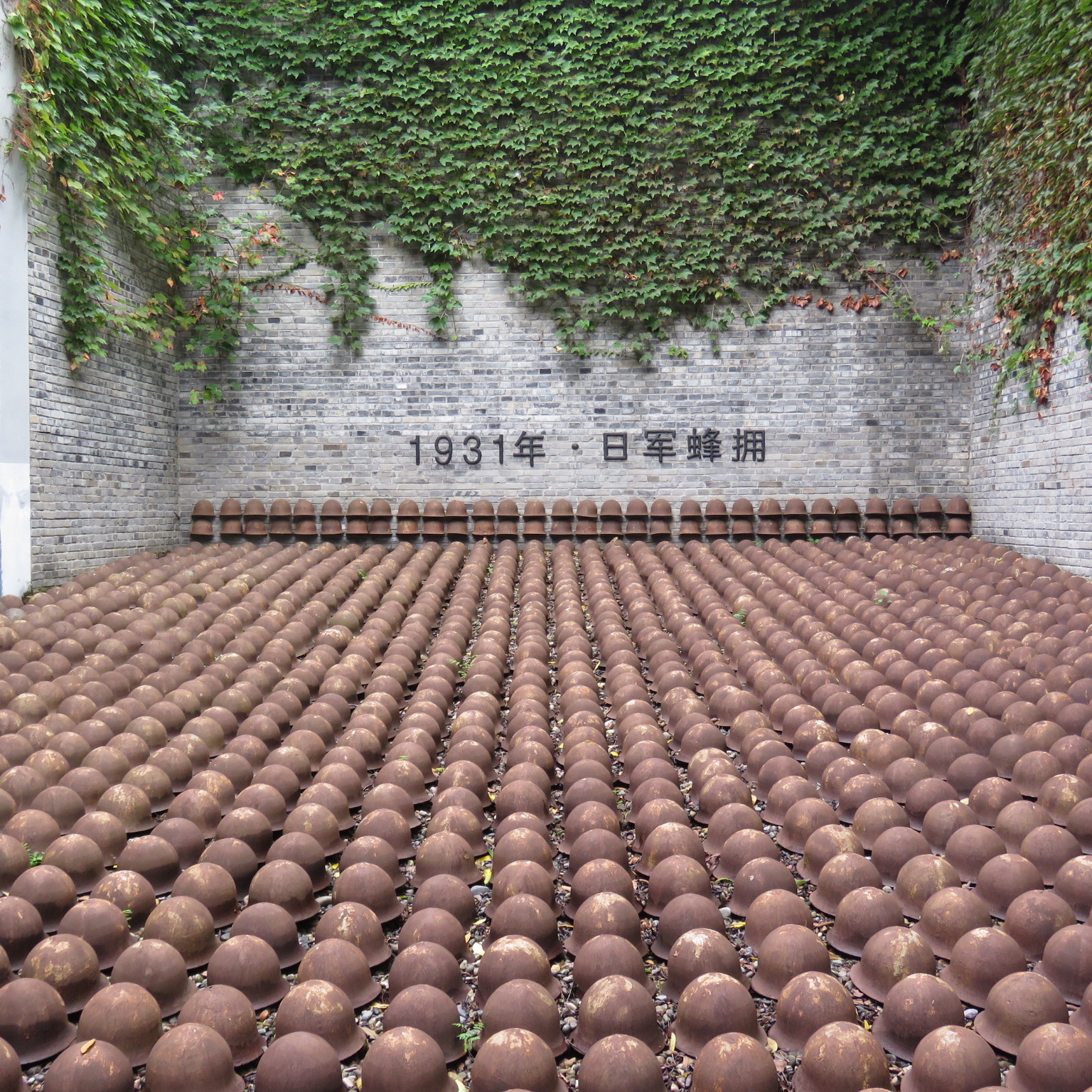
There were several wax displays depicting the war.
The museum put a lot of emphasis on the heroes that helped China in this time, including Americans, Russians and even Japanese people who fought for China’s freedom. The many sculptures in this area of the museum were impressive.
These are considered some of the greatest heroes of the war. Among them, there are women missionaries who hid women and children from the Japanese, British and Russian pilots who took part in important missions, and journalists who risked their lives to tell the truth about what was happening to people in China. As you leave the museum, there are statues showing the Japanese soldiers leaving China after the surrender. You have to walk between them as you leave, and it makes an impact.
We also learned about the heroic efforts of the Sichuan Earthquake cleanup crew. There were hundreds of photos showing the aftermath of the earthquake that killed nearly 90,000 people and injured many more.
The museum even has displays of cars that were wrecked by the earthquake and some of the debris left behind. One survivor is also present at the museum, and he in fact, calls the museum home. Meet Strong Pig….an earthquake survivor!!
Strong Pig survived under the rubble for 36 days, and as a result, became China famous! He is spending his golden years being guided around the park and even has his own little barn to live in.
Strong Pig… They like literal names in ChinaTributes to the survivorYou can even get Strong Pig t-shirts
We didn’t give ourselves enough time at the museum, sadly, so near the end, Dave went to see some war exhibits (the space and airplane technology exhibit was closed, sadly), and I headed for what I thought was going to be a museum about Lotus inspired art. It was actually a museum all about Lotus (bound) feet.
In other words…. The practice of making feet more “beautiful” by mutilating them.
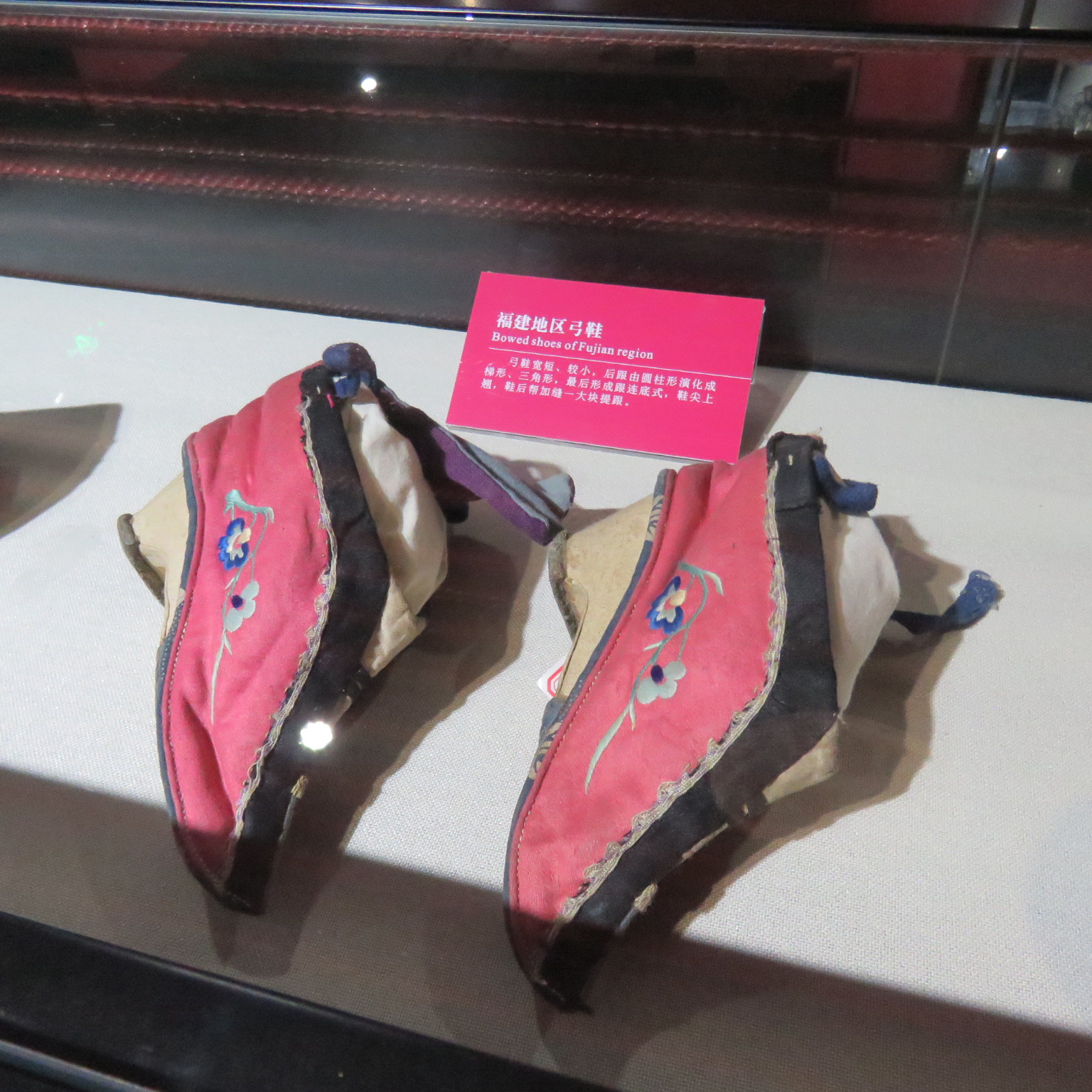
Foot binding was practiced in China for many years. From a very young age, girls’ feet were tightly bound in bands that slowly reshaped and broke the feet. The result was extremely painful and debilitating. The ‘upside’ was that women had ‘beautiful’ tiny feet. It was very fashionable.
There were different paterns for different needs. Some designs were said to bring good luck and fortune to the woman wearing them. Others were worn to bring more sons into the world.
The museum does a good job of showing the history of this Cultural practice in a fairly balanced way. The practice was banned in China more than 100 years ago because it disfigured women, was excruciatingly painful and often caused death (by infection). They also explained why it was done in the first place.
They have more than 500 pairs of shoes on display at the museum. You can see the difference in styles throughout the ages and even across China. Shoes from Sichuan weren’t the same as shoes from Jiangsu.
Mostly, foot binding was about status. If you could afford to have your feet bound, it meant you were wealthy enough to not have to work (these women couldn’t walk very well, after all …). There was also a sexual element to Lotus Feet (I fail to see how they look like lotuses…). Men apparently found the tiny feet beautiful. I’m just glad that the practice was outlawed.
I really liked the mural near the end showing women throughout the ages that impacted China and made it better. One of the reasons why foot binding was outlawed (aside from it being incredibly painful), was because as long as women were being disfigured in the name of fashion, they could never be an equal (or contributing) part of society. Banning the practice was good for women… And good for China.
There were too many for me to capture in one photo, but you get the idea.
If you’re thinking of visiting this museum, I strongly encourage you to do so. It’s very well maintained and has plenty for you to see. The variety of exhibits is very impressive and the number of artifacts is honestly too much to take in in just 1 trip.
There are some really great sculptures and carvings. This one depicts all the heroes from the Sichuan earthquake of 2008.
I have so much more to write about!! Check back soon!
Chengdu is home to some pretty cool stuff. The city has tons of museums, great restaurants anywhere you look, lovely and friendly locals, and of course… Pandas!!
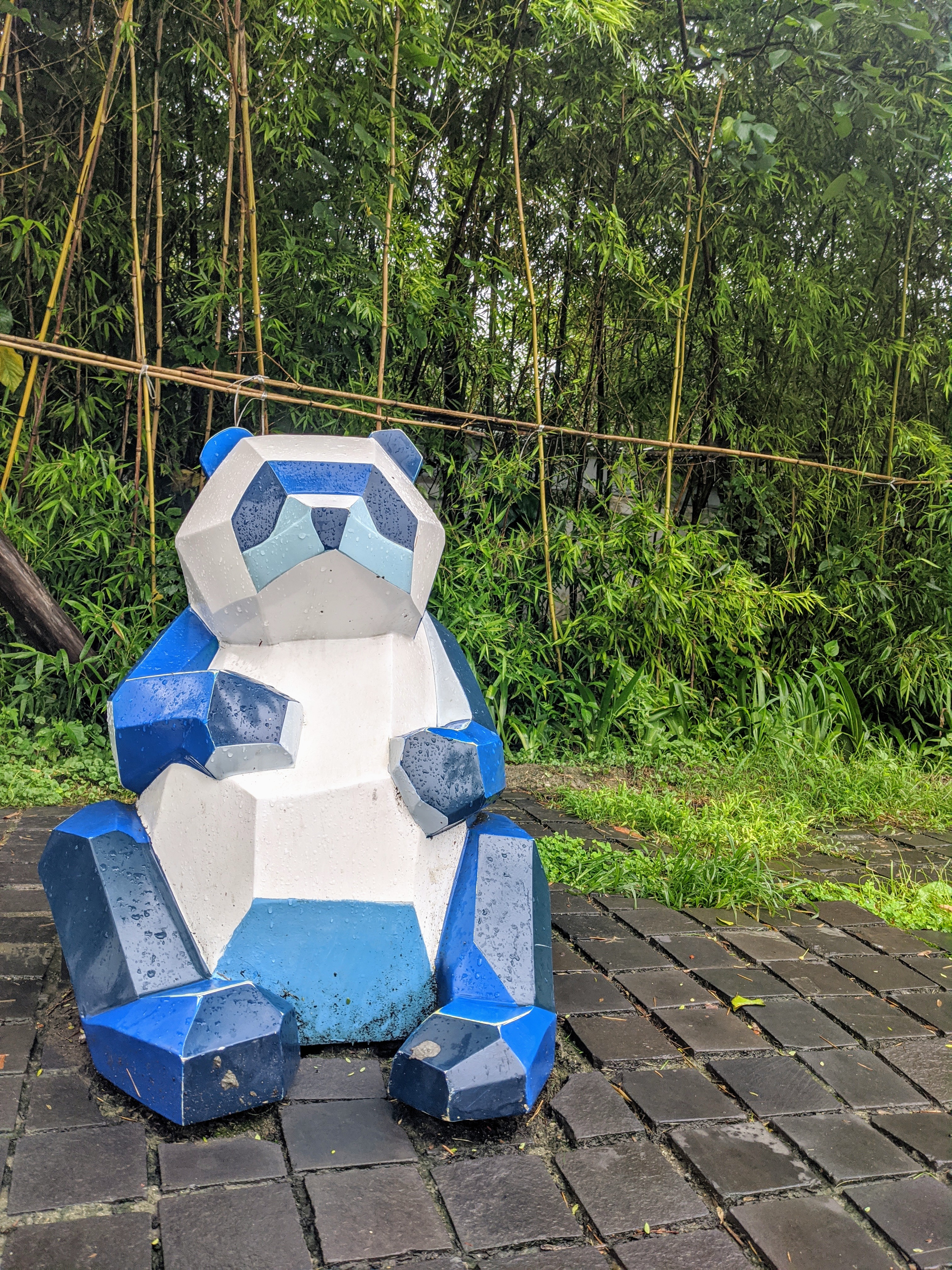
Pandas pervade the city
Everywhere you go in Chengdu, you will see Panda plushies, panda posters & other panda paraphernalia (see what I did there?). There are enormous panda statues and panda souvenirs to last you a life time. The city holds its identity in two things: chili peppers and pandas. And this is all for very good reason…
A panda hat I picked up for my nephew
Until very recently, Pandas were considered critically endangered. Chengdu is home to one of the research and breeding centers that has turned the panda’s plight around. We were lucky enough to visit, and we had a great time.
It was pretty rainy during our visit, so my photos weren’t what they could have been, but still, we made the most of it and saw nearly everything the park had to offer!
Giant PandasRed pandas
The grounds at the base are beautiful and well maintained. The enclosures are huge and each panda is given plenty of space. I felt good about visiting the center, which is not something I can say about most zoos in the country.
The base sprawls over a huge area and the scenery is beautiful!Bamboo provides shade, if you need it. Unfortunately we were there on a rainy day. The pandas have plenty of places to play and hide. They have trees for climbing, caves for hiding, platforms for sun bathing and napping, and of course, plenty of bamboo to eat.
There was a lot of information on the behaviors of pandas and how the breeding and research programs are helping these gentle creatures. We learned a lot there, including one interesting fact: Pandas prefer to fall out of trees than to climb down. Climbing takes more energy, and their diet is actually quite low in nutritional value, so they need to save every calorie they can!
Bamboo, though delicious, isn’t great for sustaining a high cardio routine. Luckily, the giant Panda doesn’t really have any predators to run from.
We saw lots of Red Pandas too, and they put on quite a show for us, playing in the rain and running around like the cutest little creatures to ever walk the earth!!!
Mischief!Basically anything they did thrilled everyone there!
If you’re heading to Chengdu, I think it goes without saying that you should visit at least one of the Panda centers! Bring your running shoes (the park is huge!) And your camera, and you’ll be sure to have a great day!!!
By the end of the day, my feet hurt, but my heart was happy! This panda might have felt the same!!
2020 has been a year for the books. Any other year at this time, we are home, in Canada, catching up with friends and family. This year, a trip home is impossible. With China’s boarders closed to foreigners, if we leave, we can’t get back in. We have 3 cats here and our lives are still very much in Suzhou, so sadly, we couldn’t make our yearly trip to Manitoba happen this summer.
This sweet boy and 2 others rely on us. They’re family and I wouldn’t dream of leaving them behind. For now… We’re staying in China where luckily, it’s pretty safe.
As always, we’ve tried to make the best of things. International travel isn’t in the cards this summer, but we could still travel within the country. That’s how we’ve found ourselves in a part of China that I have always wanted to see but until now, hadn’t: Sichuan province.
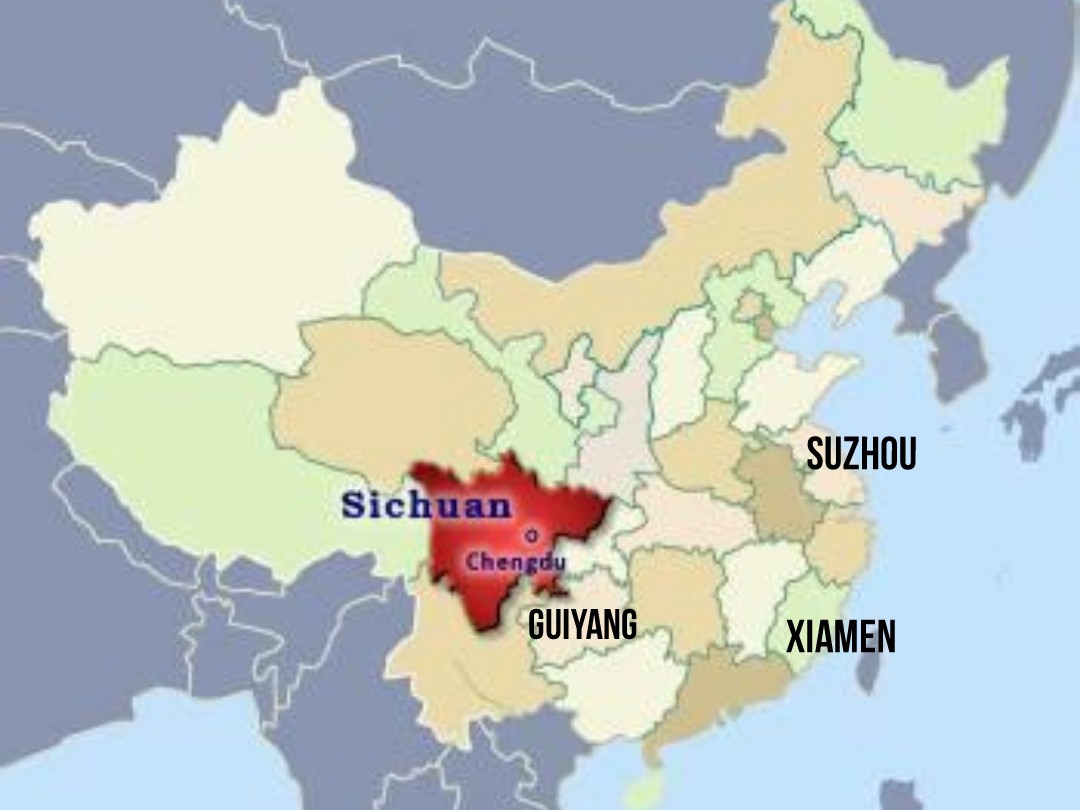
Sichuan is in red. I’ve also labeled the cities where I’ve lived for reference.
Sichuan has always appealed to both Dave and I. The food. The scenery. The pandas. There’s so much to see and do here! 6 days won’t come close to being enough, but it’s a start!
Pandas are the city mascot. You see them everywhere!
We arrived in Chengdu, Sichuan’s capital city, in early afternoon. We didn’t have a full day but we had some time and wanted to make the most of it. First stop, of course, was food!
Twice cooked pork: one of my favourite Chinese dishes!!!
After a delicious (and cheap) lunch, we hit up one of the most commonly visited tourist attractions in Chengdu: Kuanzhai Alley.
This little area is full of shops, Cafe’s, entertainment and, of course, every kitsch thing a tourist could want to do.
They even have Starbucks
There was plenty to see down in Kuanzhai Alley. Food, of course, was the main attraction, with plenty of smoked meats and spicy treats to go around!
This made me feel like I was back in Guiyang!Street food in Chengdu is significantly better than in Suzhou!Chinese pancakes are delish!A giant pot of chili soup! Hot pot is a ‘must try” for Chinese cuisine, and Sichuan hot pot is among the most famous. It’ll set your mouth on fire, and cure you of any illness you might be fighting!
Of course, there were some weird things to see as well (I mean… We are still in China!!).
Pig facePig snoutRabbit head…. These were everywhere. In China, pretty much every part of the animal is eaten. It makes for some interesting displays!
In addition to food offerings, we saw some beautiful architecture as well. Between the streets themselves and the shops along them… There is plenty to appreciate!
And of course, China never fails to impress me with its beautiful carvings!!
This was the entrance to a restaurant
We did a bit of exploring around our hotel as well. As you walk down any given street in Chengdu, you’ll get whiffs of Sichuan pepper corn and you’ll see locals cleaning and stemming the chilis they’ll be using for that night’s dinner. I love that there are benches every where you can stop and rest. Chengdu is quite old, and you can see a lot of tradition here. It feels “warmer” than Suzhou in a lot of ways.
One set of benches near our hotel
So far, our stay in Chengdu has been great! Can’t wait to see what else we find in this gorgeous part of China! Check back soon!!
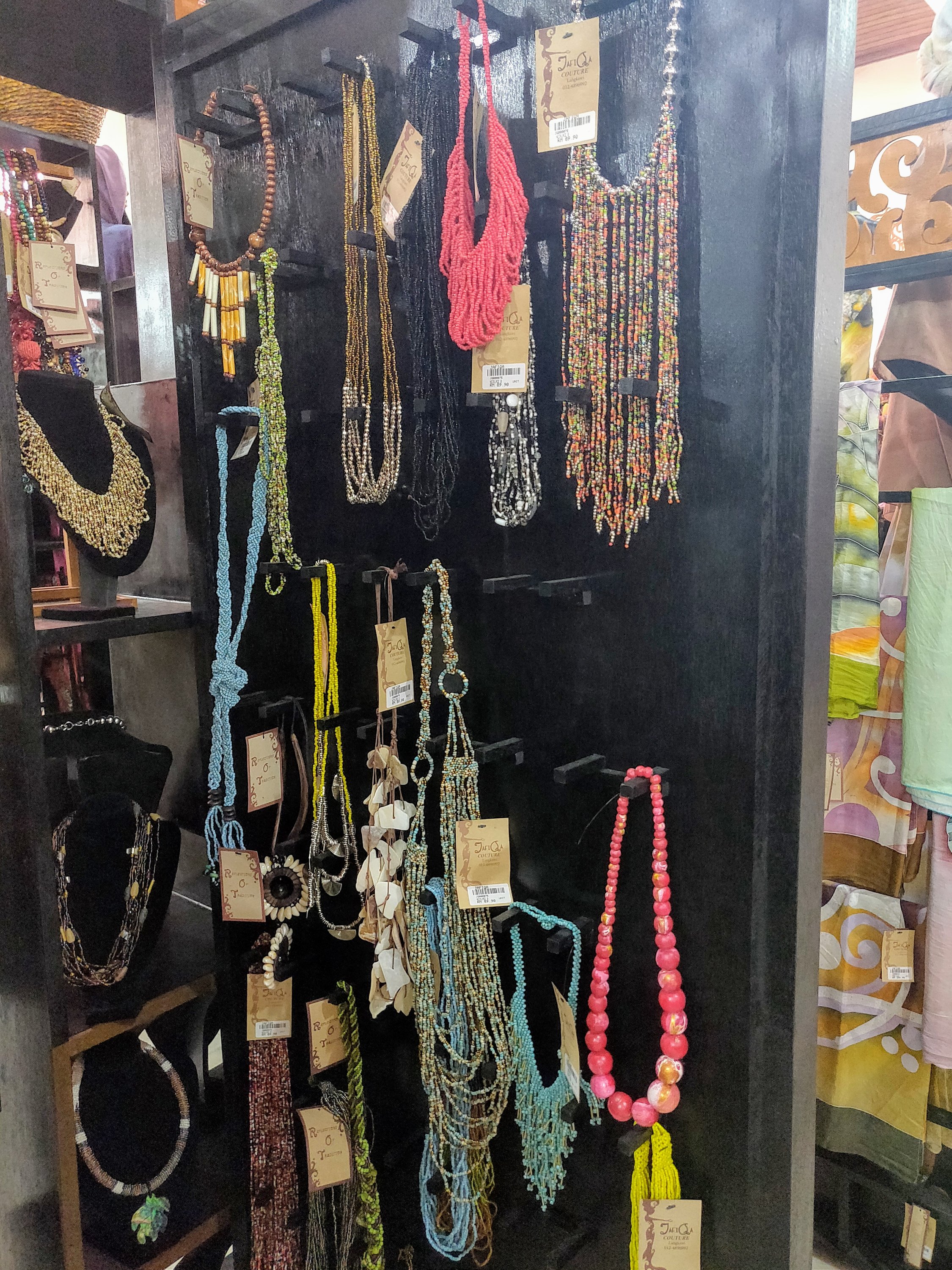
I love fair trade. I love supporting artisans and artists. This kind of stuff was really big in Indonesia and it turns out there’s quite a bit of it on Langkawi too.
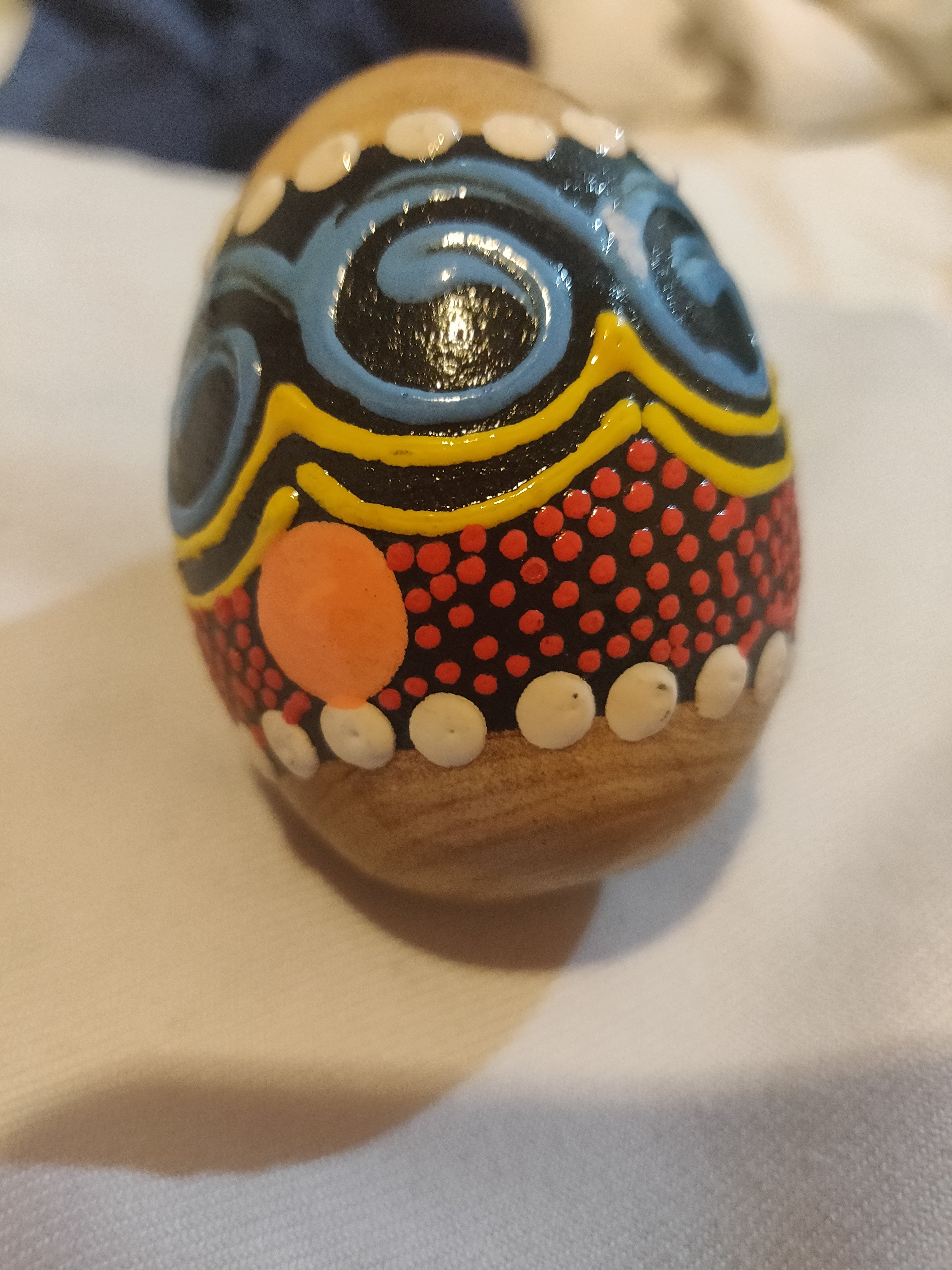
I got myself a new shaker egg to use at the next Sundaze gig
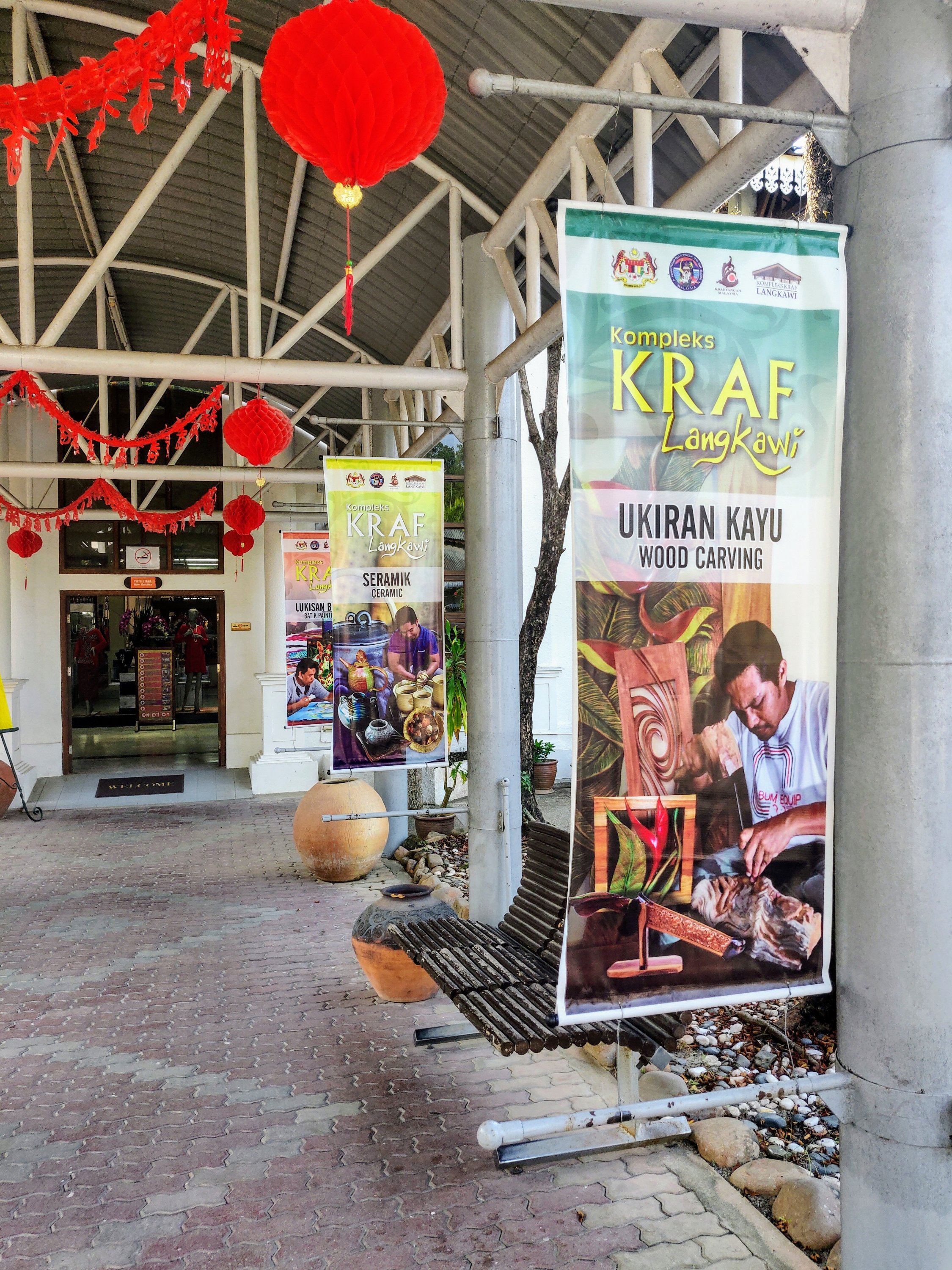
My wonderful husband knows that I love these things, so when he read that Langkawi has a Culture Craft Complex, he made sure to take me there. It’s a pretty cool place!
There are all sorts of artisans featured here
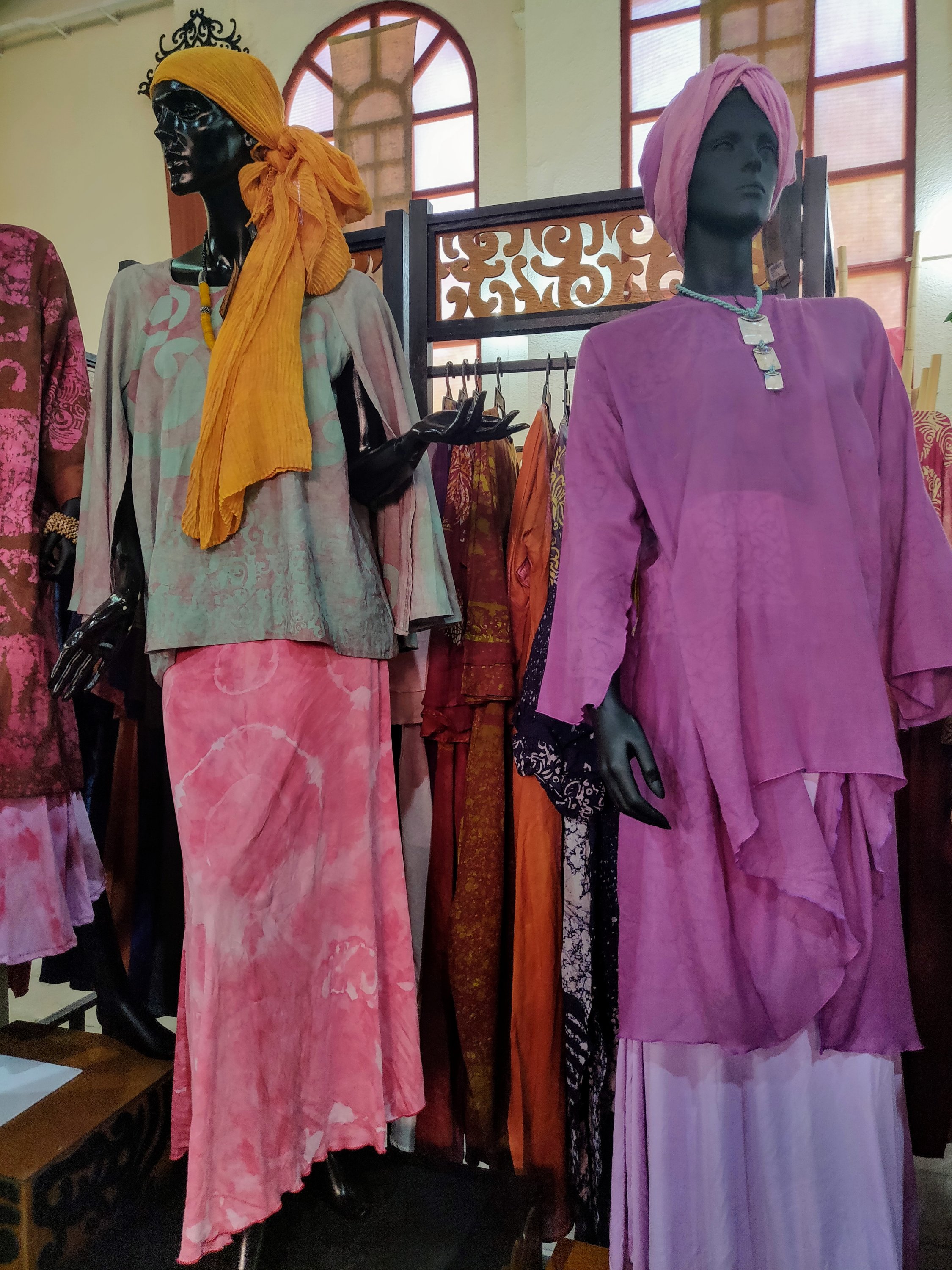
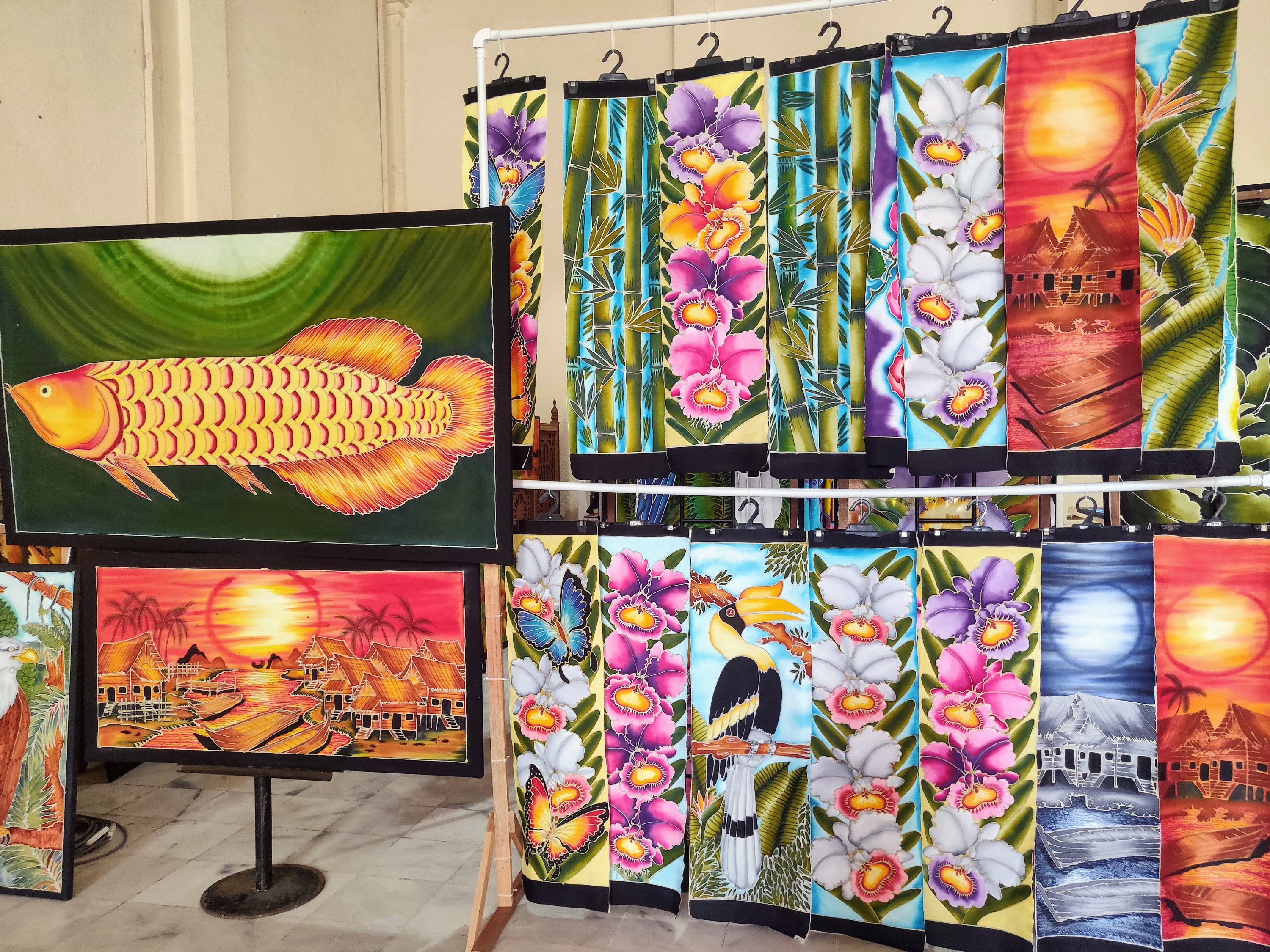
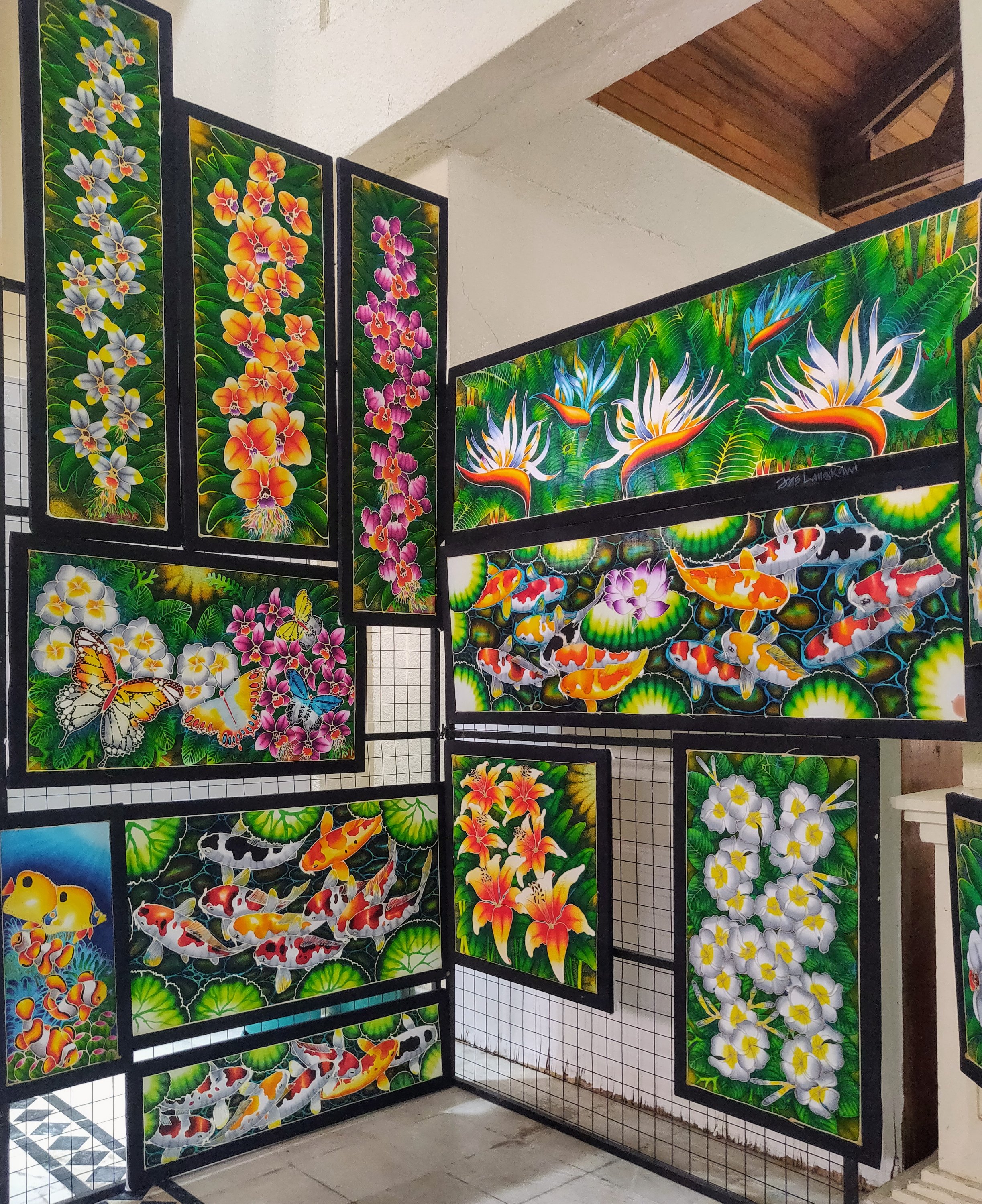
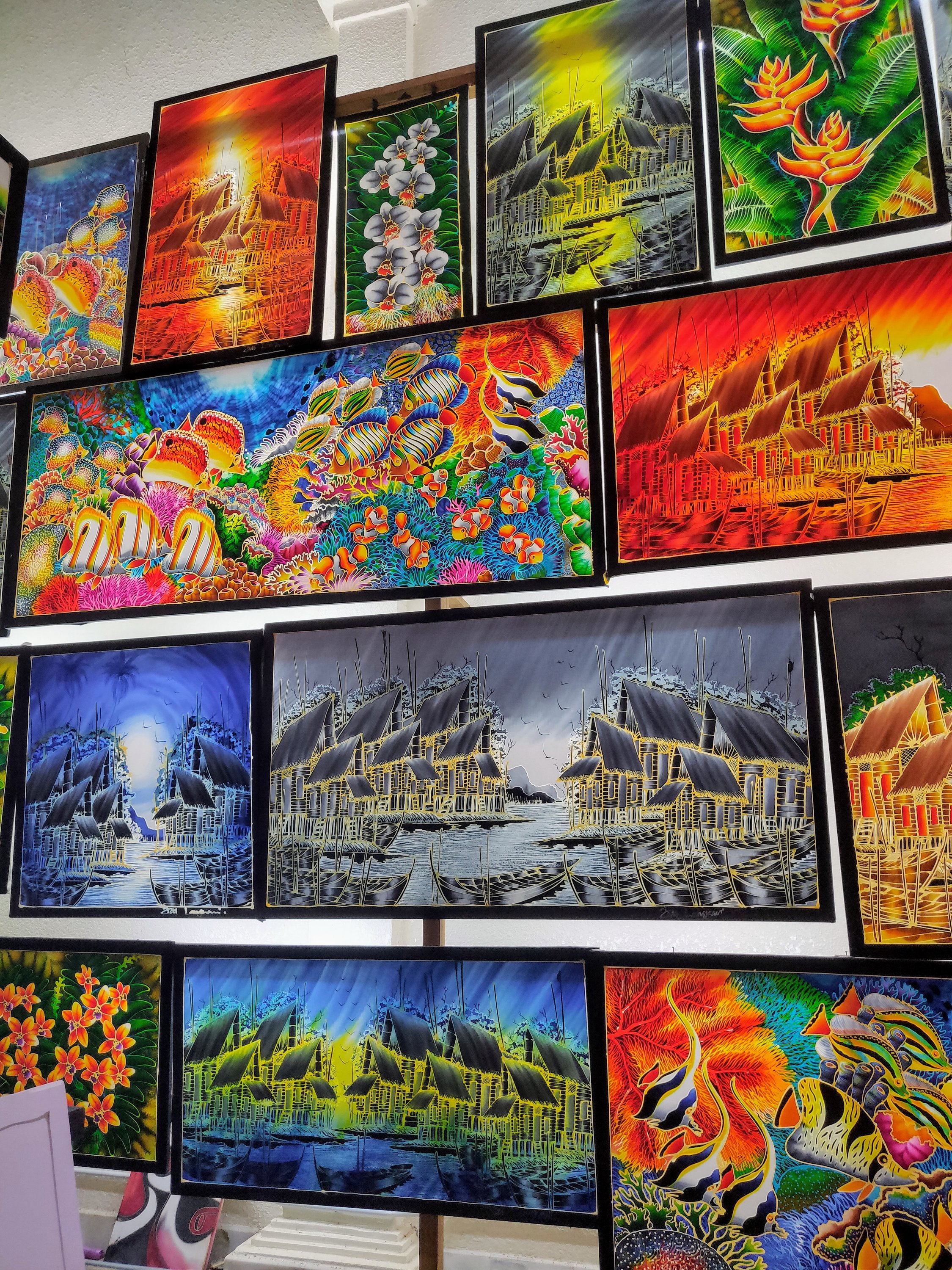
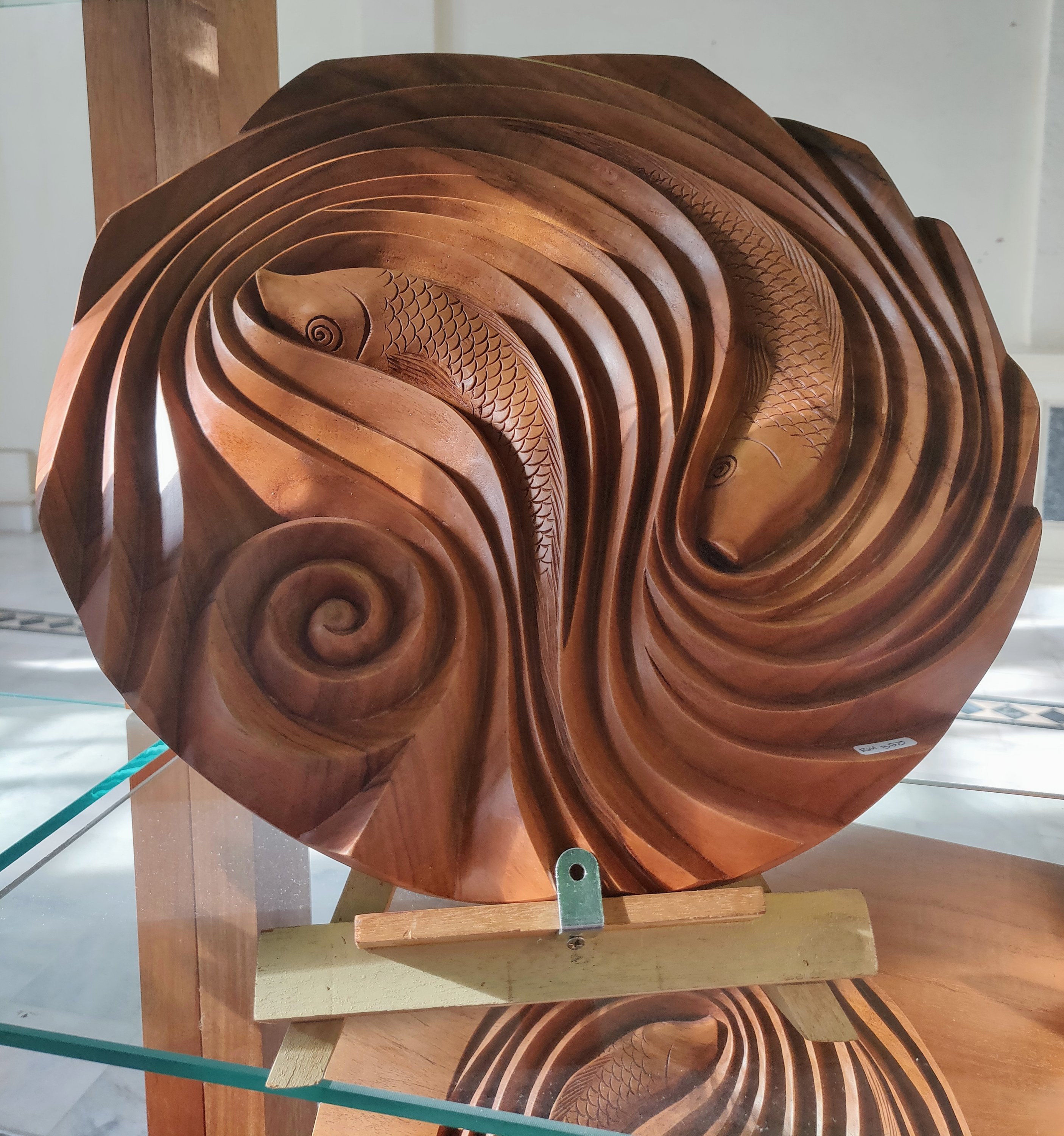
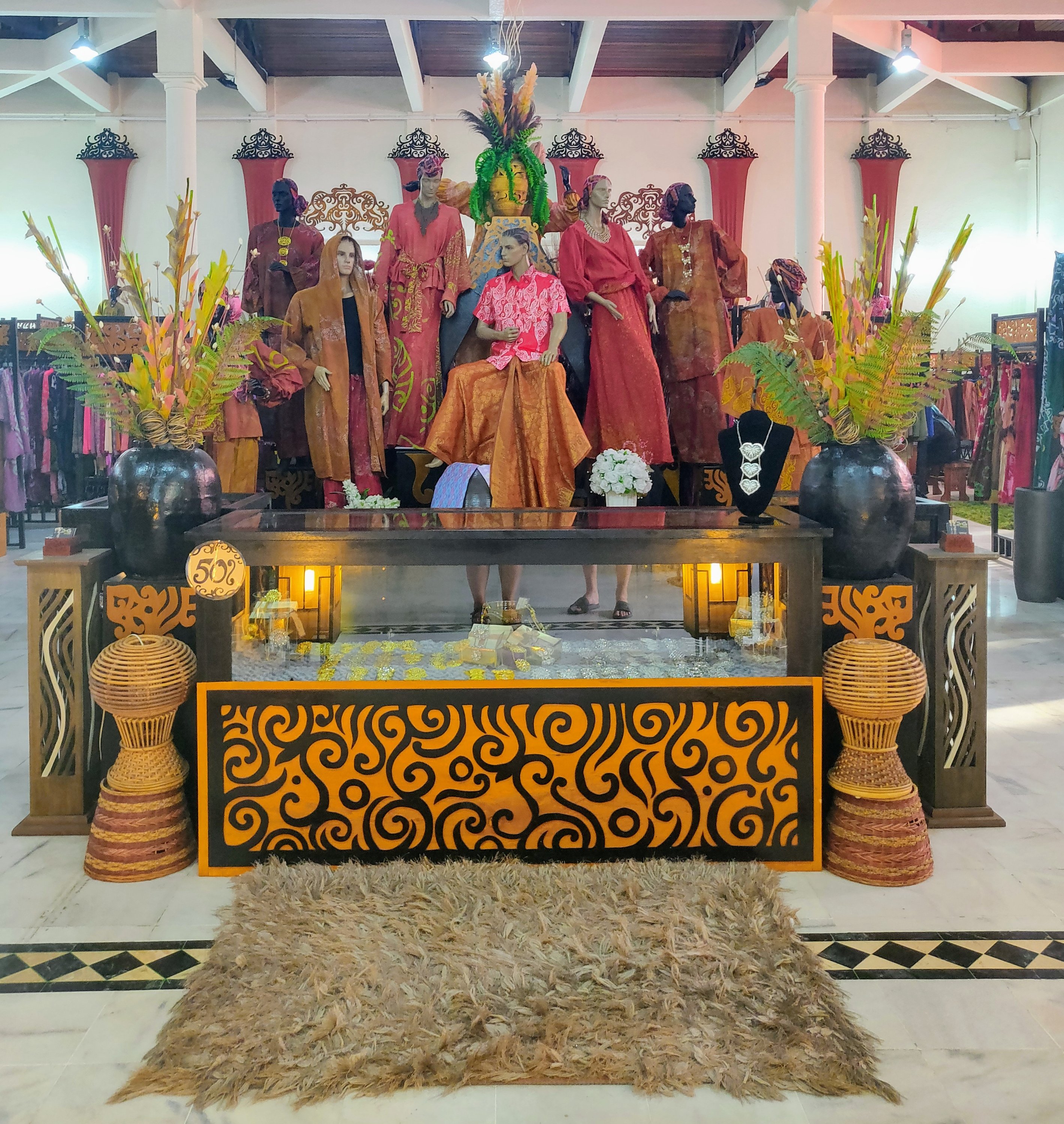
The complex has everything. Wood carving, pottery, glass blowing, textiles, clothing, jewelry… You name it, they make it!
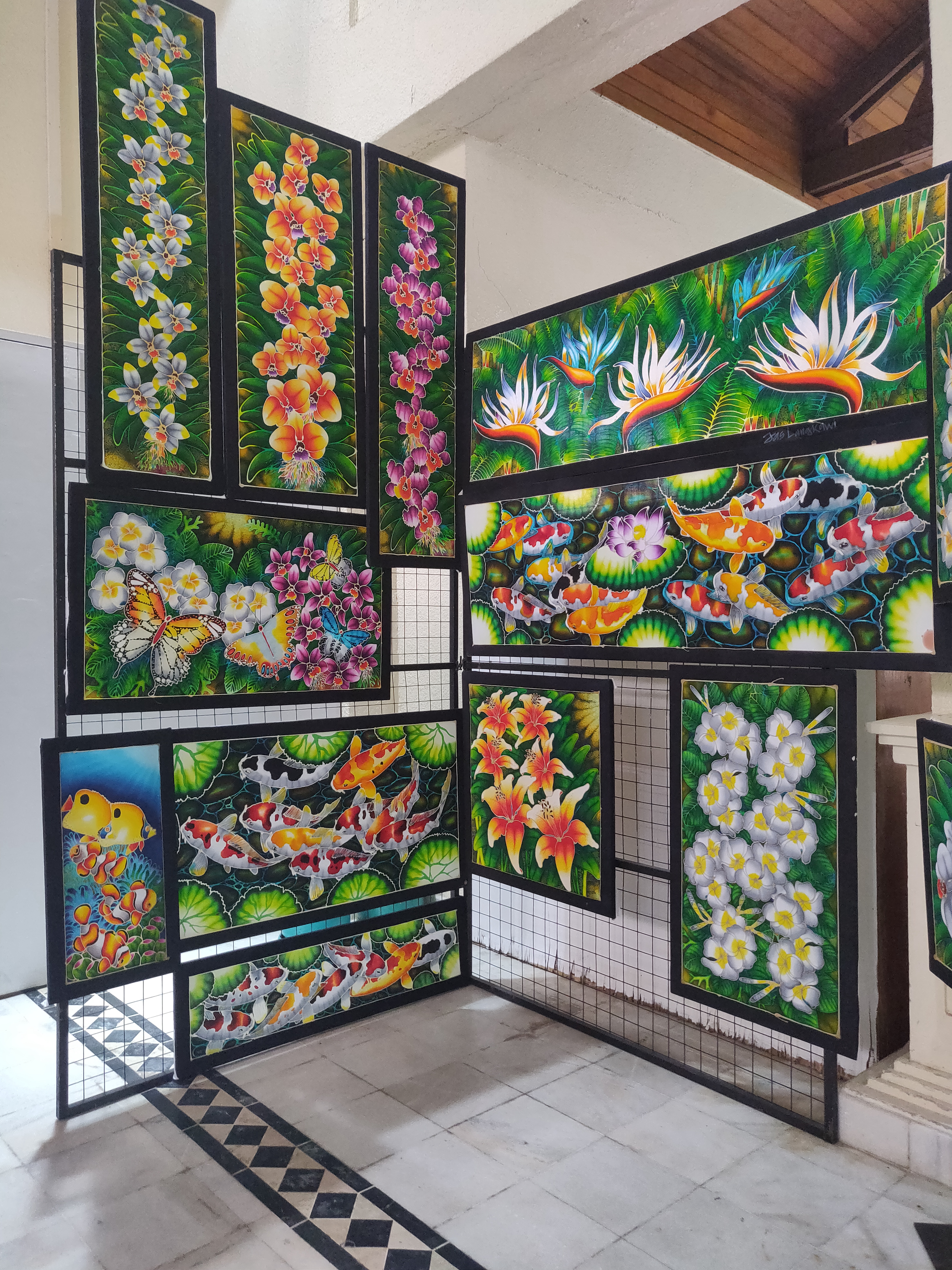
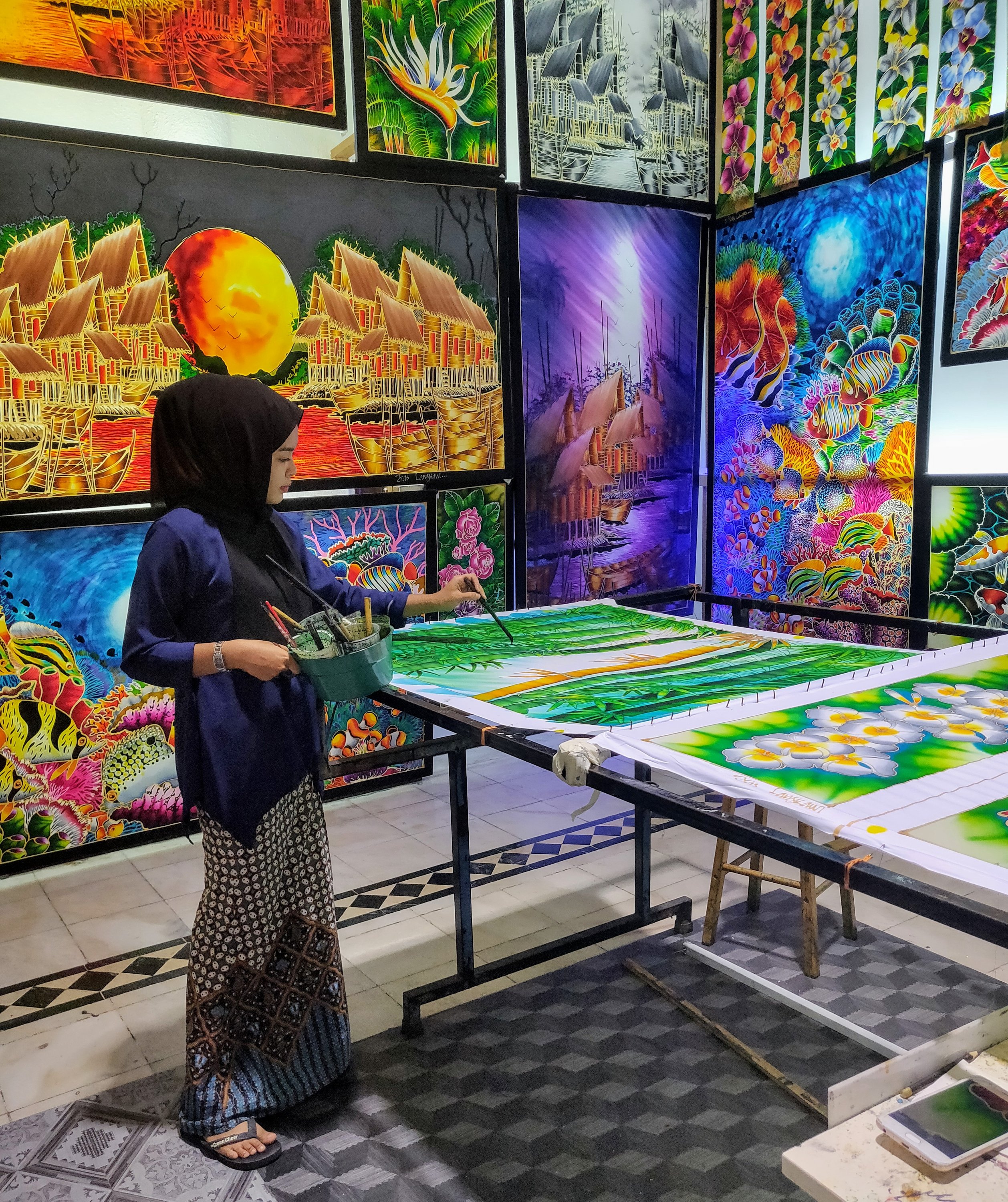
I was particularly impressed by their paintings. We saw some of the artists working on them while we were there. Such colorful and vibrant artistic style!
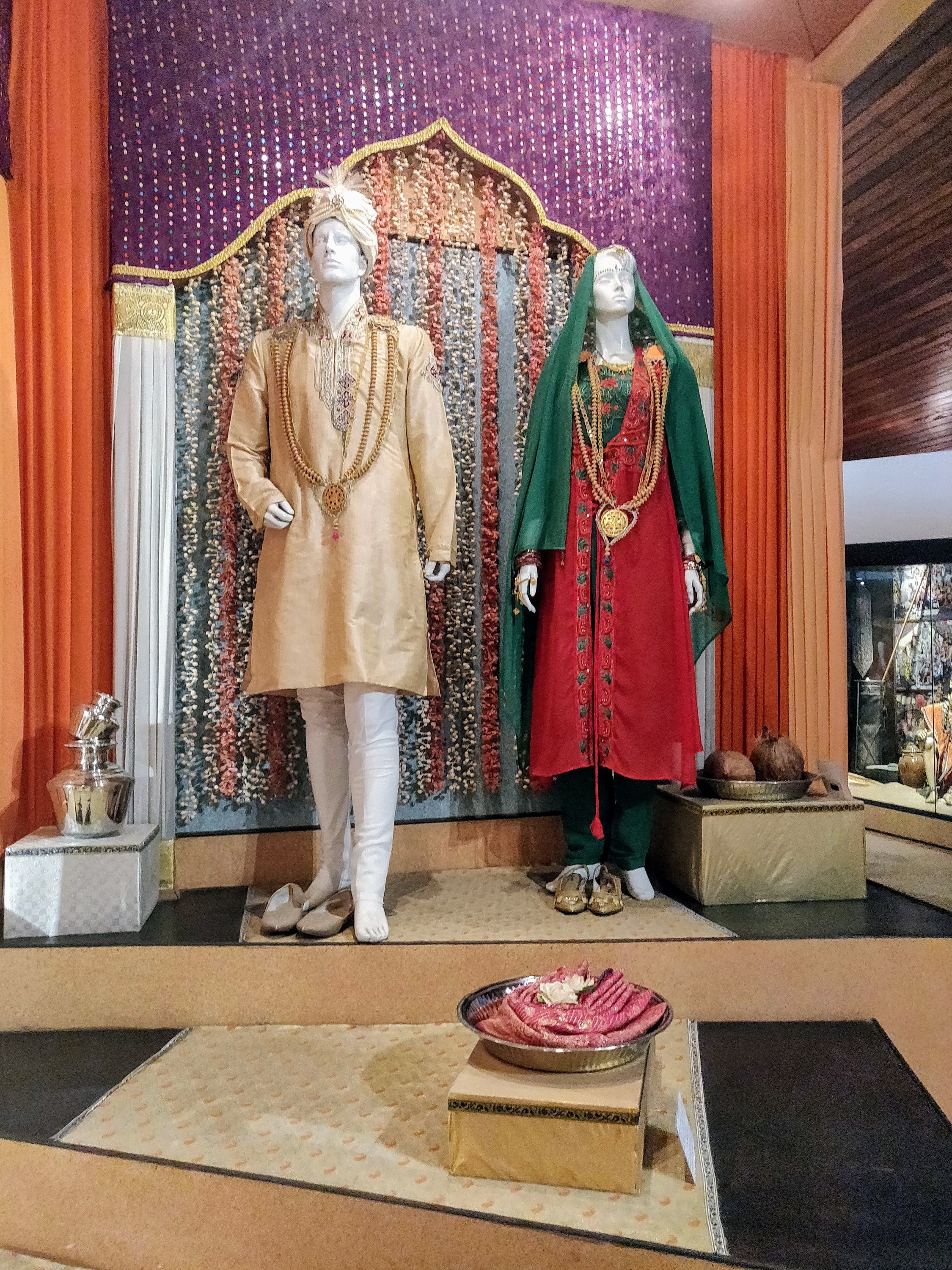
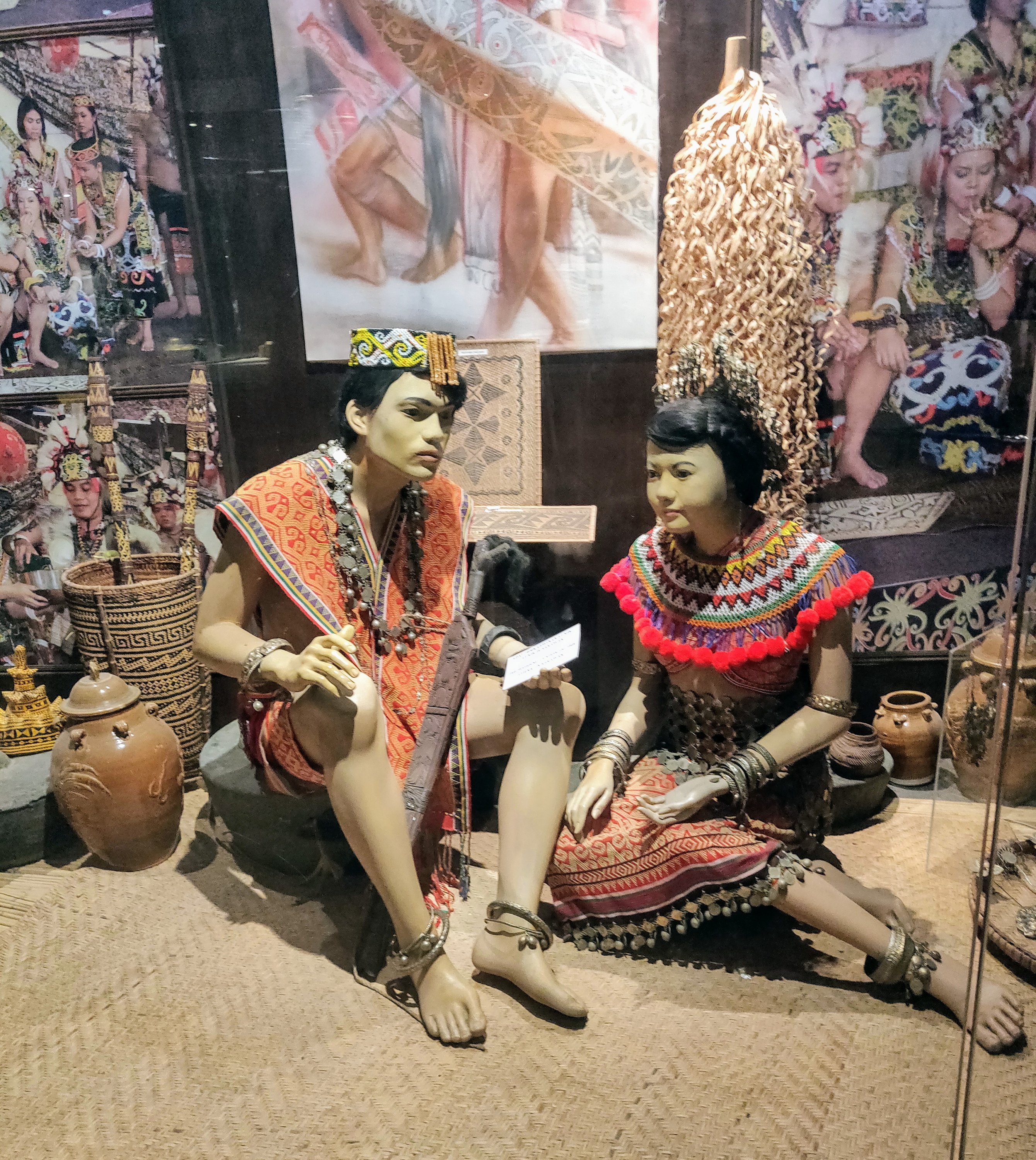
There is also an educational aspect to the complex. There are several displays set up that teach you about Malaysia’s art and culture. Some displays focus on wedding attire across the various cultures found in Malaysia, and others focused on the history of Aboriginal art.
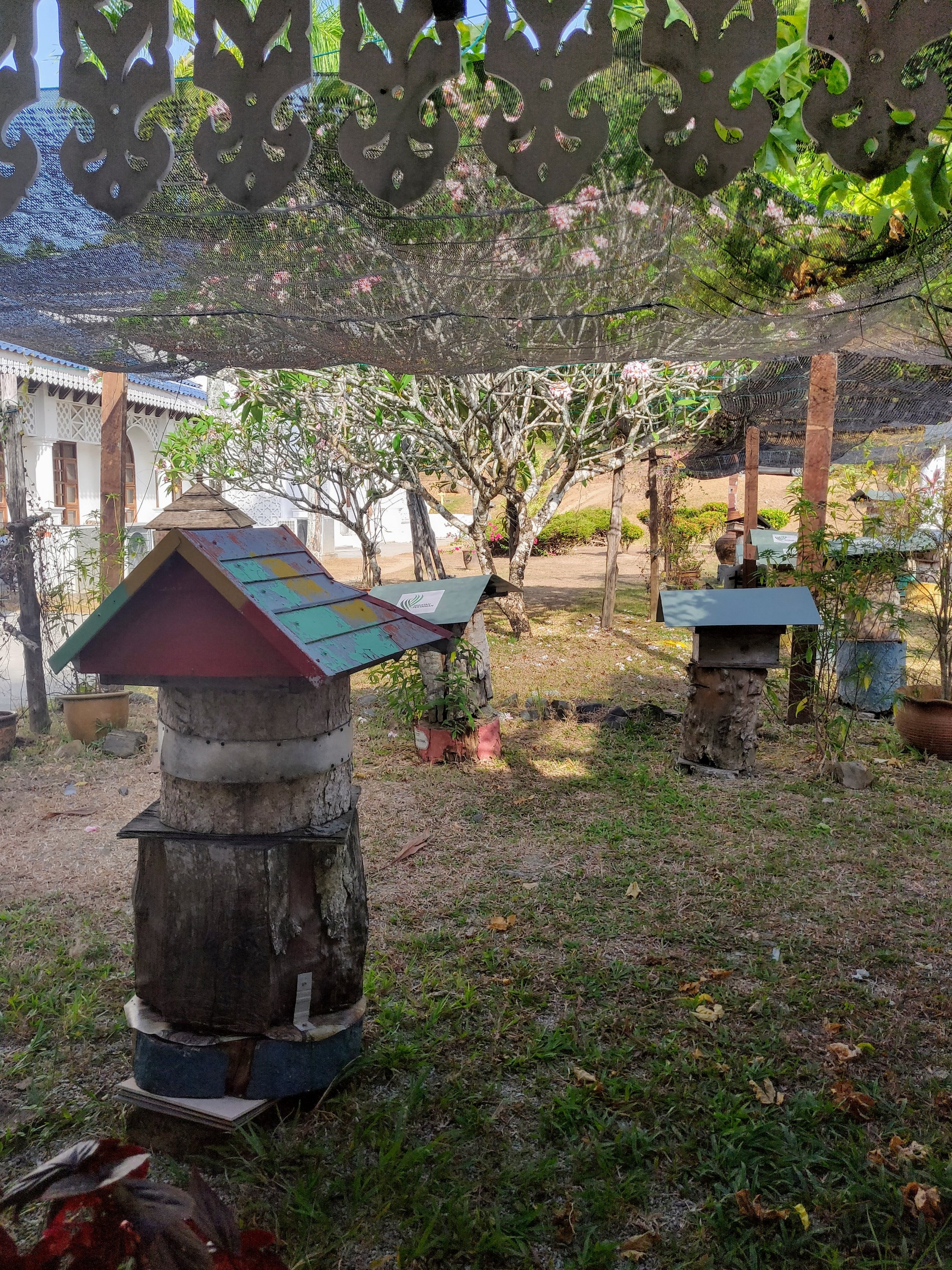
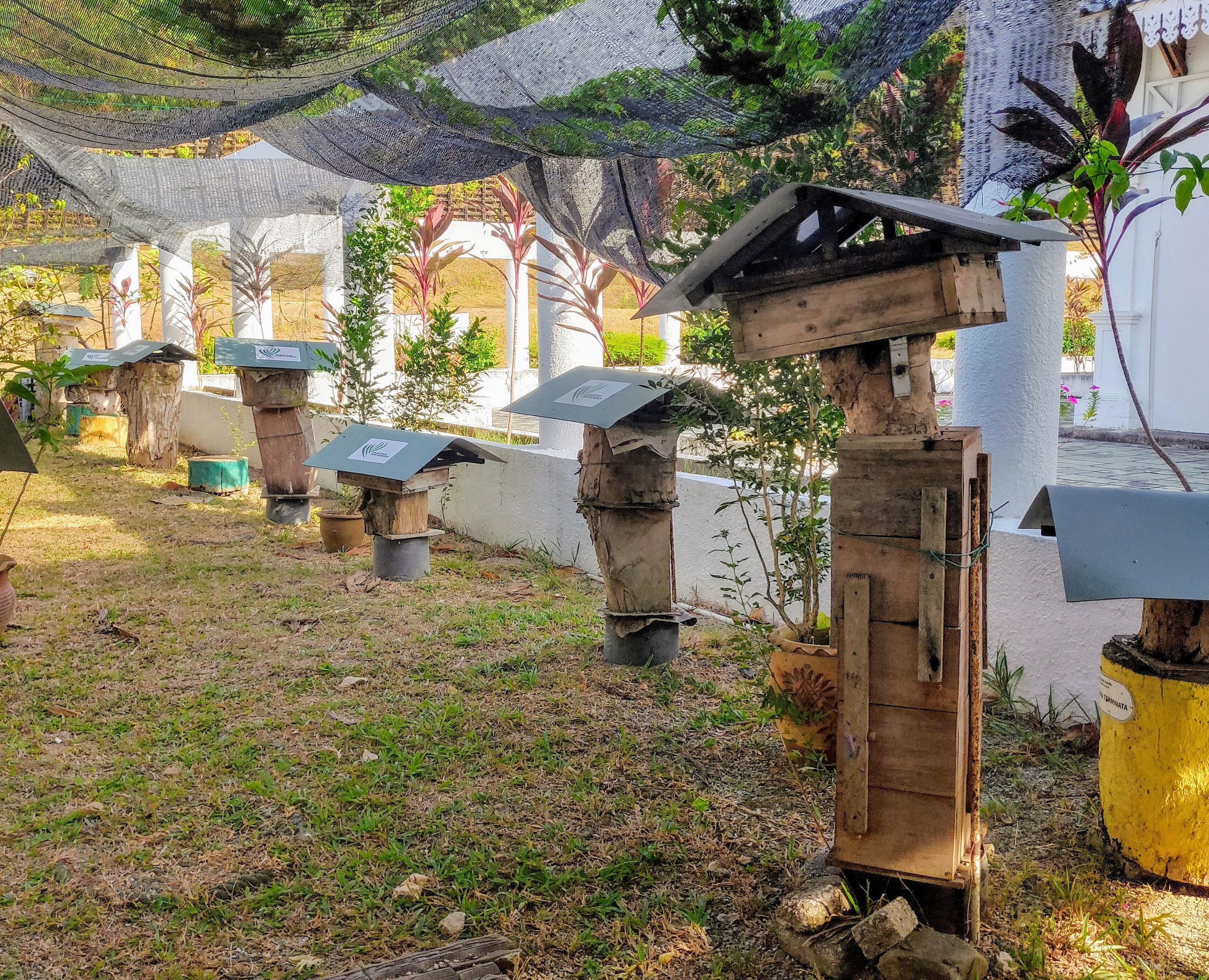
There’s also a “stingless bee farm” at the craft complex, and soap is made from the wax of these bees.
They offer glass blowing demonstrations at the craft complex too, but we happened to visit on the one day of the week they didn’t have a show.
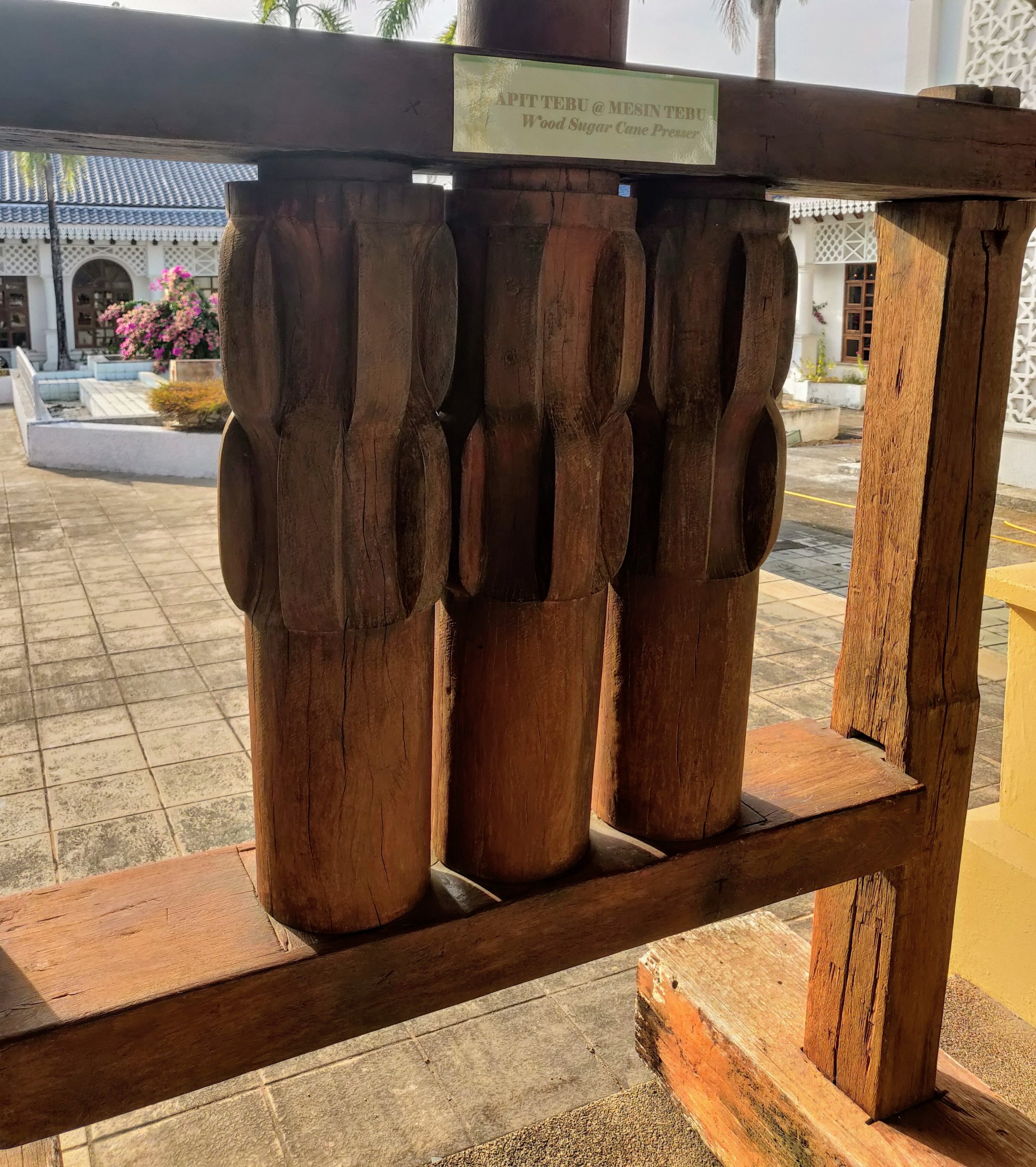
They also have some displays showing how sugar cane juice was processed back in the day
You could easily spend hours at the craft complex, if you have some free time and a husband who doesn’t mind being dragged around to look at scarf after scarf.
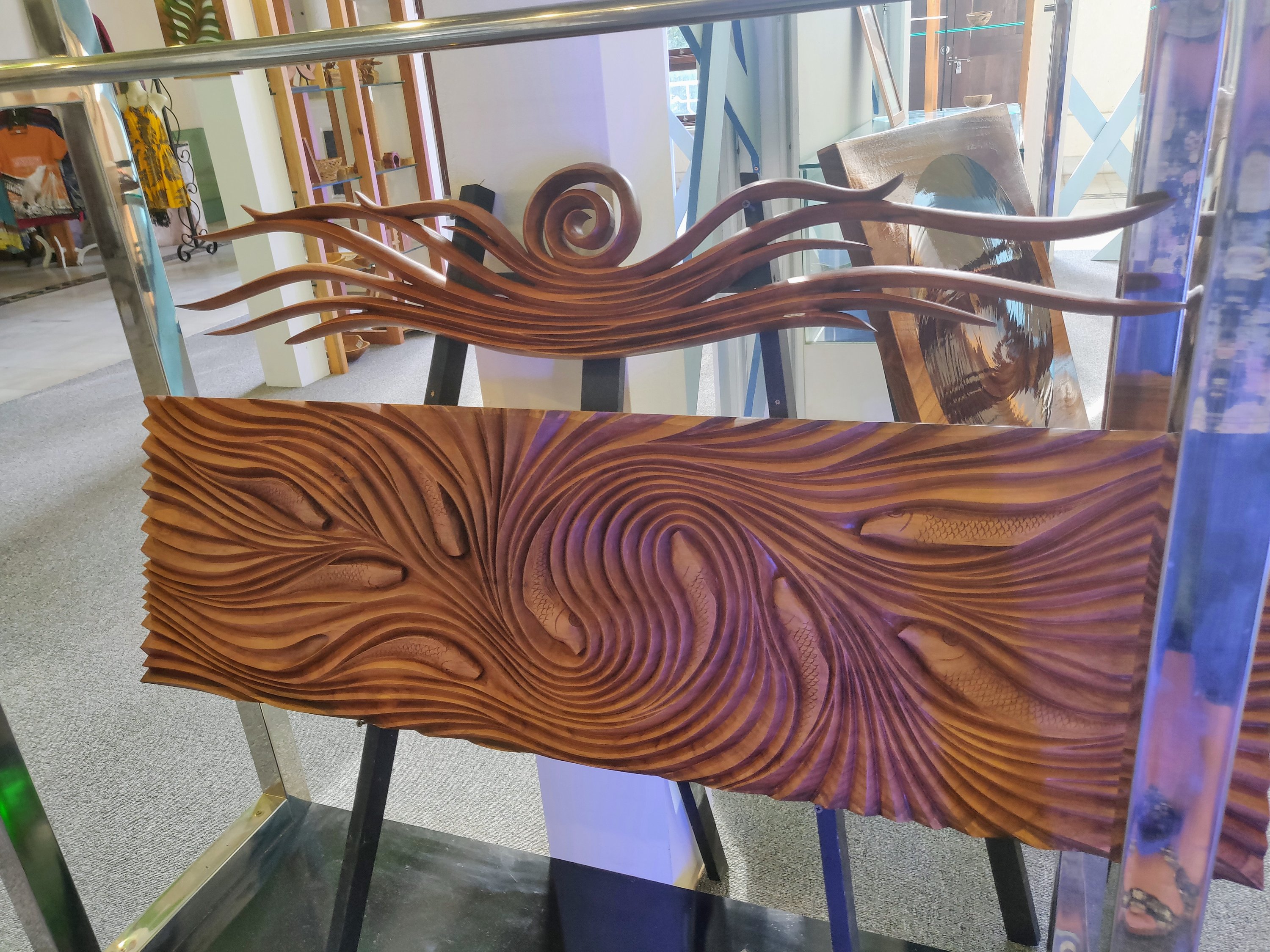
The woodwork was what impressed Dave the most
We made it through in about an hour, but I think 30 minutes more would have been nice. The complex is free by the way, you only pay for what you buy… And with so many beautiful choices, you’re bound to leave with something!
They do a really good job with their displays too!
In the hot Malaysian heat, some days you just want to be indoors where it’s cool. That’s how we found our way down to Laman Padi this week.
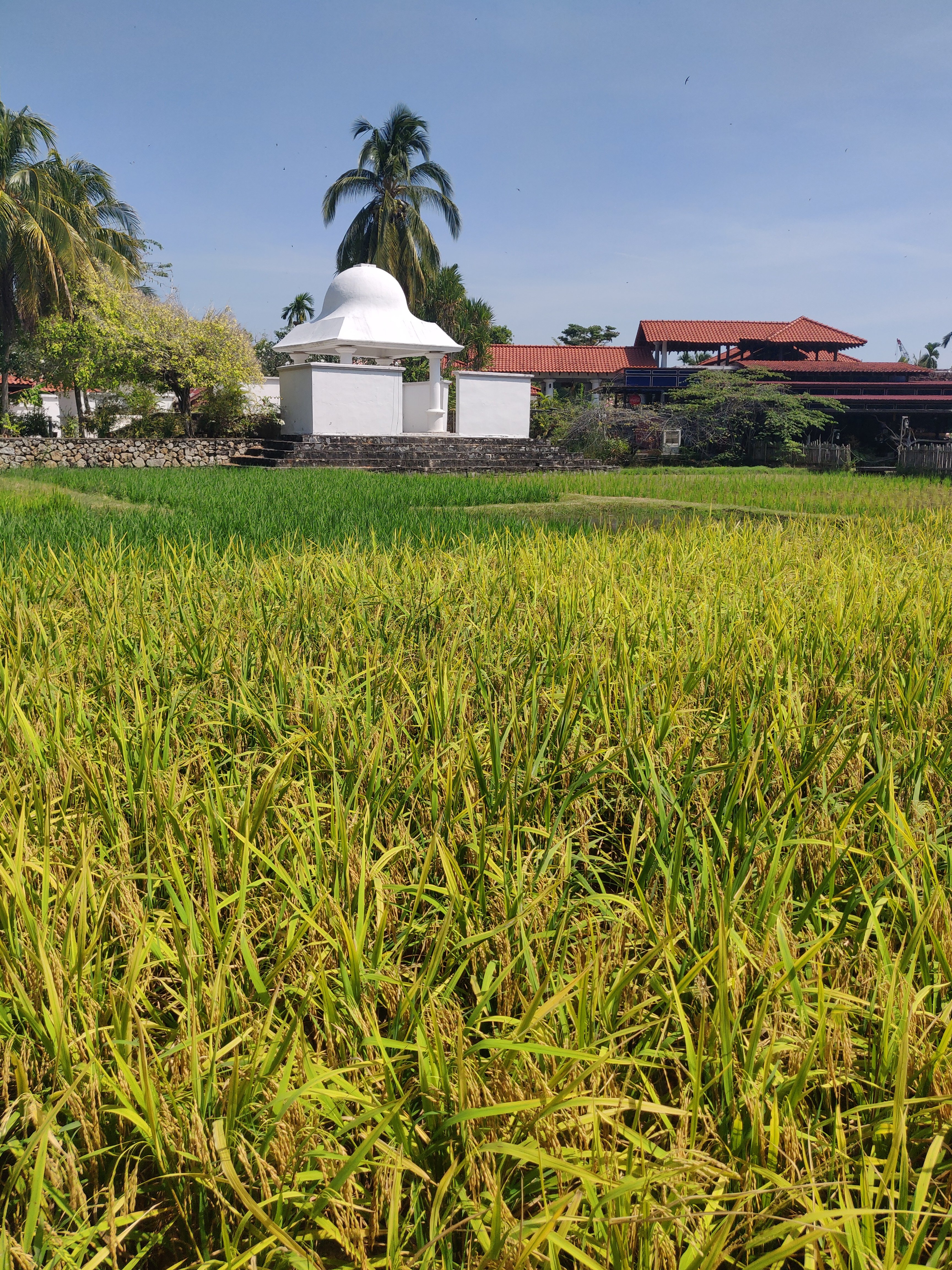
This is what time looks like shortly before it’s ready for harvest
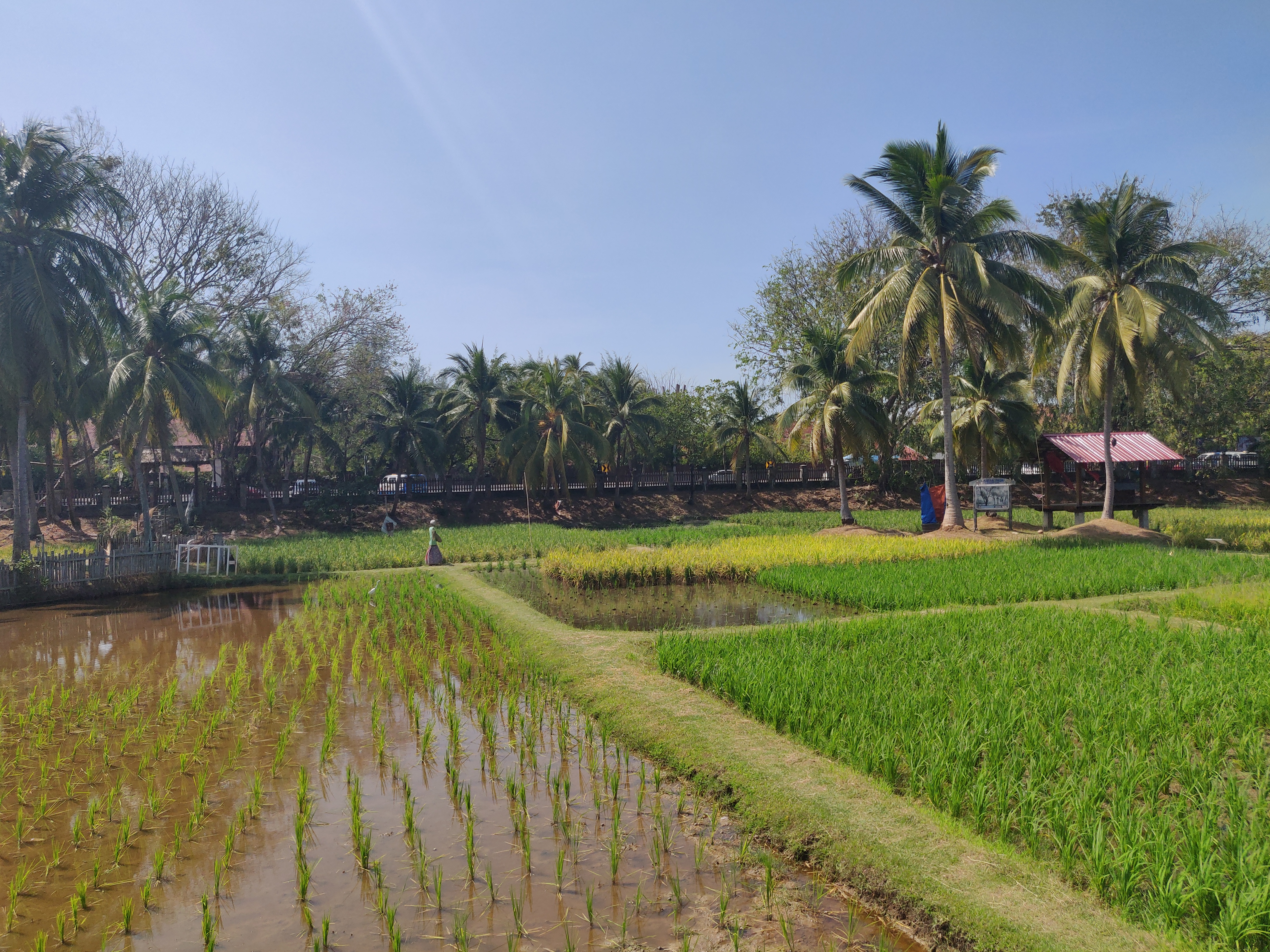
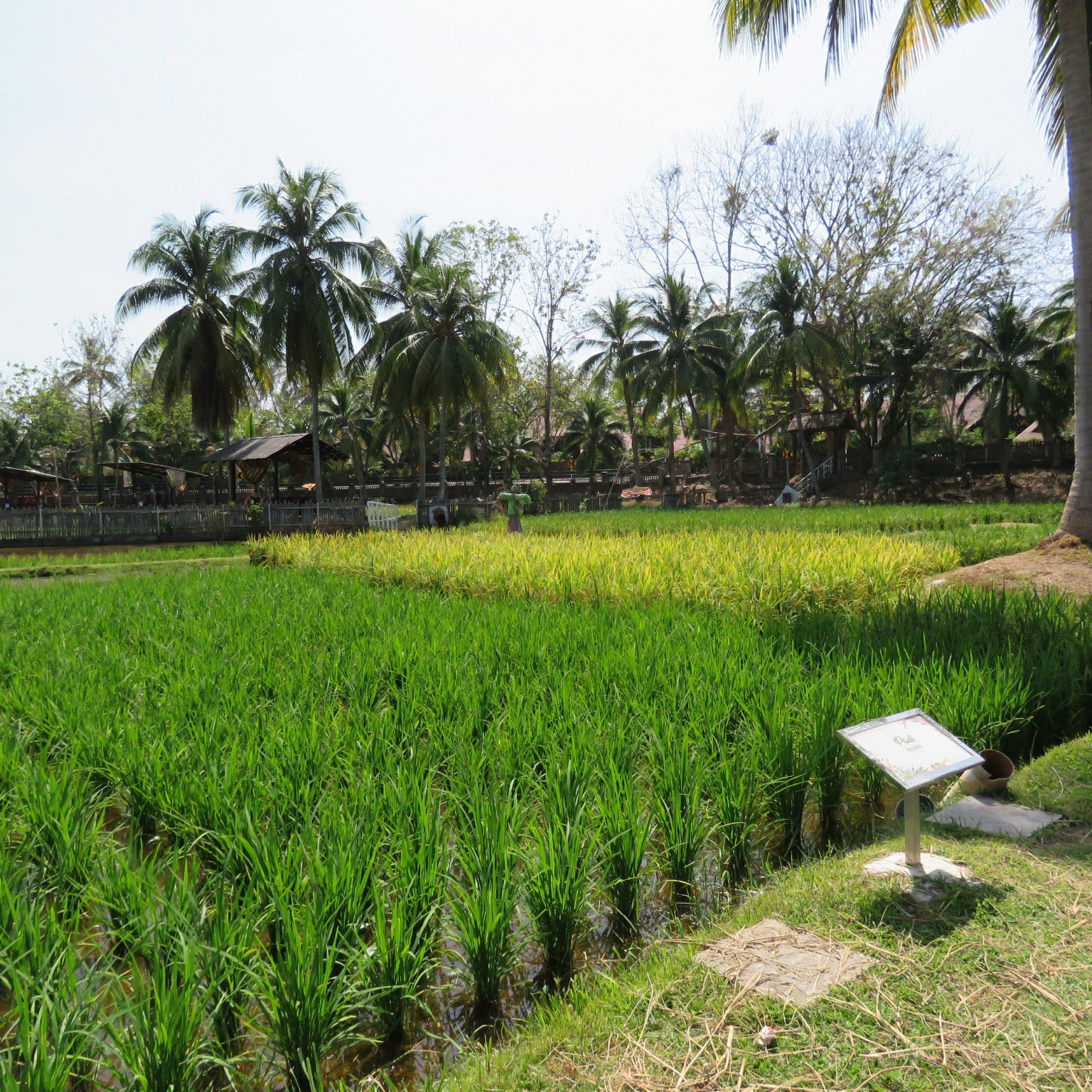
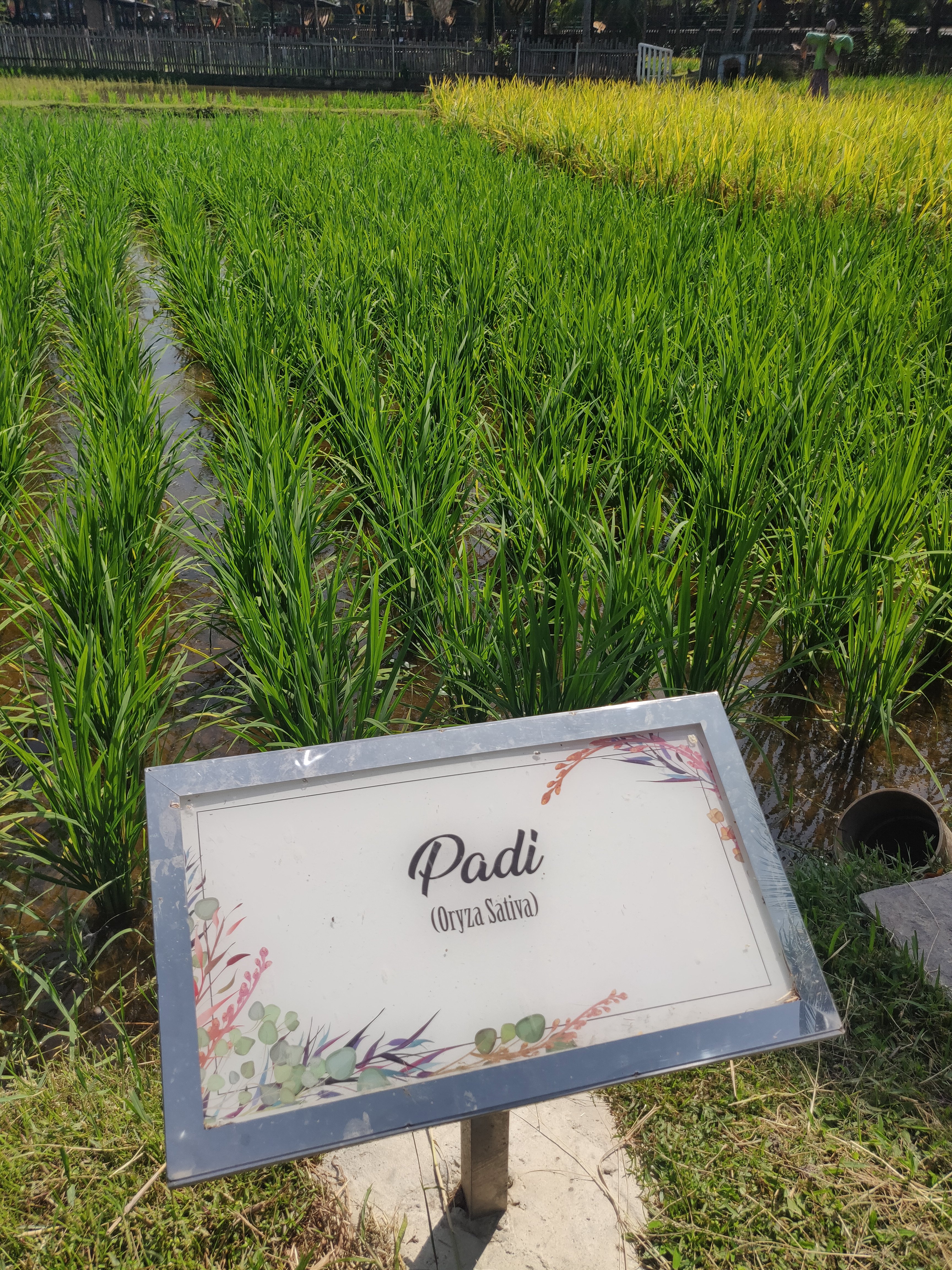
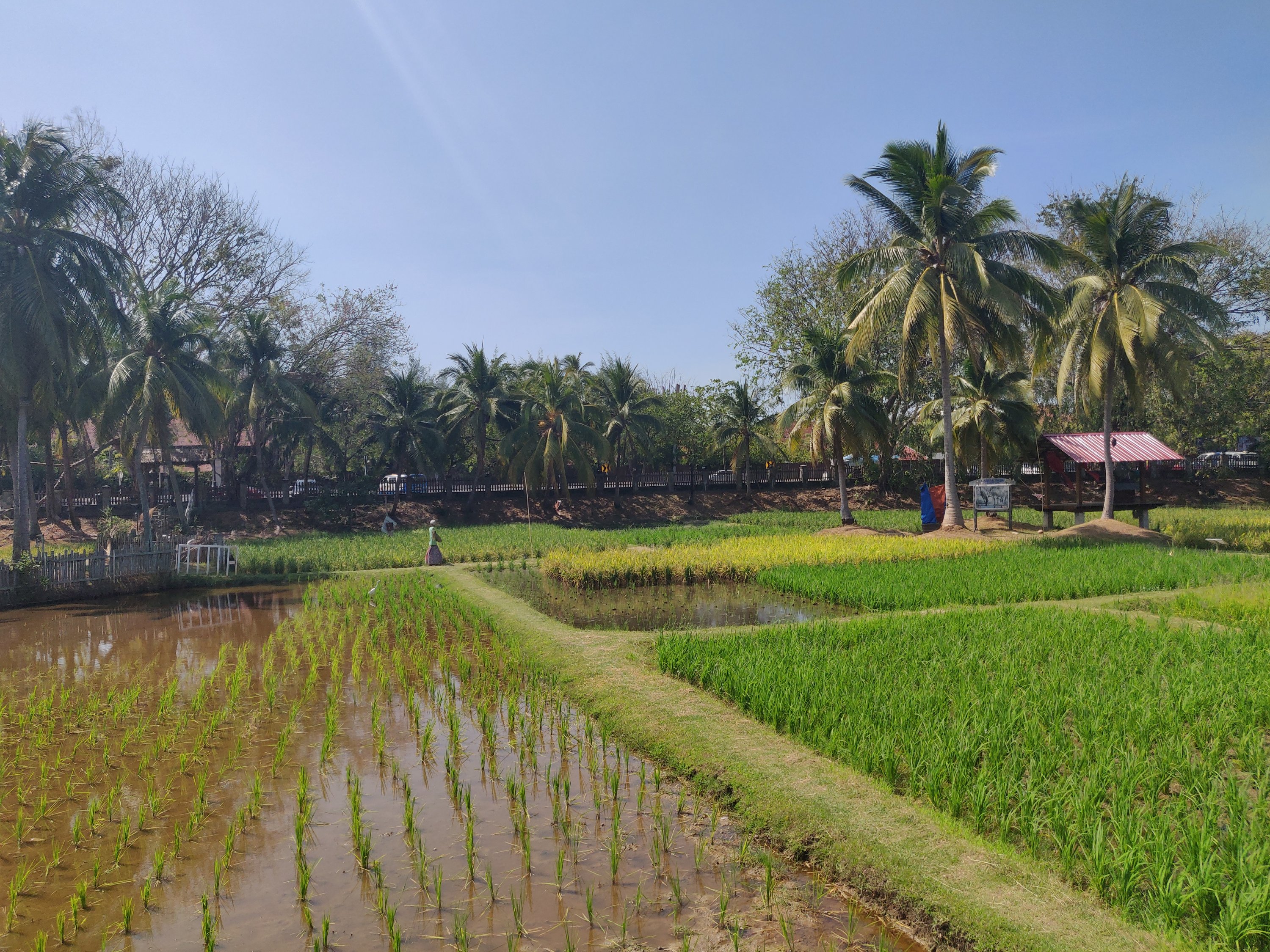
There’s quite a lot to see there, actually. They have rice paddies in various stages of growth so you can see the process of growing this grain.
You can see that the rice in the back is older than the rice in the foreground. Rice is actually a kind of grass and it becomes more yellow as it gets closer to harvest timeRice needs lots of water to grow. Often, rice is grown on the side of hills and mountains and Farmers create little walls to trap water as it rolls downThe rice on the left is very young. Notice that it’s growing in a field with several inches of water in it
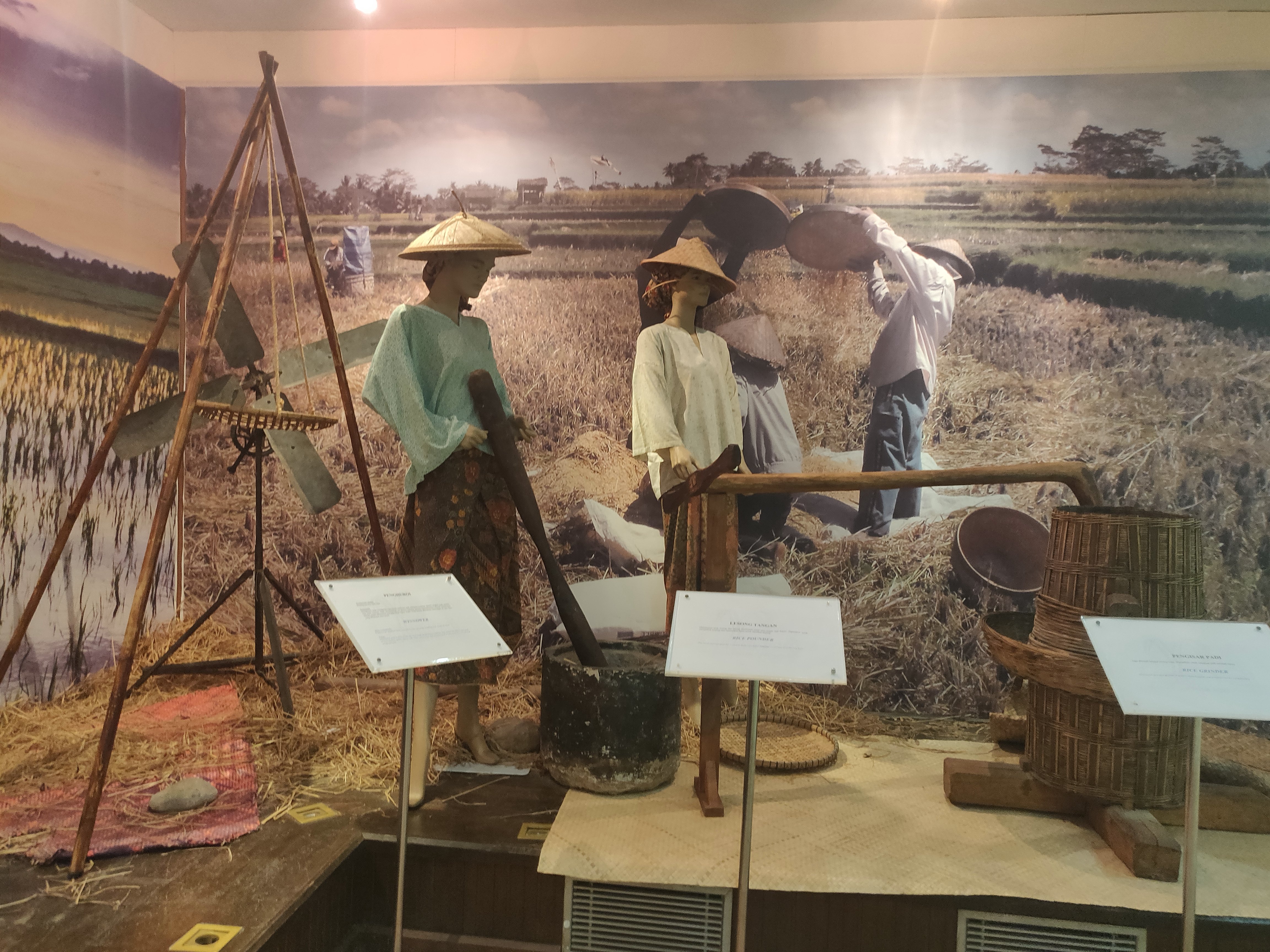
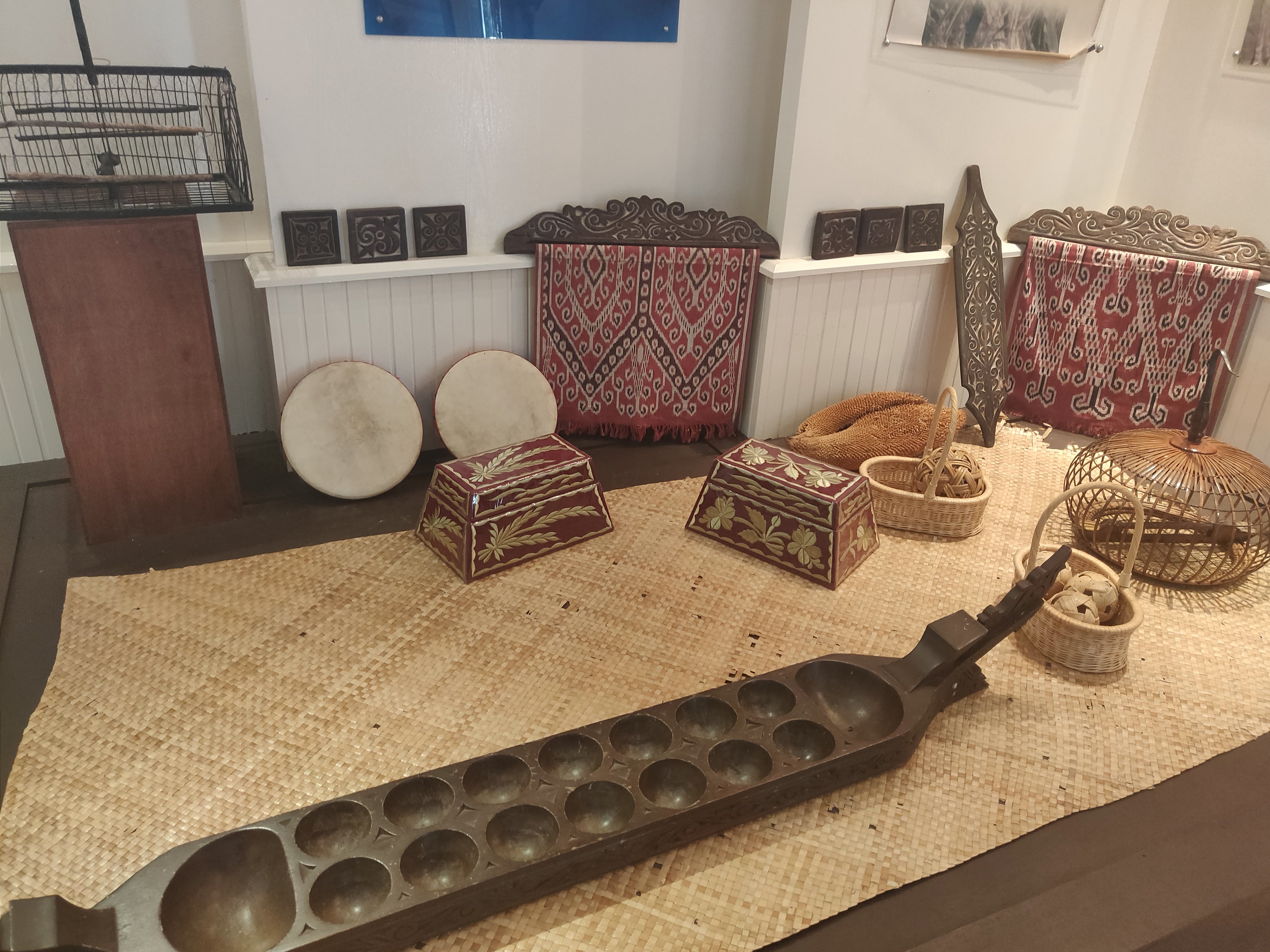
There is also a museum that teaches about the tools that are used, and tools that used to be used for farming rice. The museum is nice and cool and full of neat things to see.
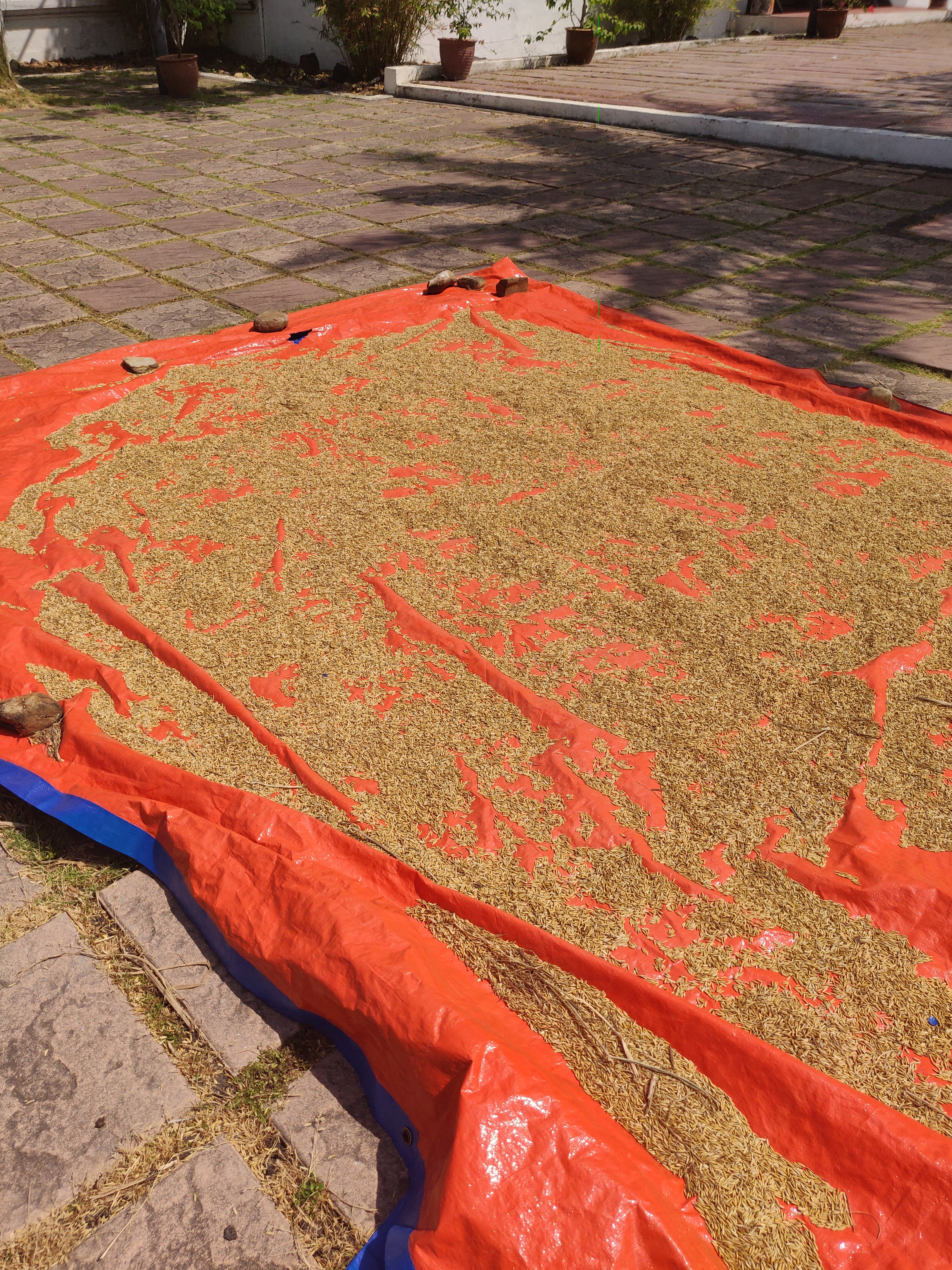
A quaint little museumTools that were historically used in rice farming Drying rice in the sun. Of course now, they have more efficient methods
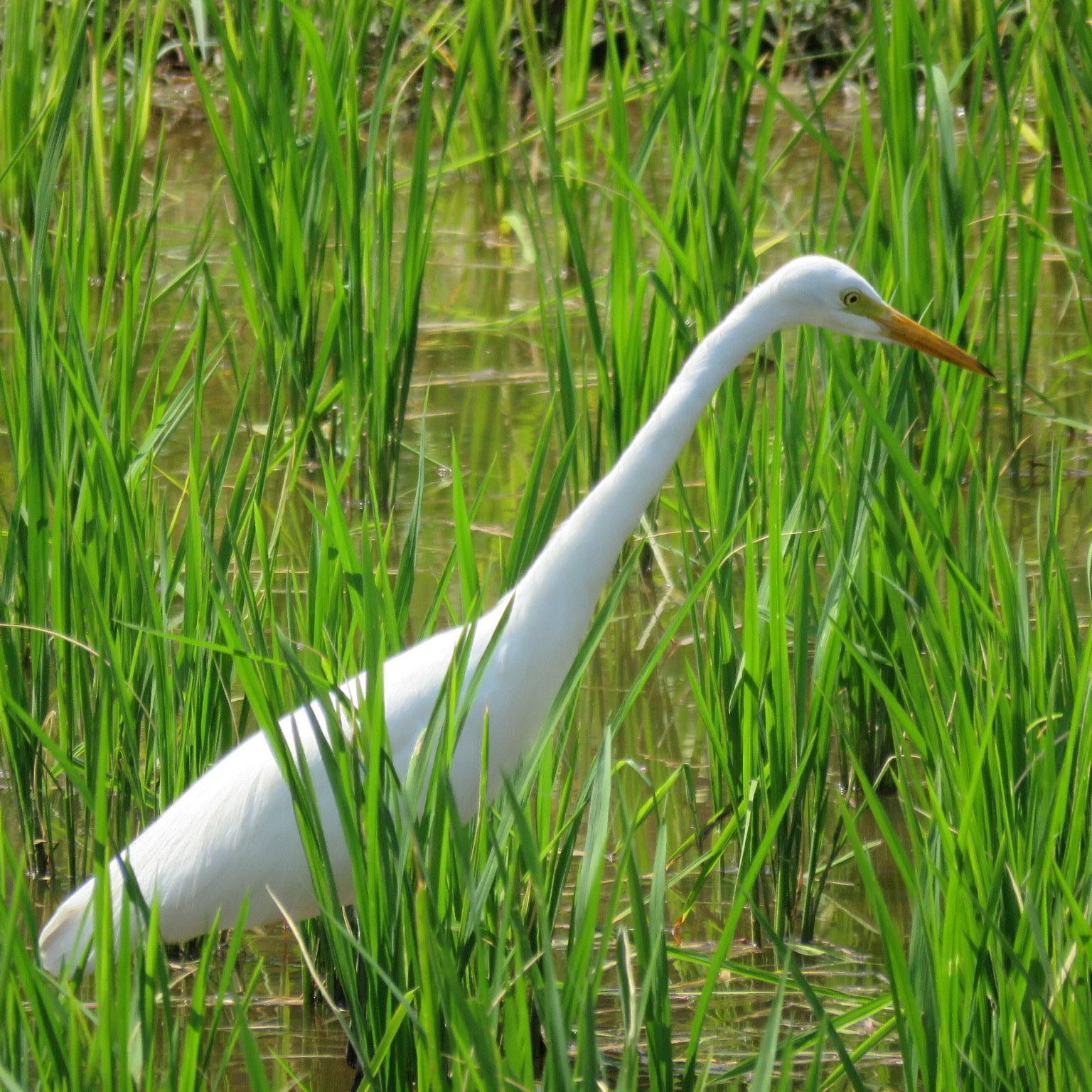
Mostly, the Laman Padi was nice because it was quiet, there was lots of indoor space, so we could stay cool, and there was a surprising amount of wildlife there.
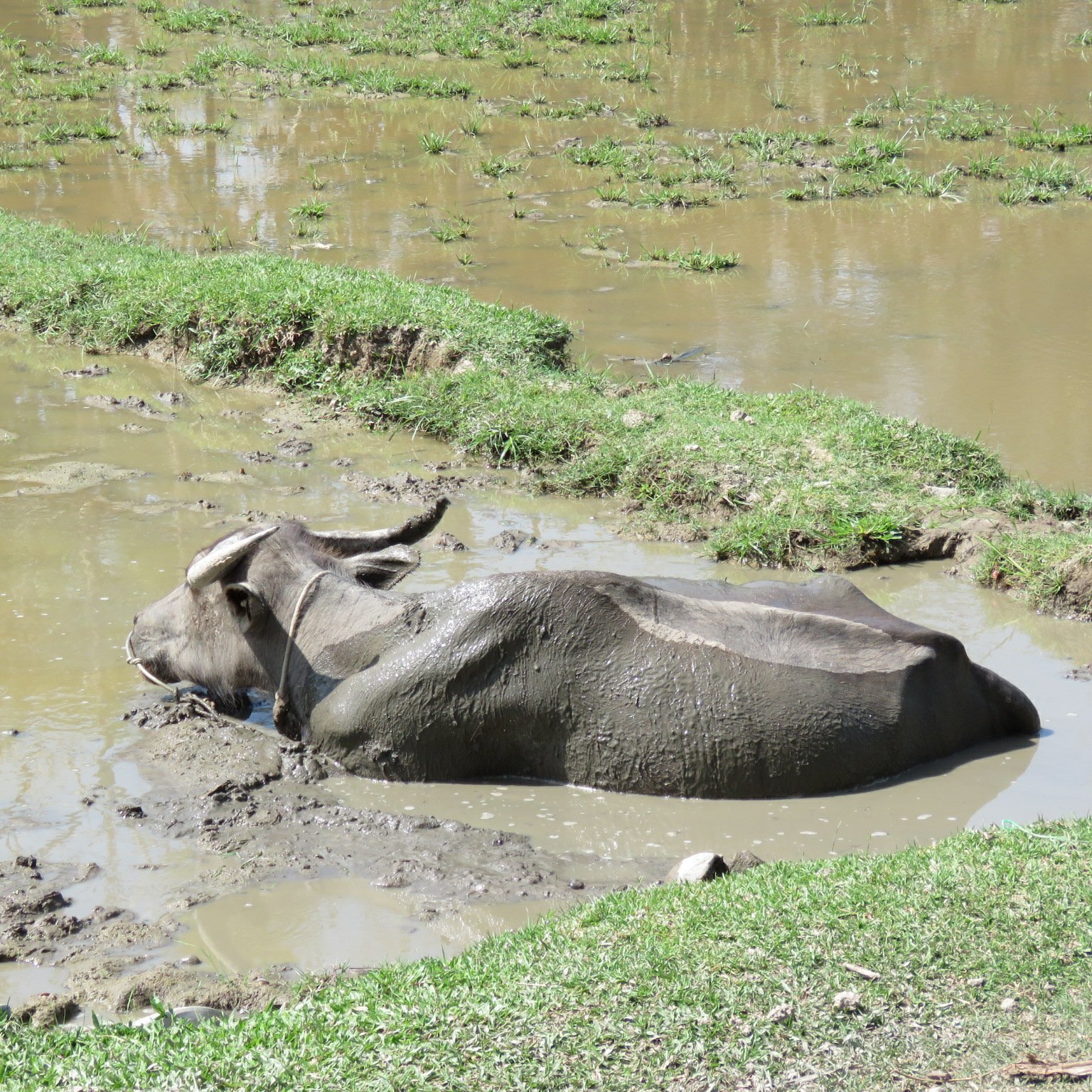
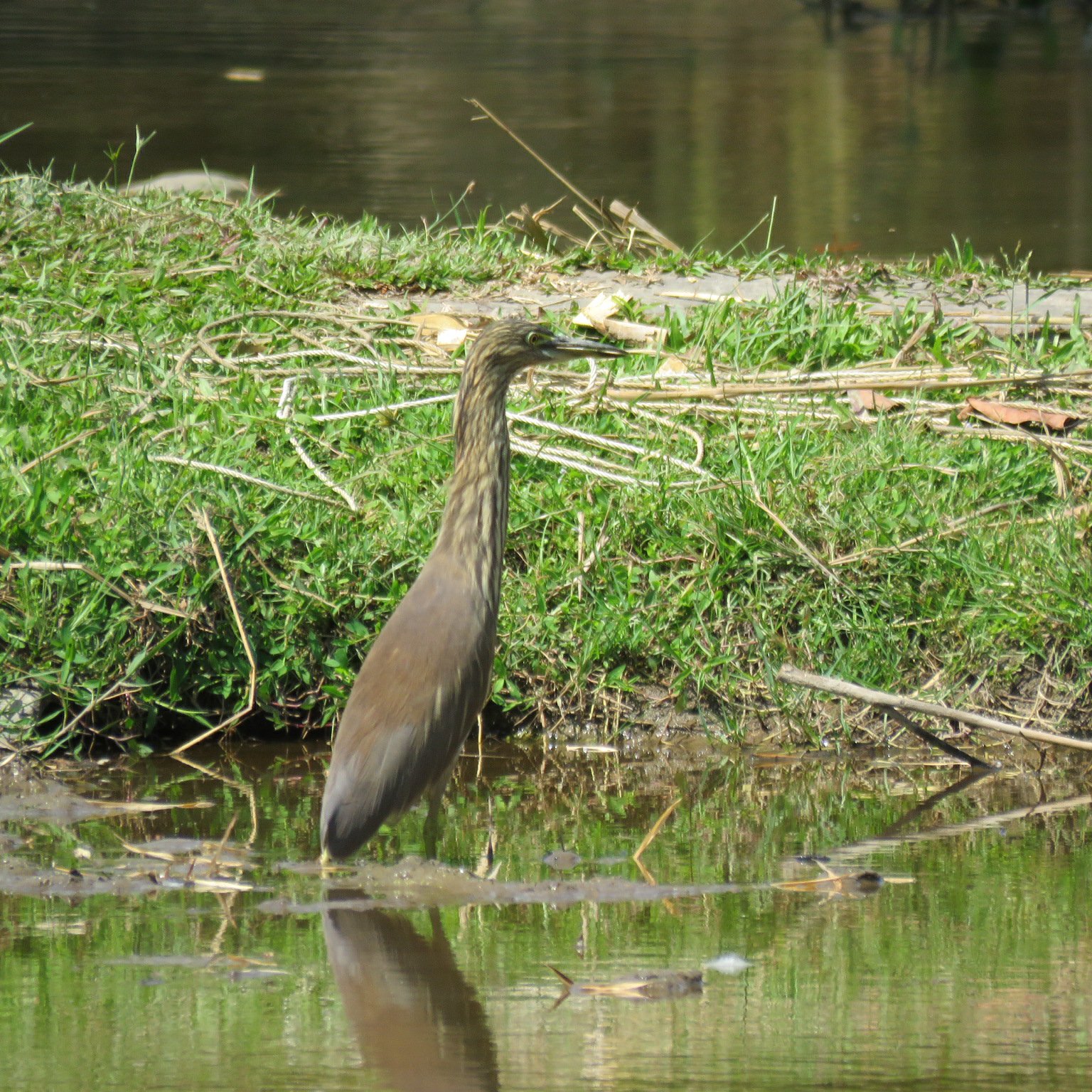
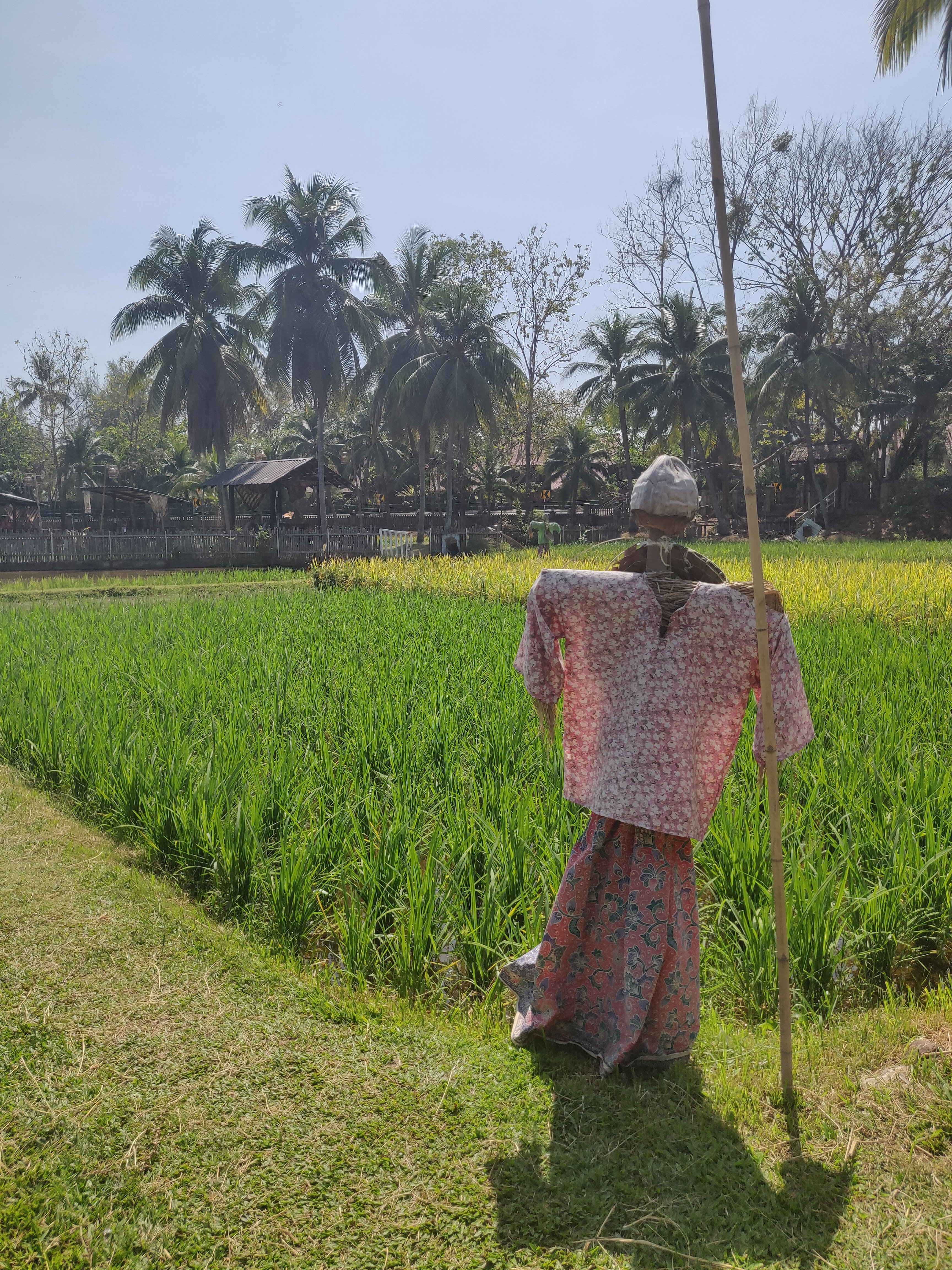
Egrets are often found in rice paddiesWater buffalo are still used in farming in some places and are also a common site in rice paddiesI’m not sure what kind of bird this is. Perhaps another kind of egret?They had scarecrows to try and keep the birds away. I think the birds were onto them because they didn’t seem to care a whole lot
With an extra week away from China, we’ve been careful to budget our money a bit better. Laman Padi is free and if you’re there and keen, staff will show you around and explain things. Dave and I chose to do the tour solo though. After living in China for nearly 6 years (7 for me!), We know a lot about rice already.
Nice place got a rest!
I’ve got some fun posts about monkeys and Langkawi’s food scene coming up!! Check back soon!!!
Gunung Raya is the tallest peak on Langkawi island. We discovered it while driving around and exploring the island by motorbike. With beautiful views and a scenic ride up the mountain, it was a nice way to spend an hour and a half.
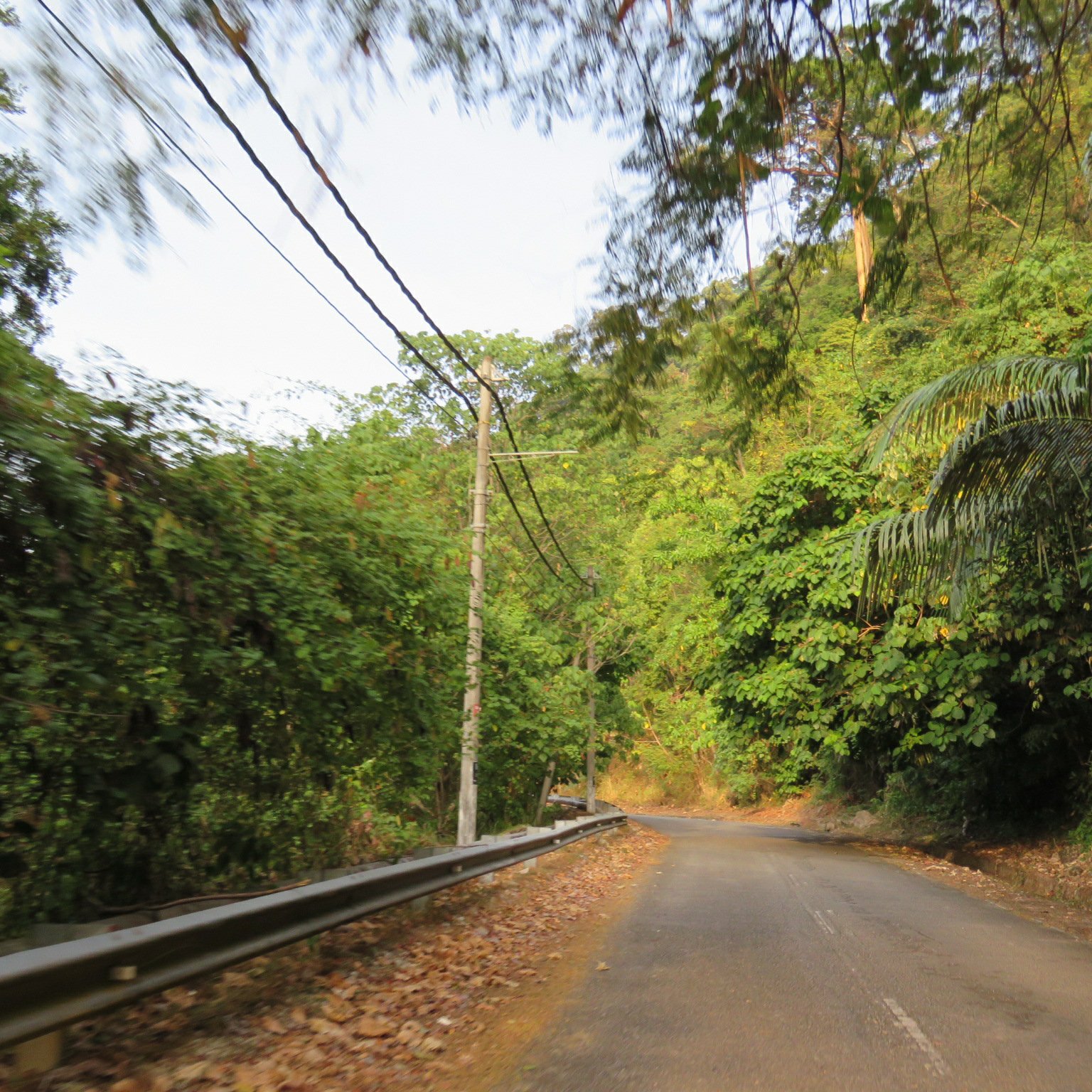
The open road
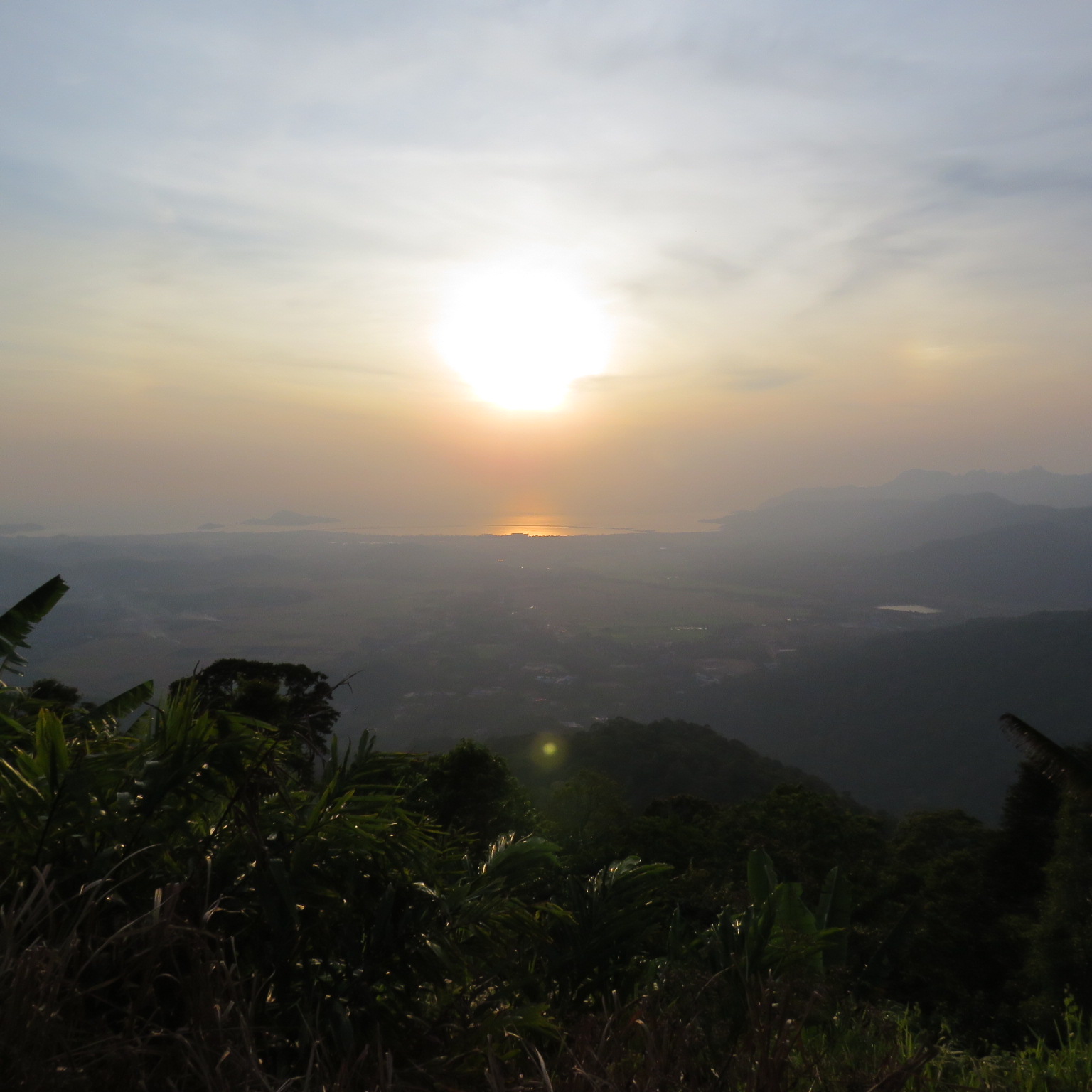
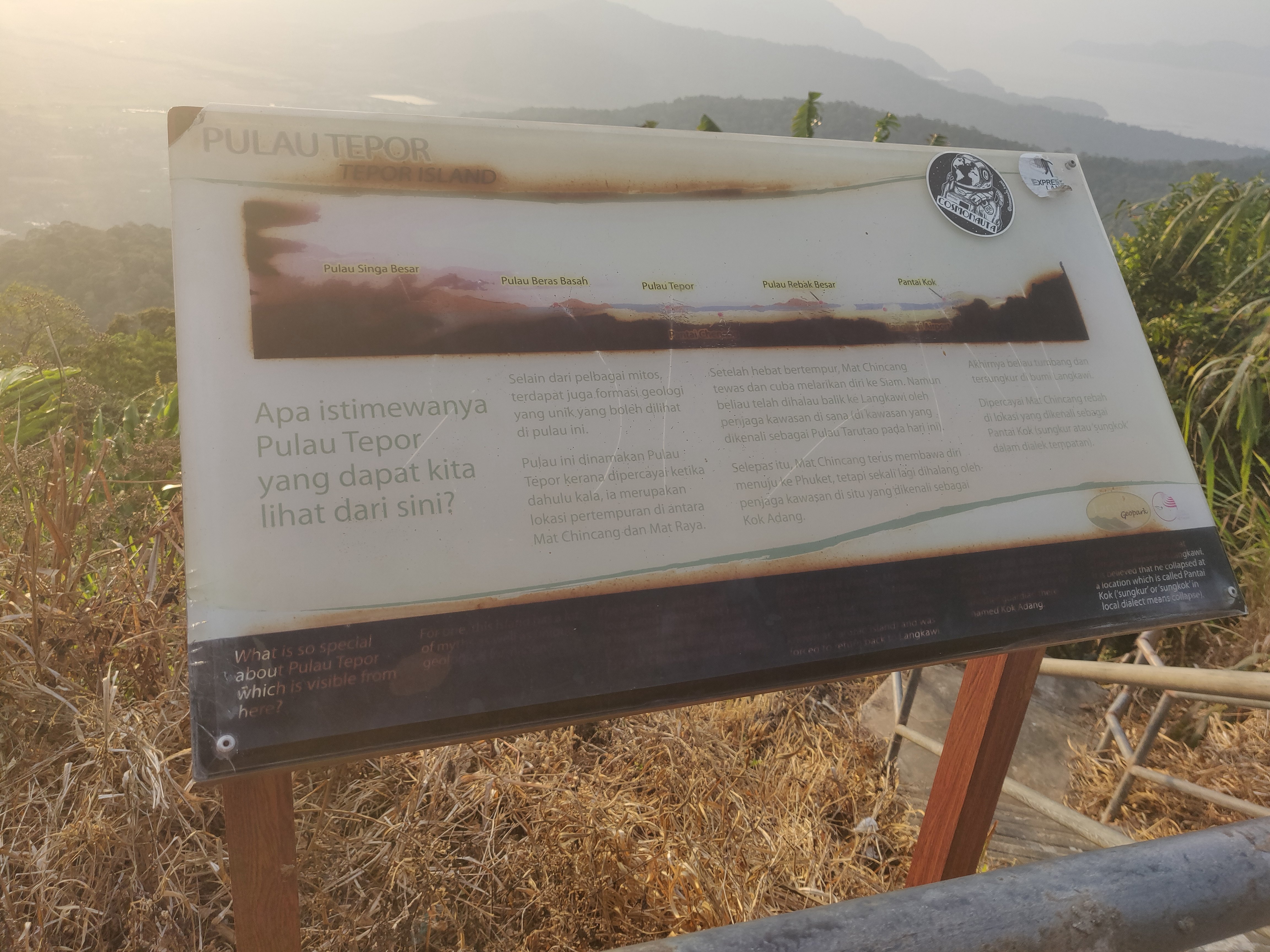
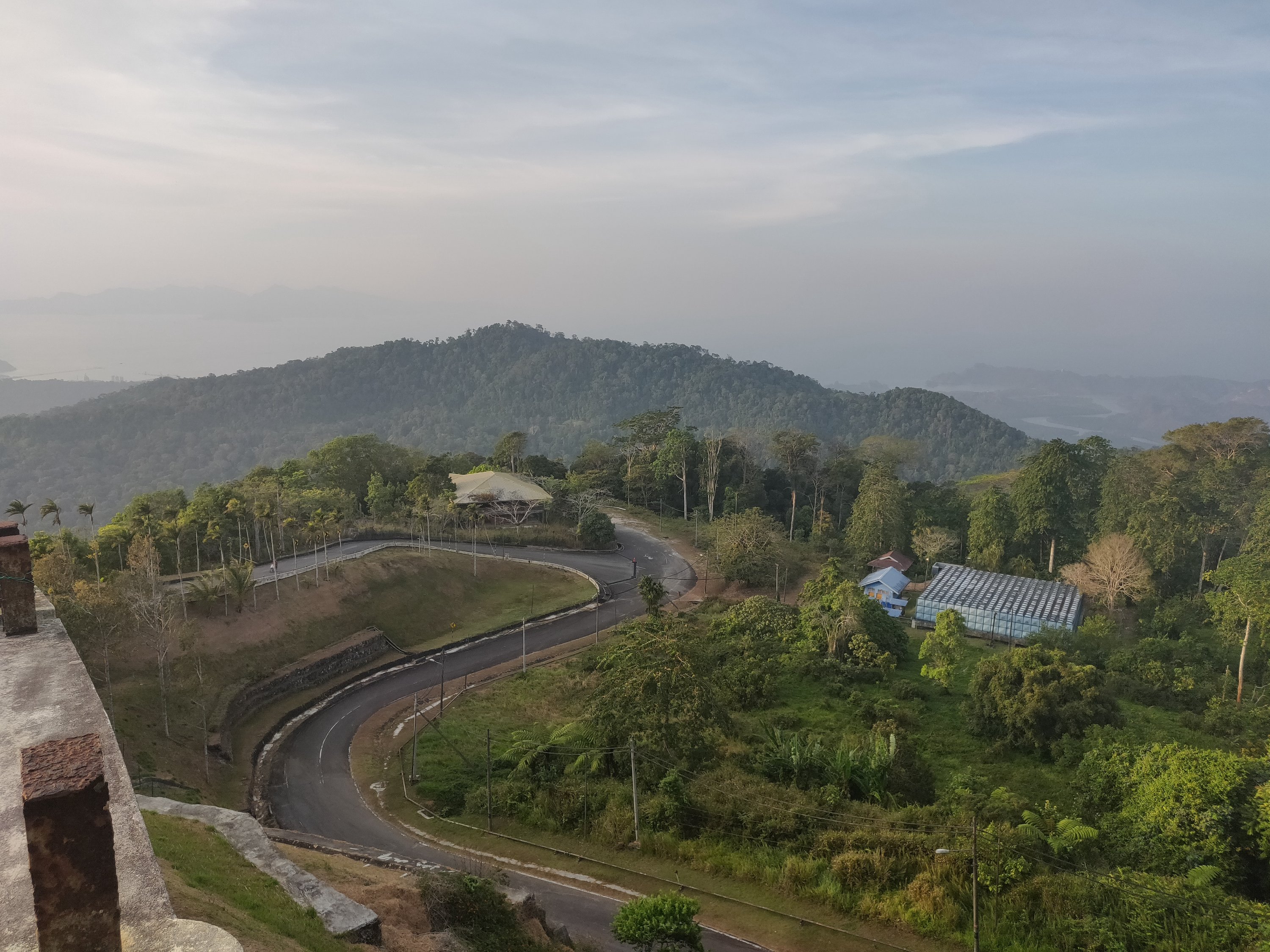
It takes about 30 minutes to reach the peak by motorbike. There is a nice lookout there and you get a really nice view of the island, the ocean and even Thailand in the distance. There’s some information on the myths surrounding this part of the island, as well as information about the area’s geological history.
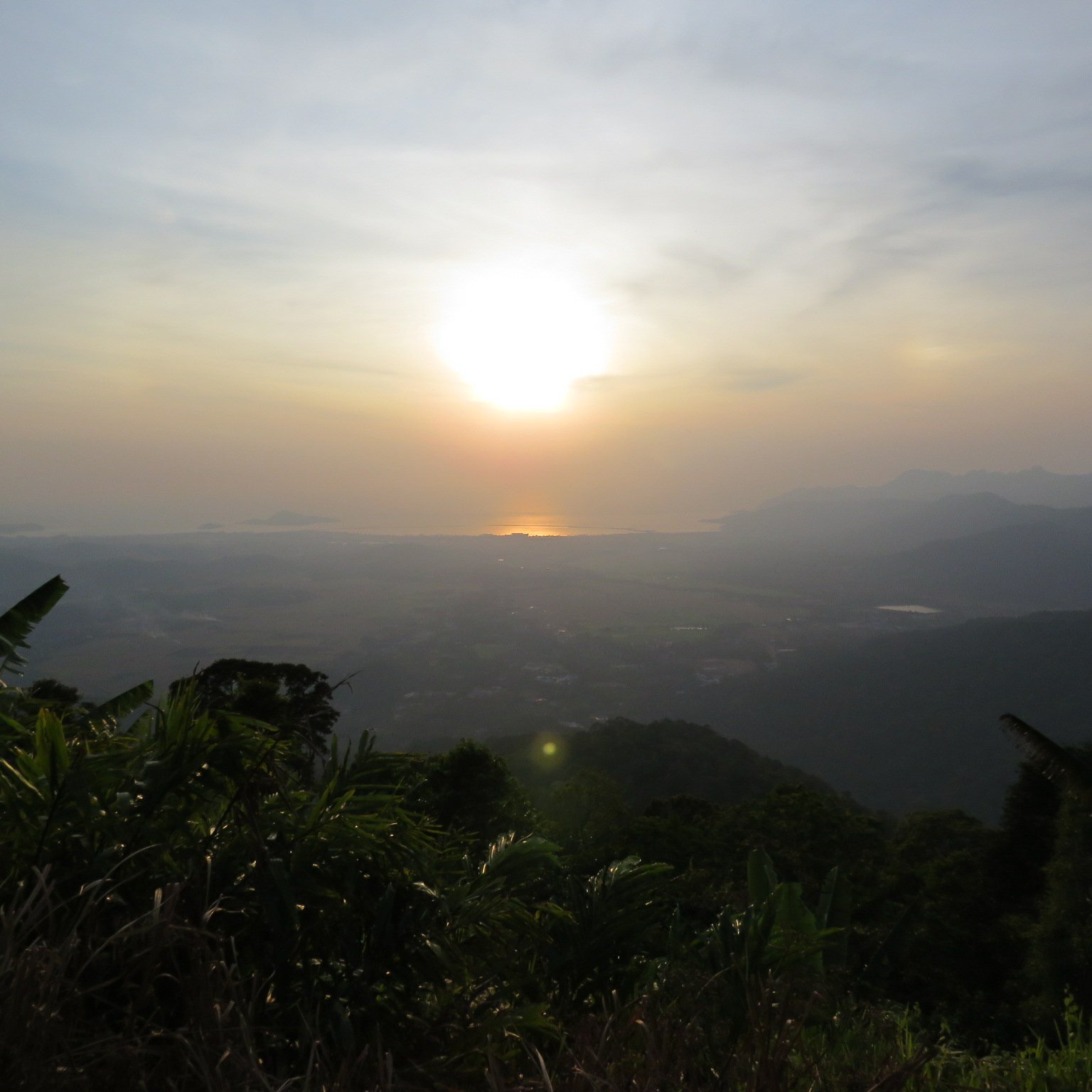
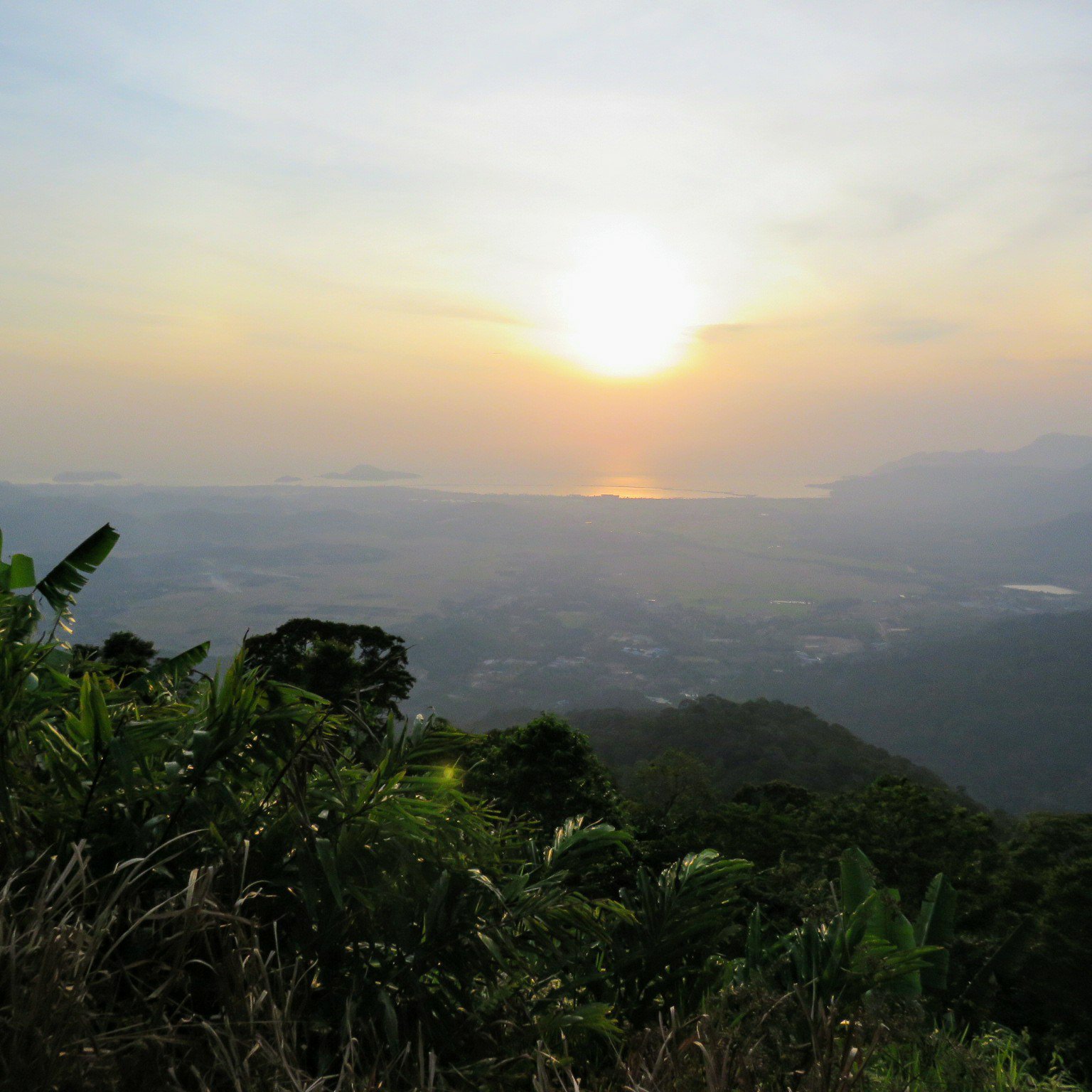
This is the real reason to go up to the peak. Such a beautiful place to see the sun set!!
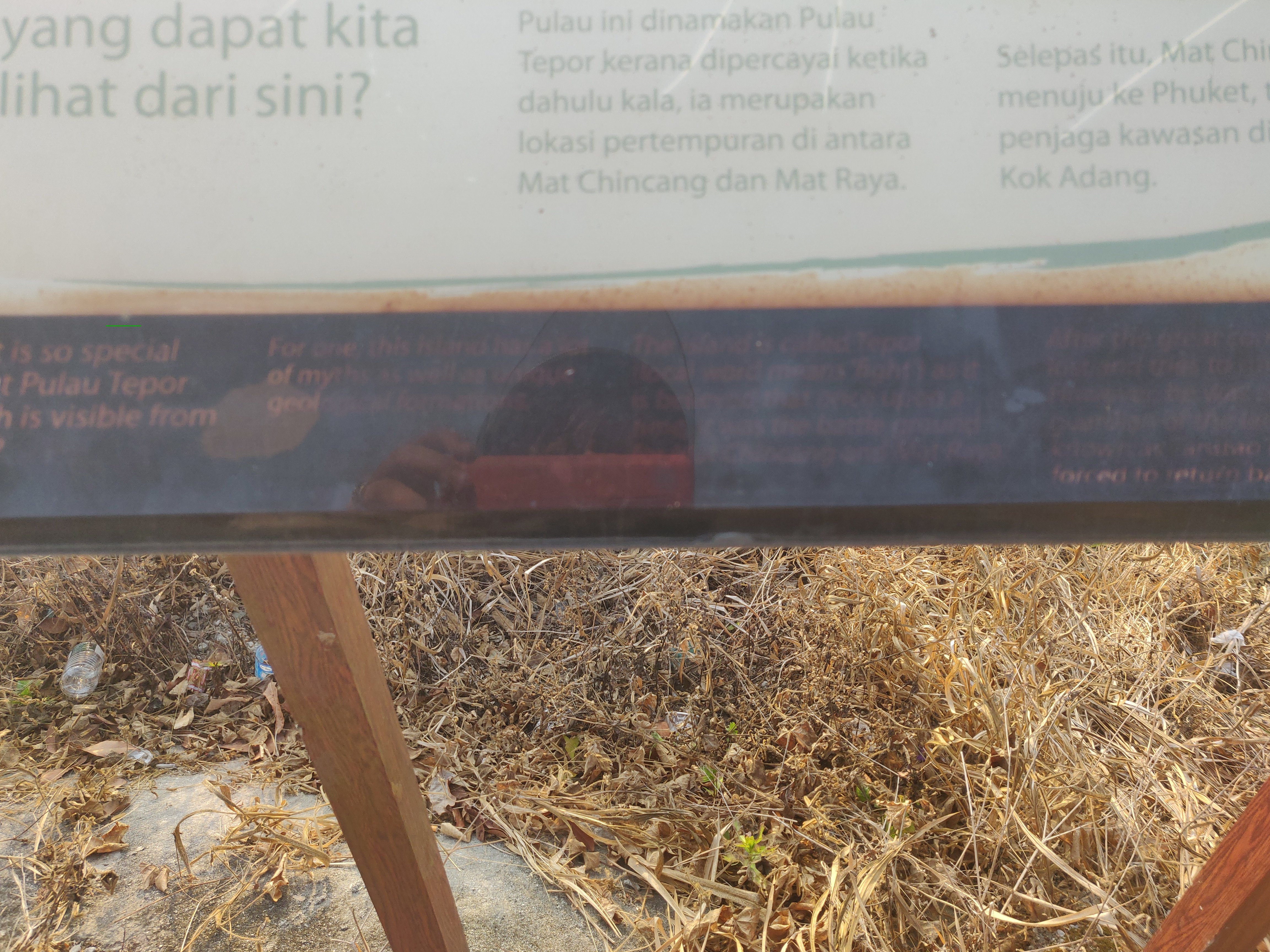
Unfortunately, whole area is pretty run down. The signs explaining the area’s geography are sun bleached, and a lot of it was actually quite difficult to read. It’s like the tourism bureau just forgot about this place…
The signs are badly sun bleached and need replacingI couldn’t even read all of the English parts
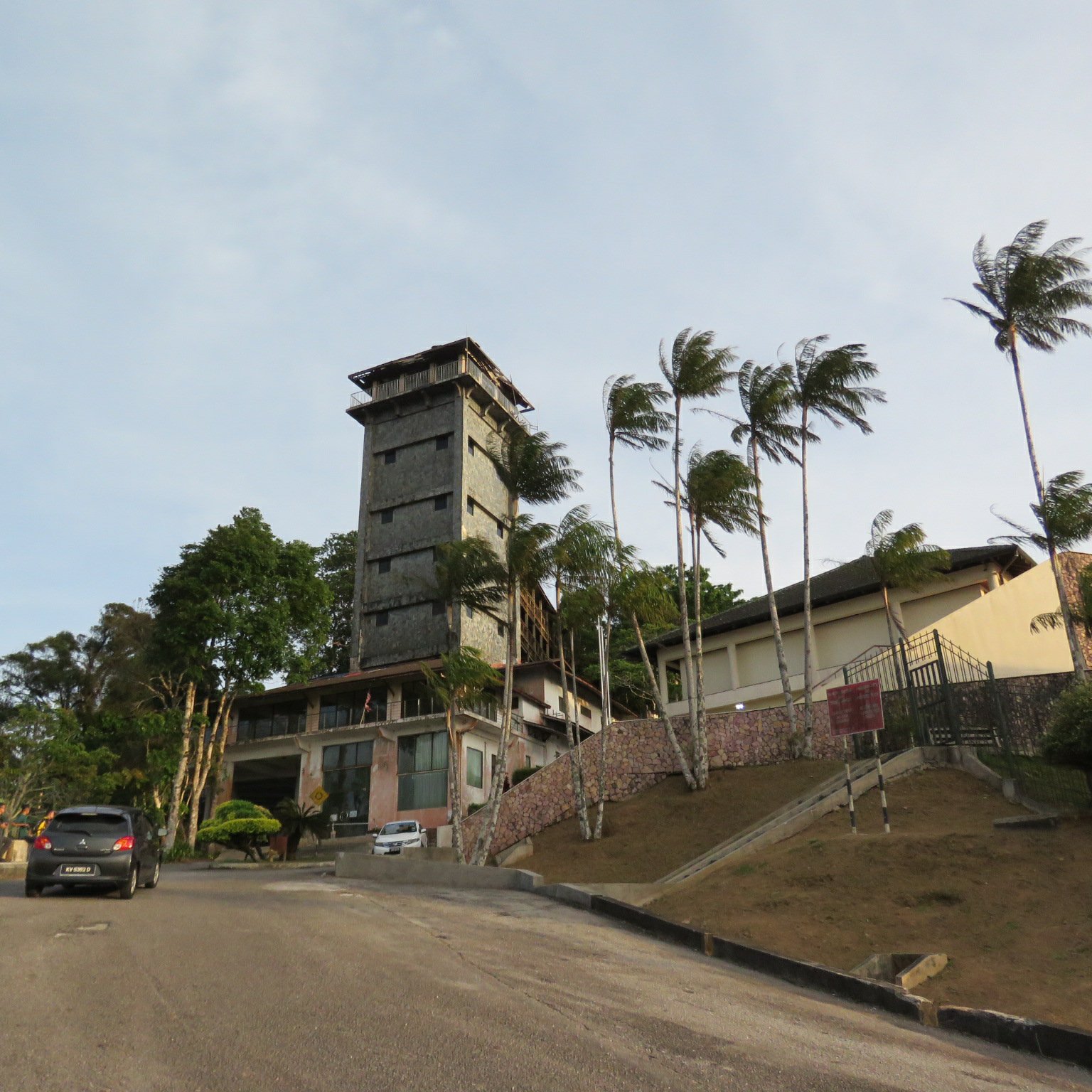
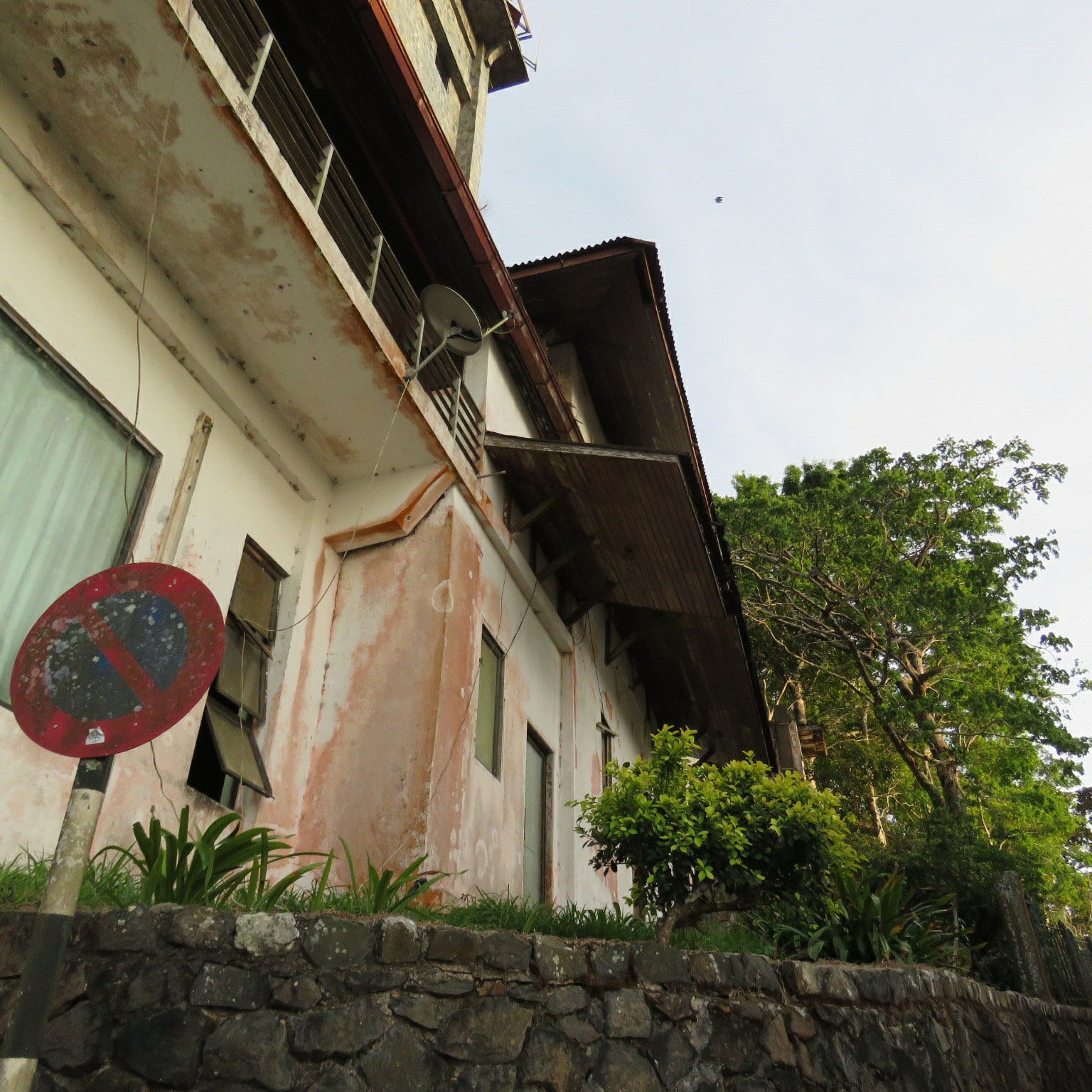
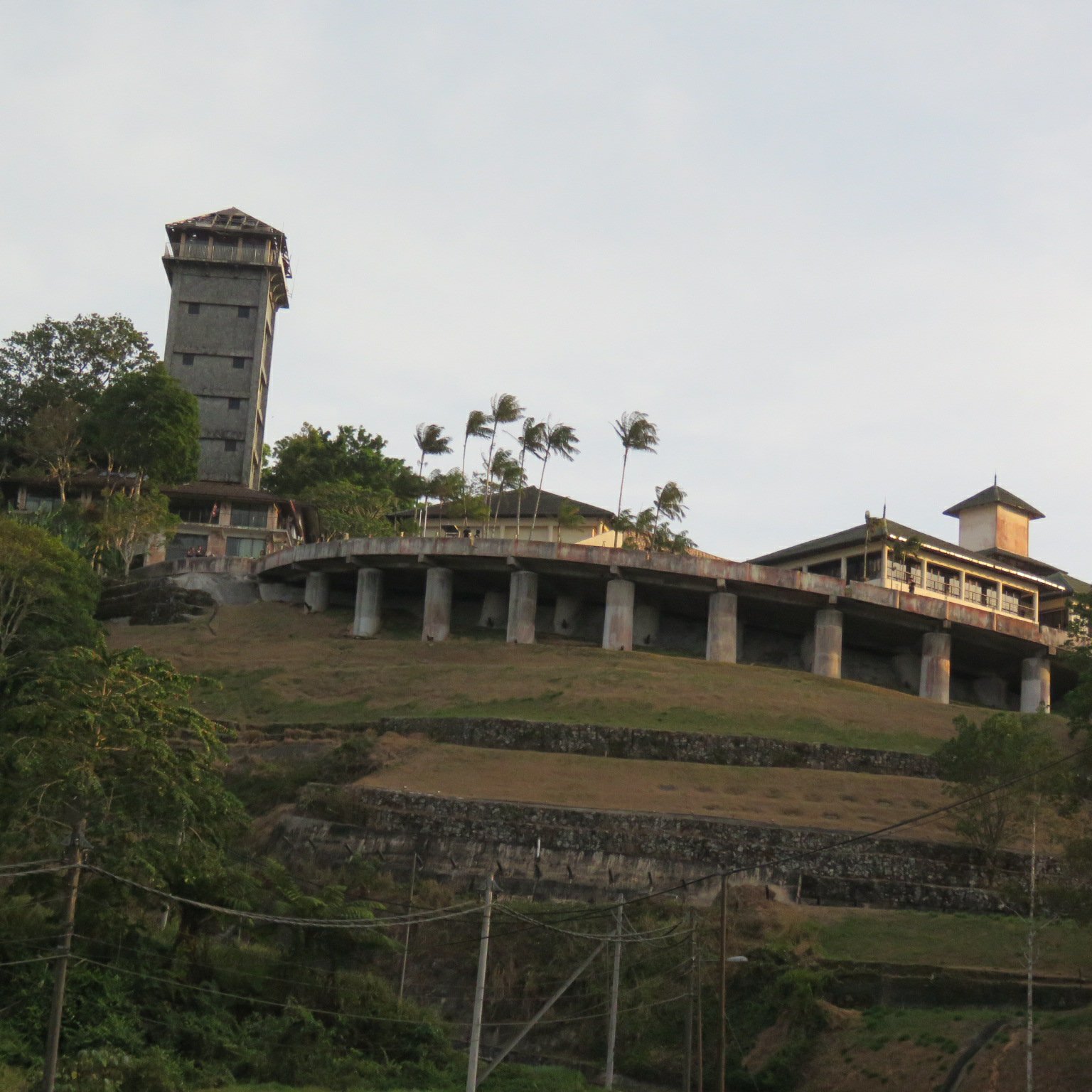
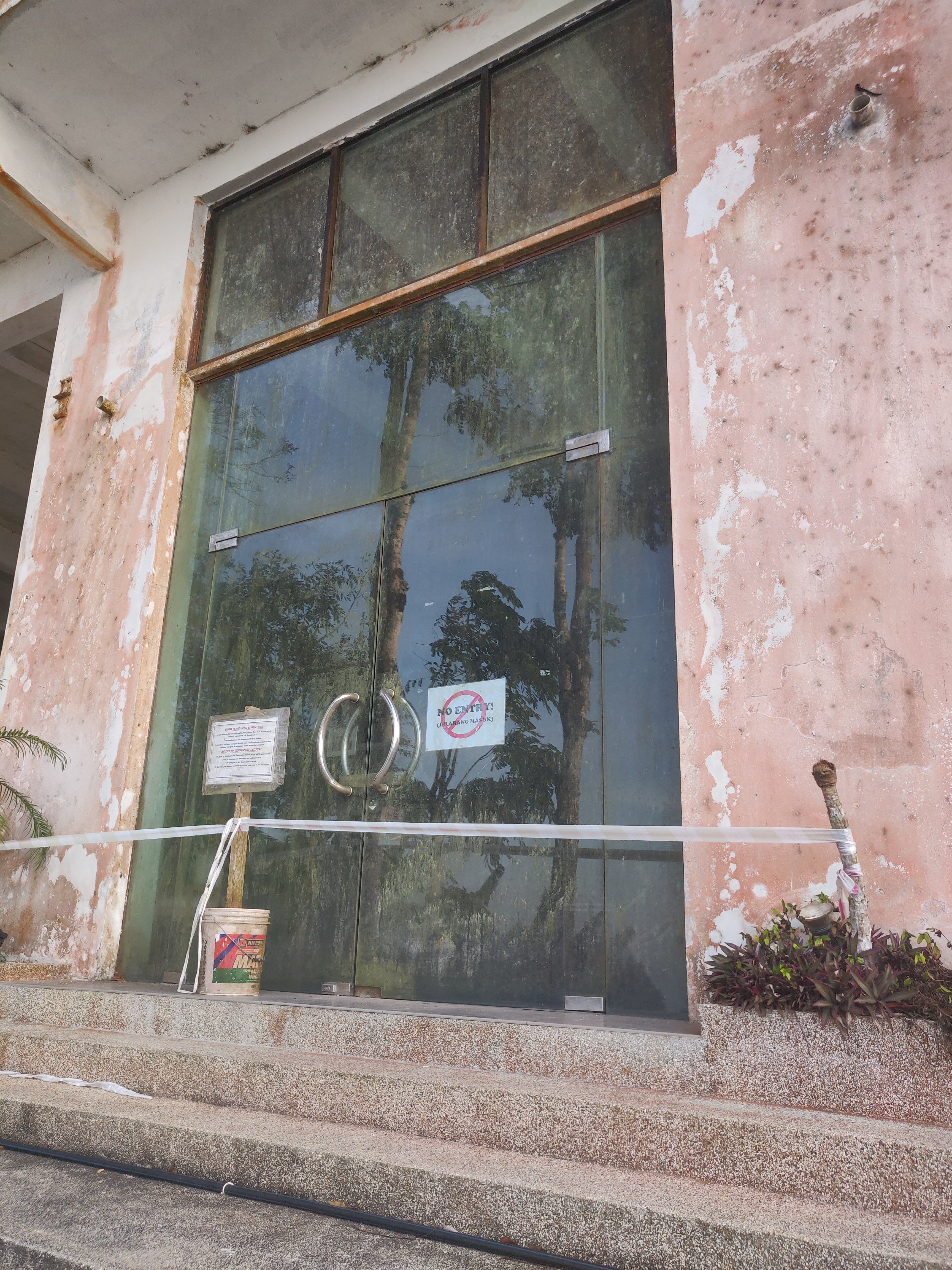
There used to be a hotel up at the peak where people could stay. They also had restaurants in the hotel and a lookout tower to see the whole island from up high. Now it’s all abandoned and kind of spooky.
When we first drove up, I thought it was a prison.I’m surprised no one tried to turn it into a tourist cafe or something.I’m sure it was a beautiful hotel in its dayI’m impressed that the place hasn’t been totally vandalized at least! Just general weathering and decay.
All in all, I’d recommend the trip up to the summit if you have a motorbike. The views are pretty and you’ll likely see some wildlife (birds and monkeys are everywhere on this island). Don’t expect anything extravagant, but if you’re looking for something free that involves some stellar views, this is a great way to spend some time!
The view from right in front of the lookout towerBeautiful!!