Rainbow Mountains & More!

After leaving Lanzhou, our next stop was Zhangye City via high speed rail. We were originally planning to stay there for the night and use this small city as a home base while we checked out the surrounding area, but some advice from friends changed our minds. Instead, we booked a yurt at a local camp ground.

You can find them on Booking.com. The place we stayed, which I highly recommend, is called KaoShan Tent Zhangye

Yurts were traditionally used by nomadic tribes in Asia because they’re relatively easy to take down and set up. They block the wind nicely and keep in heat. Our yurt was super cozy and honestly was a lot nicer than we were expecting from a campground in one of China’s poorest provinces.

It was pretty cold while we were there. It dipped down to 0°celsius and we woke up to ice in those cute little sinks outside. So, we were happy that hot pot was on the dinner menu at the hotel (it was the only option, actually) and luckily? I made a doggie friend that kept me warm throughout dinner.

The big tent is the kitchen. They serve a really great breakfast in there, which we really weren’t expecting! They had an egg station, jam and a coffee maker. Most of the hotels we’ve been to in China don’t have all 3 of those options, but this yurt camp did!!

The hotel staff kindly helped us rent a driver and car for the day on Sunday, which allowed to to see 3 separate areas.  It was money well spent because we got to see so much beauty and variety in such a short time. 

Colourful Danxia (The Rainbow Mountains)

We were actually at the Yurts by 3pm so we had time to visit the rainbow mountains twice. Once at sunset and once for sunrise. Our afternoon visit was a bit crowded but breathtakingly beautiful!

Aptly named the Rainbow Mountains

The Rainbow Mountains, in Danxia Geopark, is a unique geological area, where the mountains have formed in a spectacular way. No photographs can really capture them properly. The mountains seem to go on forever!

As of 2020, entrance to the park is about 75rmb, which includes the shuttle bus and entrance into the park itself. If you go back the next day, like we did, you only pay the portion for the bus (20rmb). It’s well worth the price, and the shuttle bus service takes you to several viewing points. We didn’t have a ton of time before the sun set, so we saw 2.

Probably my favourite photo from day 1 in Danxia

We actually walked home while the sun set, and enjoyed a beautiful evening and an early bedtime back at the camp.

They light up the mountains with colourful lights at night. Really pretty!

For our morning trip, we focused on the first viewpoint and the most sprawling lookout. We watched the sun slowly rise over the mountains, lighting up the sky and bringing color back to the world. I don’t wake up for many sunrises… The last one before this was in Cambodia at Ankor Wat… But this was certainly worth the early start!

Binggou Park

After a quick breakfast and pack up back at the yurts, we head to our next stop via private driver. I can’t lie and say we were particularly fond of either of the men who drove us around this area. They both drove like absolute maniacs, driving into oncoming traffic to get ahead of other cars… But after watching the other drivers on the road, it seemed like that is just the status quo in Gansu. Be prepared for some crazy drivers!

It’s also very likely you’ll need to stop for sheep now and then

Binggou Park is about a half hour drive from Danxia, and very worth the trip! The area reminded us of a mixture of Zion and Bryce National parks in Utah. There were a lot of stairs to climb, but the views more than made up for the aching glutes!

The rock formations, colorful landscapes and blue skies made for some perfect photography conditions. There also weren’t as many tourists out this way, which was nice.

We spent 2 hours hiking up and down trails before heading back up our car and setting off for Mati Temple.

Mati Temple

Mati Si or ‘Horseshoe Temple’ was our final stop for the day. Located about 65km away from Zhangye, it’s a beautiful ride up to this unique temple.

We saw a lot in one short day!!

What makes this temple so fascinating is the way it has been built. Most temples are a series of buildings. Mati Si is actually a series of rooms carved into the side of a mountain. It’s definitely something to see!

Unfortunately, the temple is very small and wasn’t really built for tour groups, so only a set number of people could go through at a time. This made for long queues and a lot of time spent waiting. By the time we finally got to go in, we basically had to leave for the train station. We didn’t end up seeing most of the temple, which was really too bad.

I wish we had spent more time walking around the outside areas of Horse Shoe Temple instead, because although we really didn’t get to see much, we had no regrets about going to Mati Si.  The trees there are changing color and the landscapes are stunning. The mountain range also changes a lot in this area and starts to look more Himalayan. 

If I could redo this trip, I would have actually skipped our next stop and have stayed near Mati temple over night. There are camps where you can learn more about the nomadic cultures that lived in this area nearly 2000 years ago when the temple was first built. You can also do hiking in the area.

All those colors!!

Our trip didn’t end here! Our next stop was Jiuyuguan, home of the Great Wall! (Yup, there too!! Not just in Beijing!). Stay tuned for more on that!
Lanzhou, Gansu, China!

It’s China’s birthday, so we get a week off of work! We are still pretty bummed about not being able to go home this summer, and the COVID numbers here are still very low (because social distancing, closing boarders and making people wear masks works…), so we decided to do a bit of traveling!

We travelled to a north western province of China: Gansu

We decided on Gansu for a few reasons. Of course, I’ve always wanted to see the rainbow mountains (I’m writing this post from a camp right next to this beautiful geological formation), but also, Gansu is generally less crowded than places like Xi’an, Beijing or Shanghai. We loved our trip to Xi’an 3 years ago, but we don’t want a repeat of those crowds!!

No repeats, thanks!!

Gansu has so much to see. This province is home to the Gobi desert, some gorgeous temples, unbelievable geological formations and also some rich history.

The silk road went through Gansu, and you can even find part of the Great Wall of China in this province. We’ll be heading there next week!

Our first stop in Gansu, of course, was the province’s capital city: Lanzhou. There isn’t a lot to see there, but it is home to some pretty great food! Especially if you like naan, lamb and skewers!!!

P1: Lamb Skewers. P2: Spicy Naan. P3: Lamb Ribs

Of course, Lanzhou isn’t without sites to see. We spent most of the afternoon walking around Baita Mountain, which is home to a pretty cool pagoda. There are some beautiful views from up on the mountain and it’s a nice walk. You can take cable cars both up and down the mountain, if you don’t feel like doing the work.

There are some nice temples and shrines on your way up
Nice views of un-developed China to enjoy as well!
There are nice benches along the way too, which is good because there are a LOT of stairs!!

At the top, the view is nice, and the pagoda is definitely worth seeing. It’s different from any pagoda I’ve ever seen because it looks like it’s made right from the earth around it, while most others are made of brightly painted wood.

After our trip up the mountain, we decided to take the cable car down. It was a bit of a wait but we chatted with some local people and had a good time of it. From there, we head down to another of Lanzhou’s best sites: the night market!

Masks went up, and we went in.

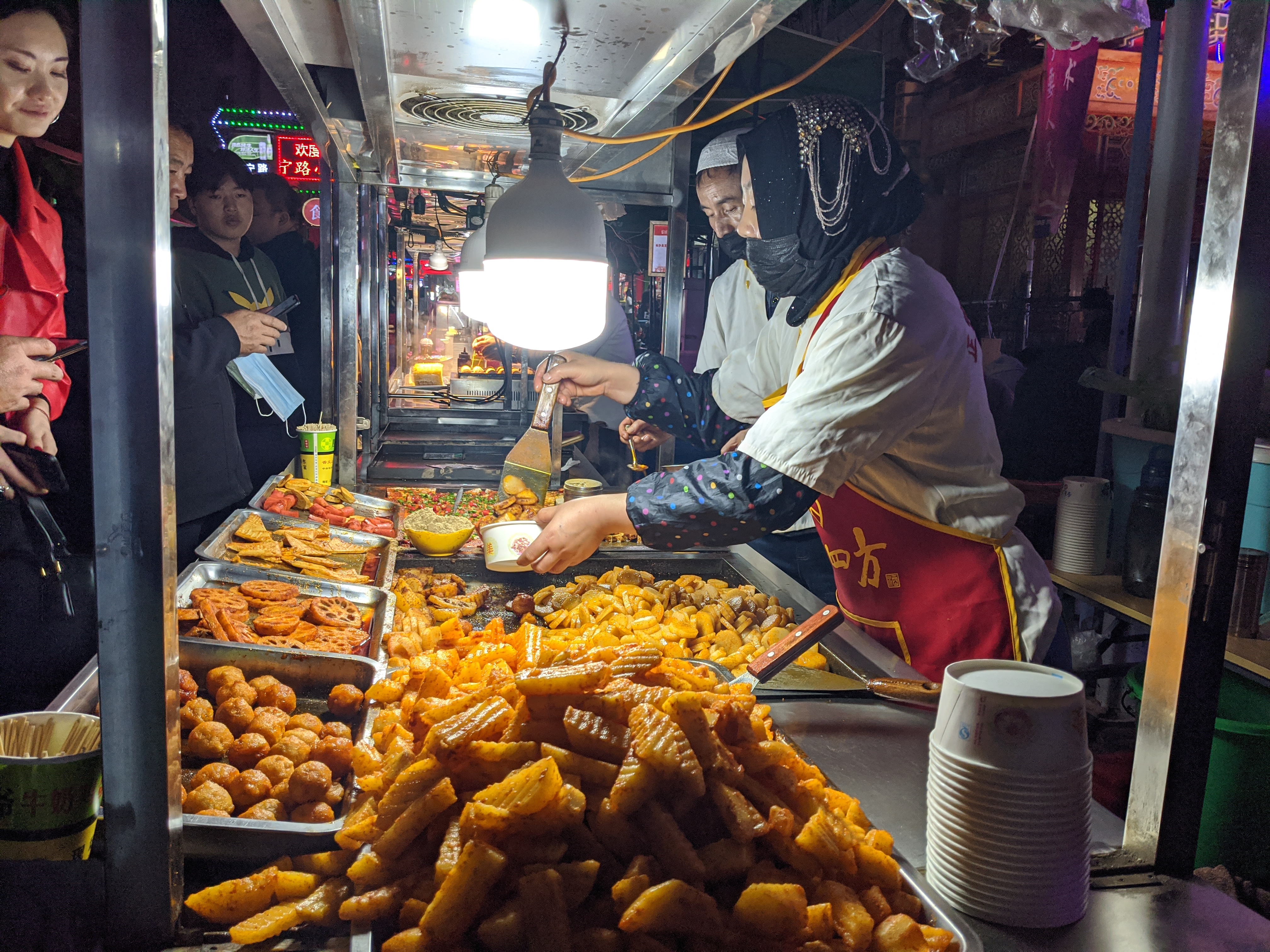
The market was a bit nutty but I was able to get some crazy photos to share with all of you. We had dinner at one of the best rated restaurants on the strip, and opted out of the food-stall choices. I don’t regret that decision….

Lanzhou was worth a short visit, but it can’t compare with what we saw next! Stay tuned for my post on the Rainbow Mountains!

Tiger Leaping Gorge

We’ve been back in Suzhou for a while now, but I haven’t forgotten to finish up with my posts about the rest of Yunnan and Guizhou! The beginning of the school year has kept me very busy, and of course, I’m still trying to find about 1000 animals homes, so sometimes, the blog needs to wait. These are just a few!

Our time in Yunnan was spectacular. As you can see in my posts about Lovely Lijiang, there is so much to see and do in Yunnan province. And, if all that good stuff isn’t enough reason enough, there is yet another spectacular site to see. A few hours away from this lovely city, you will find one of China’s greatest natural treasures: Tiger Leaping Gorge.

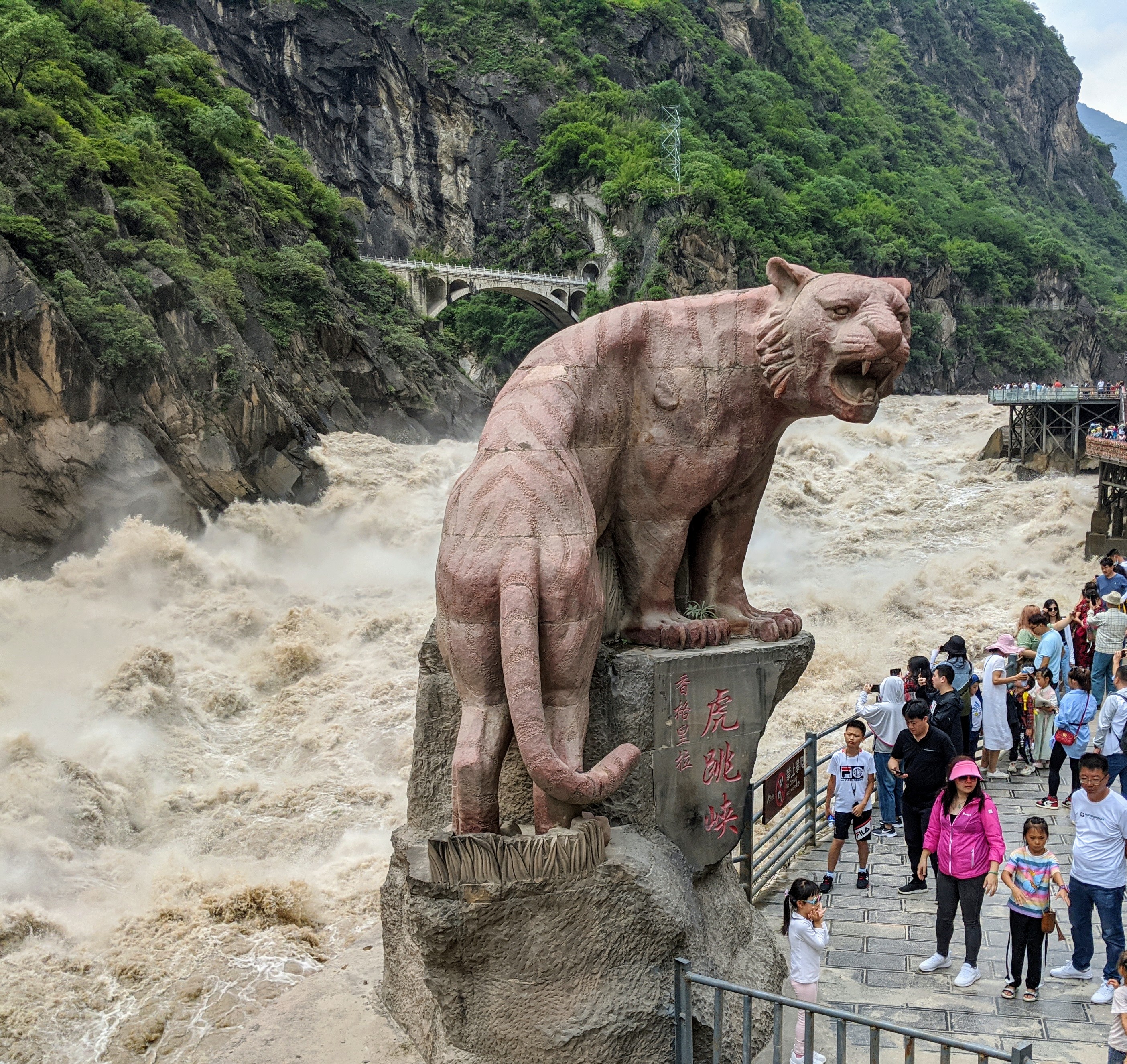
Tiger Leaping Gorge is the thing of legends. People have been writing about it for years, and its name actually comes from one of many myths written about it. It is said that a tiger was running from hunters when it came upon the massive gorge. Instead of diving into the water below, or being killed by the hunters, the tiger leapt onto a rock in the middle of the gorge, and then from there, safely to the other side.

The tiger has been immortalized in a stone carving

We heard of a lot of different ways to get to Tiger Leaping Gorge, but we were on a bit of a budget, so we decided to take a bus there, rather than book into a crowded tour. It turned out the bus we took actually WAS a tour, but it was cheap, and the guy who ran it was super nice, so we were ok with it.

The bus was pretty old, and one of the windows had a taped up piece of cardboard instead of a window, but it got us from point A to point B, and back again!
Our rest stop on the way to the gorge. That is a ‘toilet’ that you squat over. If you’re near the end, you get to see everyone else’s ‘stuff’ float under you while you’re going. Also, there are no doors, so you can watch someone across from you pooping. It’s all very….rural.

The time spent on the bus and in rest stops is well worth it once you arrive at the gorge. Tiger Leaping Gorge is one of the deepest in the world. It’s 16kms long, and is nearly 3,900kms deep, from the top of the two mountains where the river begins. When you get to the viewing point, you need to climb quite a ways down to get to the gorge itself. Don’t worry though: there are stairs leading the way down, and you can even hire someone to carry you in a chair up and down the stairs if you’re disabled, a child, or just plain lazy.

I don’t think I’d look so happy if I were carrying people up and down stairs all day!

Being down by the water is mesmerizing. The power this gorge holds is unlike anything I’ve seen. As the water thunders down from the mountains, into this narrow canyon, it’s almost hypnotizing. It hadn’t been particularly rainy before we went, but still, the water is deafening as it thunders through.

Even from up high, the gorge is unbelievable
As you get closer, it just gets even more incredible!

Upper Gorge is the most popular destination for tours, so it was pretty crowded, although not as bad as I had expected. The accessibility to Upper Gorge is quite good, so almost anyone can go, but more adventurous people carry onto Middle or Lower Gorge We planned on going to middle gorge to see some of the beautiful sites there, but when we arrived, it turned out it was just a guesthouse we were seeing, and we never got to go down to the actual water there. We did stop at a beautiful lookout on our way though!

We were hoping to see a bit more during our time at Tiger Leaping Gorge, but there was some construction on the road due to landslides, and we wound up spending over 2 hours waiting in traffic to get through to middle gorge, so we really only had a bit of time to grab some food and then head back.

There was an awesome pig across the road from the guesthouse where we got food though, so that was pretty cool!

If you’re thinking of making the trek out to Tiger Leaping Gorge, you will not regret it! My only wish is that we could have spent a few days hiking around there, but it would have meant giving up some of our time in Sichuan or Guizhou, so we did what we could with the time that we had. Lots of people do hike the very long trail though, and they’re rewarded with gorgeous views when they do! Once you’re in Lijiang, you’ll be spoiled with options to see the Gorge. Every hotel and guesthouse offers info on tours and trips down there, because it’s the main reason people go to Lijiang in the first place.
And don’t worry…by the time you get to the actual gorge, you’re back in the land of nice toilets!

That’s all I’ve got for Yunnan! My next post should be about Guiyang City; the place Dave and I called home during our first year together in China! It was pretty surreal being back there this summer, and I’m looking forward to writing all about it!

Lively Lijiang

Our first trip to Kunming, back in 2015, wasn’t planned very far ahead of time. We had been granted a few extra days of holidays before our trip to Thailand, so we zipped down to the capital of Yunnan and didn’t have time for anything beyond that. This time around, we made sure to get out of Kunming, and we were very glad we did!

We took a high speed train directly to Lijiang from Kunmimg Station. It was a 3 hour ride and it was beautiful!!

We stayed at a nice little hotel in Shuhe Old Town, which is far enough from the main buzz that we could get some sleep, but close enough to lots of restaurants and shops that we weren’t remote. The whole area was beautiful and I honestly felt like I couldn’t take a bad picture if I tried.

Our hotel had a spring fed pool. No chemicals, which was cool…. But also… It was cool! Very cold water. We never ended up going in.
The spring water was clean and beautiful and ran through the town.
Every path leads to beauty!
One of the many little restaurants in Shuhe
Plenty of kitsch photos to be taken (but they looked pretty good!!!)
One of many doggie friends I made in Lijiang. The whole city is full of big dogs! They all seem well cared for and were very friendly!!

Most people come to Lijiang to see Tiger Leaping Gorge, and I’ll get to that in my next post. Lijiang is so much more than a stopover though and there is plenty to see right in the city itself.

Black Dragon Pond

Our view as we entered the park

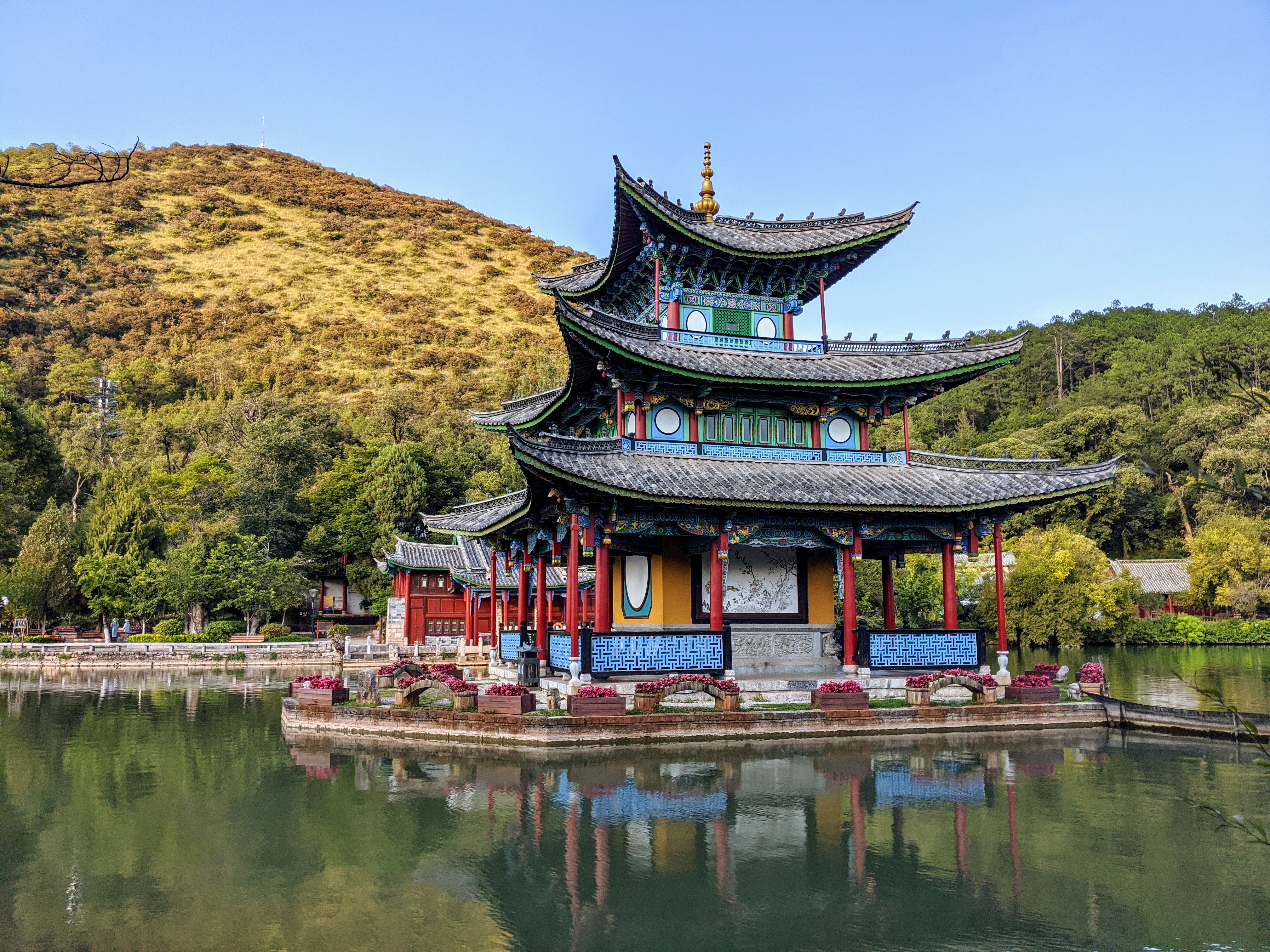
Black Dragon Pond Park is a lovely place to go for an evening stroll. It was built in the 1700s and offers peaceful walking paths and beautiful pavilions and pagodas to enjoy during your stroll.

Gorgeous architecture. I loved the colors in Lijiang
The pond is the central feature of the park. It dried up in the past, but is now a protected zone, so Lijiang never loses these beautiful views
So much green!

We didn’t spend a great deal of time here, but we walked around shortly before sunset and enjoyed the comfortable weather and the peaceful atmosphere.

Lovely Koi. Some children were feeding them yak milk candies. I feel like these likely aren’t a part of their regular diet.
A lovely evening with a lovely person

Mufu Palace

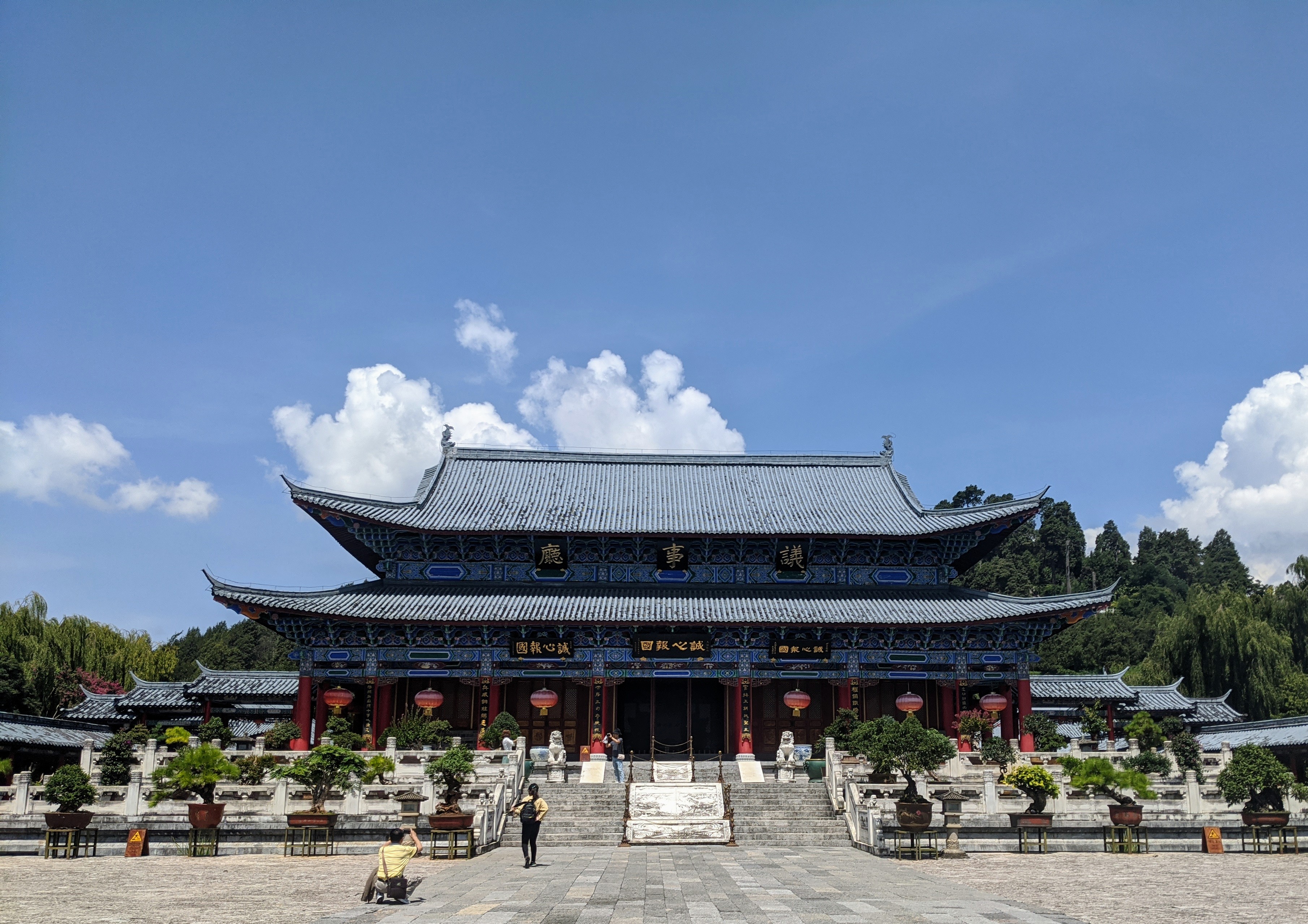
Once more, I was blown away by the colour!

We made the mistake of visiting Mufu palace in the heat of a very hot day, so we didn’t actually stay long. We did manage to see some of the palace’s beautiful architecture.

In its hay day, Mufu palace, which was owned by the Mu Family for 22 generations, rivaled Beijing’s forbidden city in size and splendor. The palace was destroyed in the 1800s, and the area was used to build houses in the developing area, but in the late 1900s, a reconstruction was planned, and the palace was rebuilt as a tribute.

The original grounds were said to sprawl over 16 acres and had more than 100 buildings. The complex now still takes up 8 acres of space, most of which we didn’t have a chance to see.

Even if you can’t see the whole palace, it’s only about 40rmb to get in and walk around (under $10cad pp), so it’s well worth even a short visit.

Old City of Lijiang

Lijiang old city comes to life at night

We spent quite a bit of time in the old city. It was beautiful, lively and not nearly as crowded as we’ve seen in other places. Unlike Pingjianglu in Suzhou, Lijiang old city is sprawling and covers a very large area.

For China…. This isn’t crowded

There are shops selling all sorts of yak-related products. We tried yak jerky, Yak skewers, Yak yogurt and Yak candy while we were in old town, and it was all delicious!!

Yak jerky isn’t cheap, but it is tasty!

You can also buy scarves, locally made fruit wine and all sorts of souvenirs in the old city. And of course, the bar scene is worth mentioning. There’s live music all the way down the bar street. The nightlife in Lijiang wasn’t really something I was expecting. It kind of felt like we were in a tame version of Thailand!

I forgot to get pictures of the bars. There is so much to see down there, that it’s easy to miss stuff!!
You can’t miss the durian though. Even if your eyes don’t see it… Your nose will smell it!!!
And I was glad to get this shot! All of Old Town lights up at night, making this UNESCO site both beautiful and bright!

Lijiang is a city full of life, great food and beautiful architecture. With perfect climate, big doggie friends in abundance and all the liveliness in the world, Lijiang is definitely worth a stop in Yunnan!

Stay tuned for my post on Tiger Leaping Gorge!

2020: Vacation & Virus

2020 has been a very hard year for everyone… But I think expats have had unique challenges that people back home don’t really realize. I have friends who are separated from their spouses and kids, because boarders closed when they were apart. I know people who have lost their jobs and their homes because they didn’t get home in time. Thousands of pets have been abandoned or left behind this year, because it’s simply too expensive to fly them anywhere. And of course, this is on top of the stress that everyone is already under, as this pandemic changes the way the world works, and the way we travel.

I wouldn’t dream of abandoning our furry crew, which is why we are sitting tight and waiting for the worst of it to pass.

Dave and I have been lucky, but even we have been affected. I won’t see my family and friends for 2 years because of this virus. Traveling home this summer was impossible, because if we leave, it is exceptionally hard to get back into China. Even if the boarders had re-opened over the summer, we couldn’t have risked it, because they could close again at any time.

When Poe developed an infection in her intestine while we were stuck in Malaysia, it was an awful feeling. Knowing we couldn’t get to her was not a situation I want to repeat.

Luckily, China is one of the safest places to be right now. Closing the boarders, requiring masks in public spaces, major disinfecting routines and frequent testing have all made a huge difference in controlling the pandemic. Rules have been put into place, and people follow the rules. That’s why our second wave has been minimal (so far).

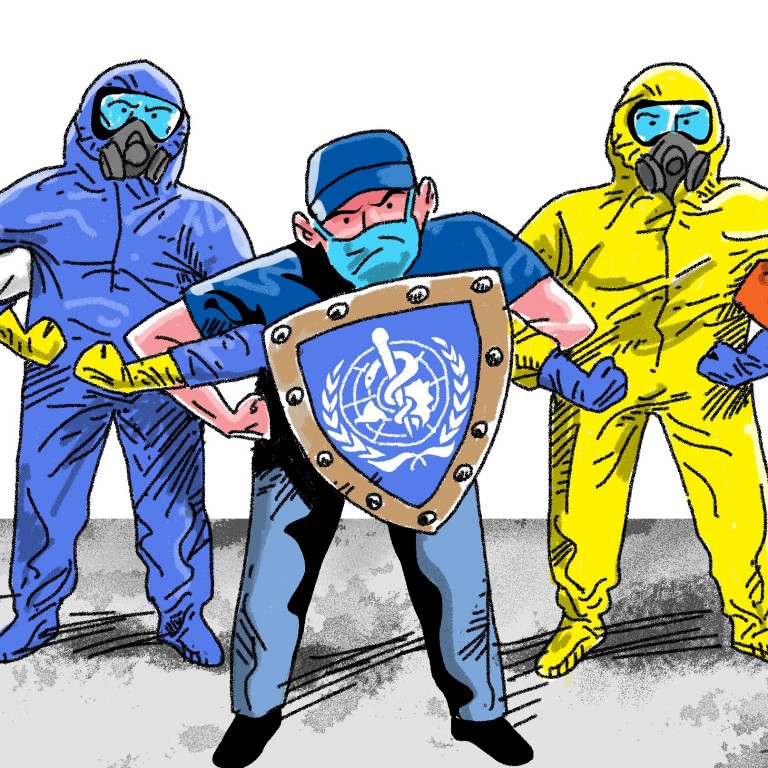
China has worked with The World Health Organization and followed guidelines for preventing the spread of the virus.

Of course, taking things seriously can make for some hoop jumping on holiday. So many hoops, in fact, that plenty of people chose not to travel at all. I knew that if I just sat at home, I was gonna get pretty depressed, so Dave and I took plenty of safety measures, chose areas of China that had been COVID-free for some time, and we planned a 2 week trip. Here’s what that looked like for us…

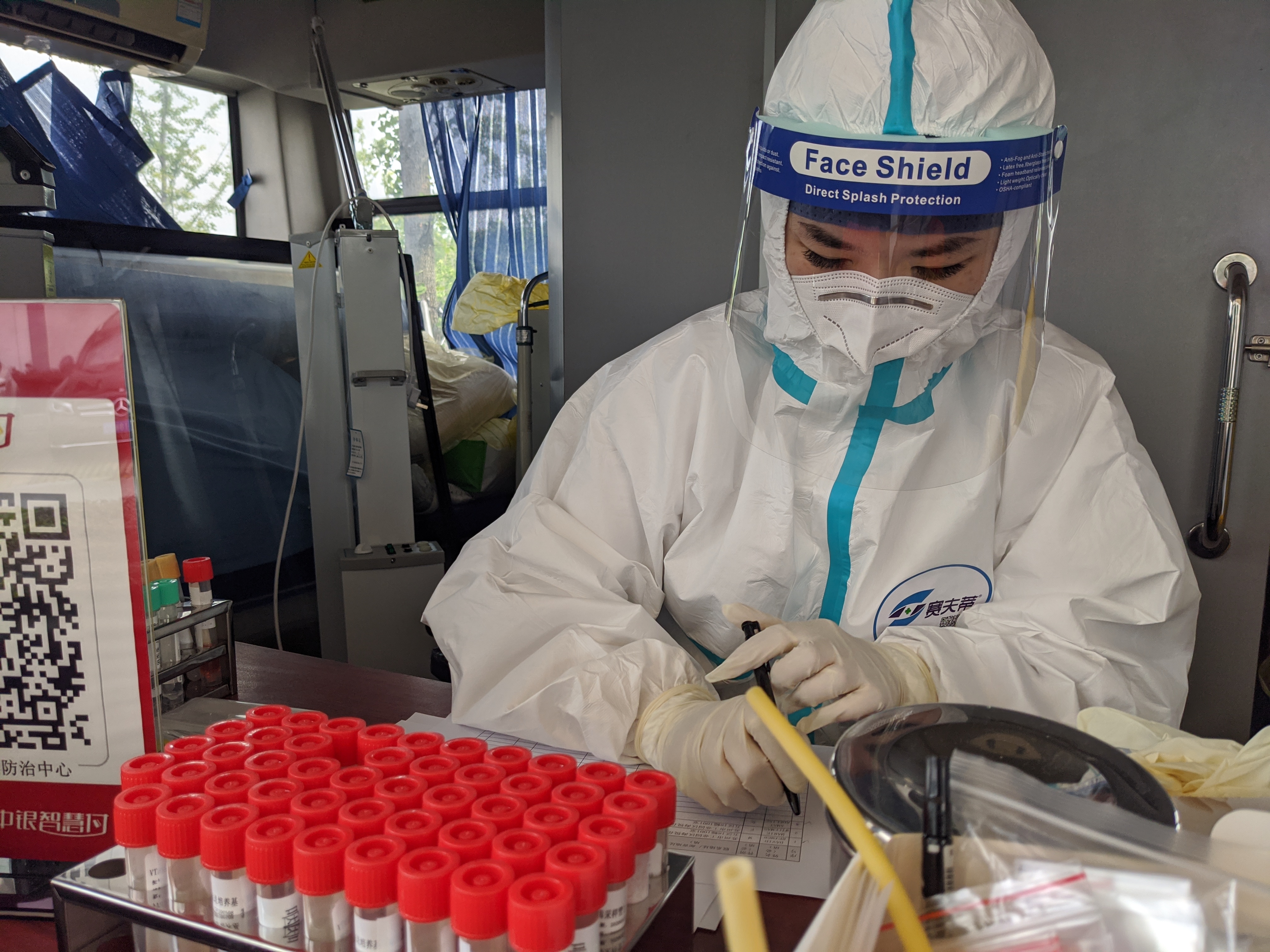
I love that her mask says ‘face shield’ in English

Part 1: Nucleic Acid Tests

We decided to get the tests done before leaving on holiday. It isn’t a requirement to travel, but can facilitate things, so we figured it was wise. Also, if we were going to travel, we wanted to be sure we weren’t carriers. As a responsible person… You have to make sure you aren’t putting others at risk, after all.

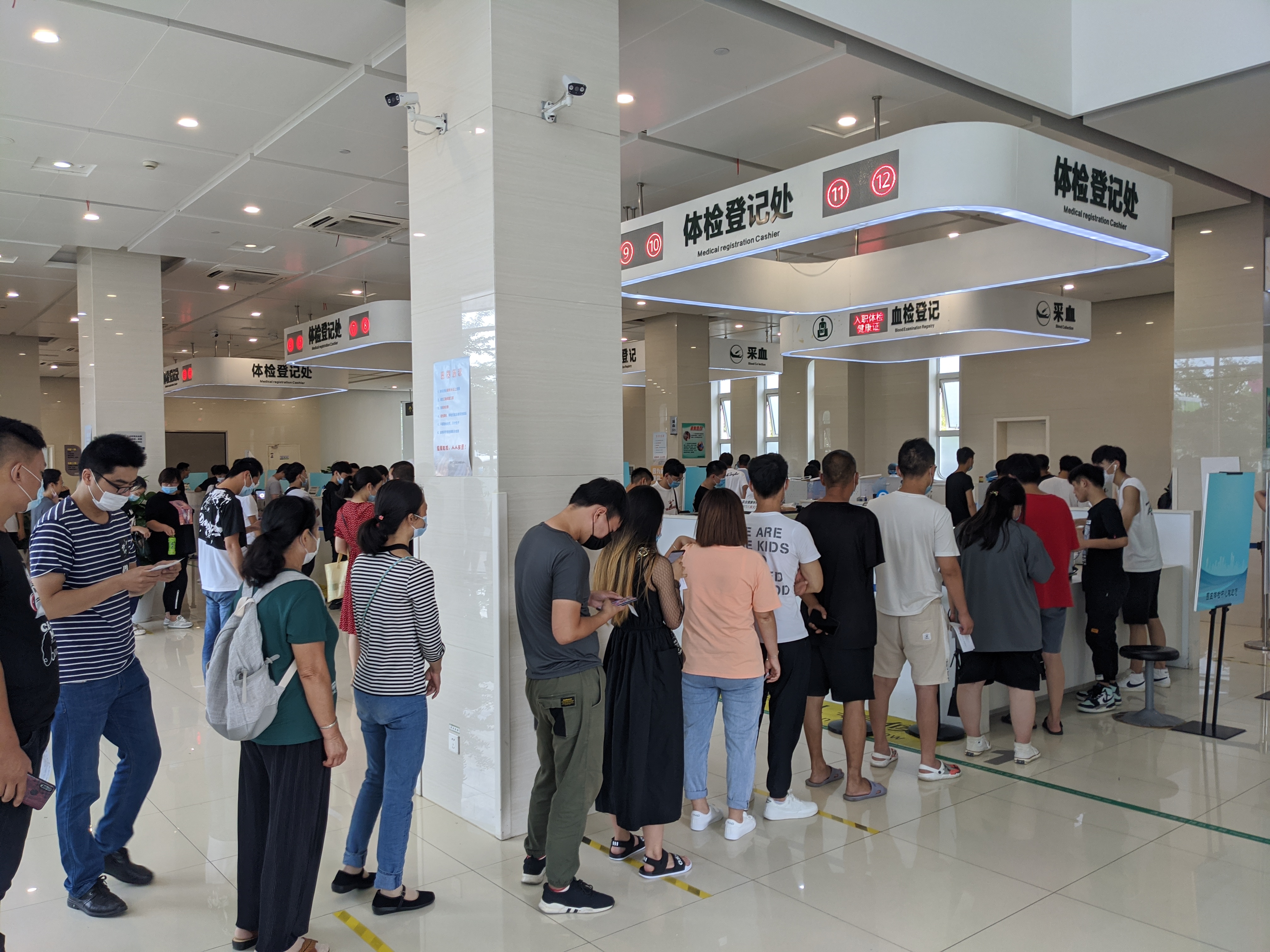
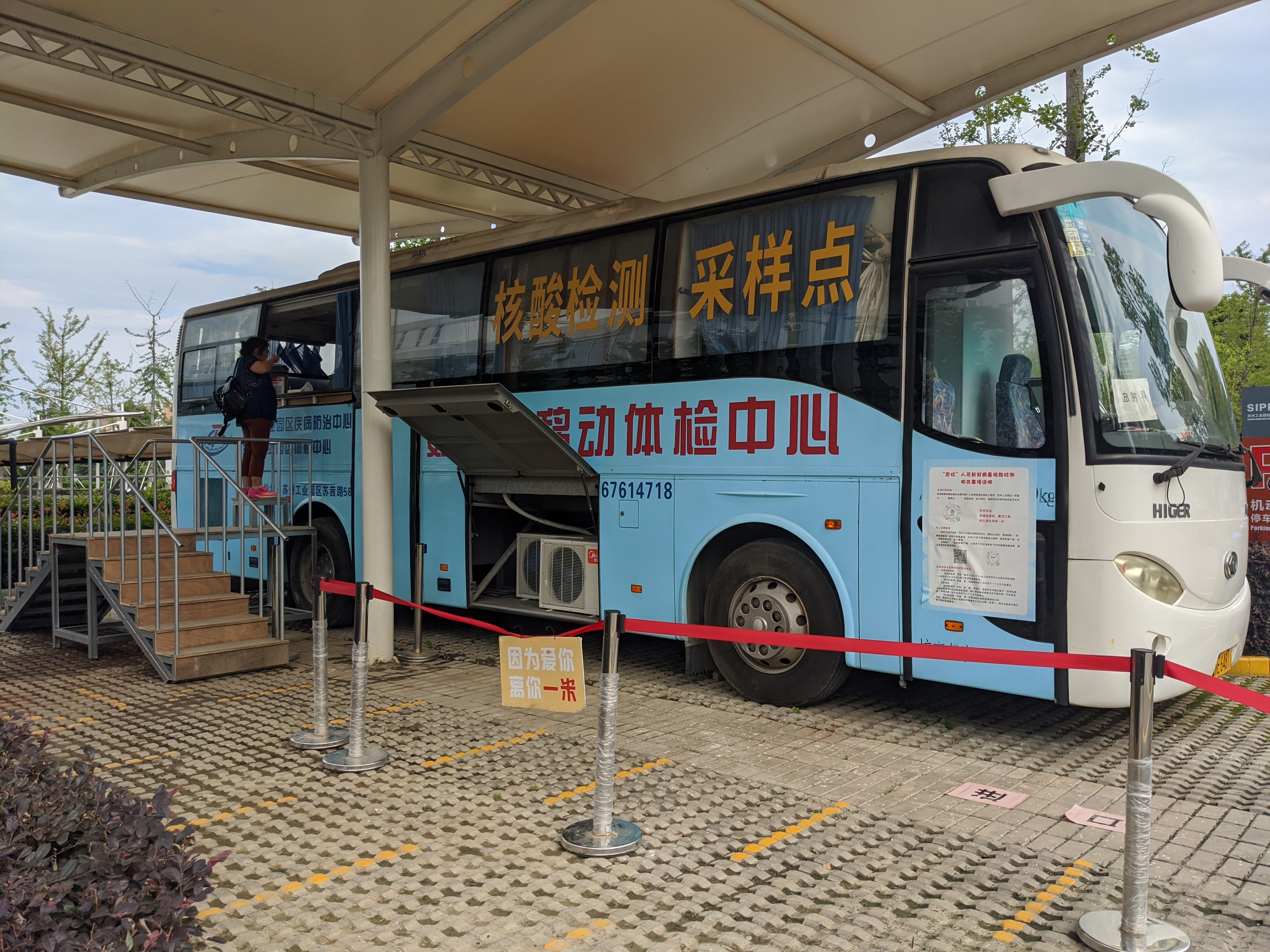
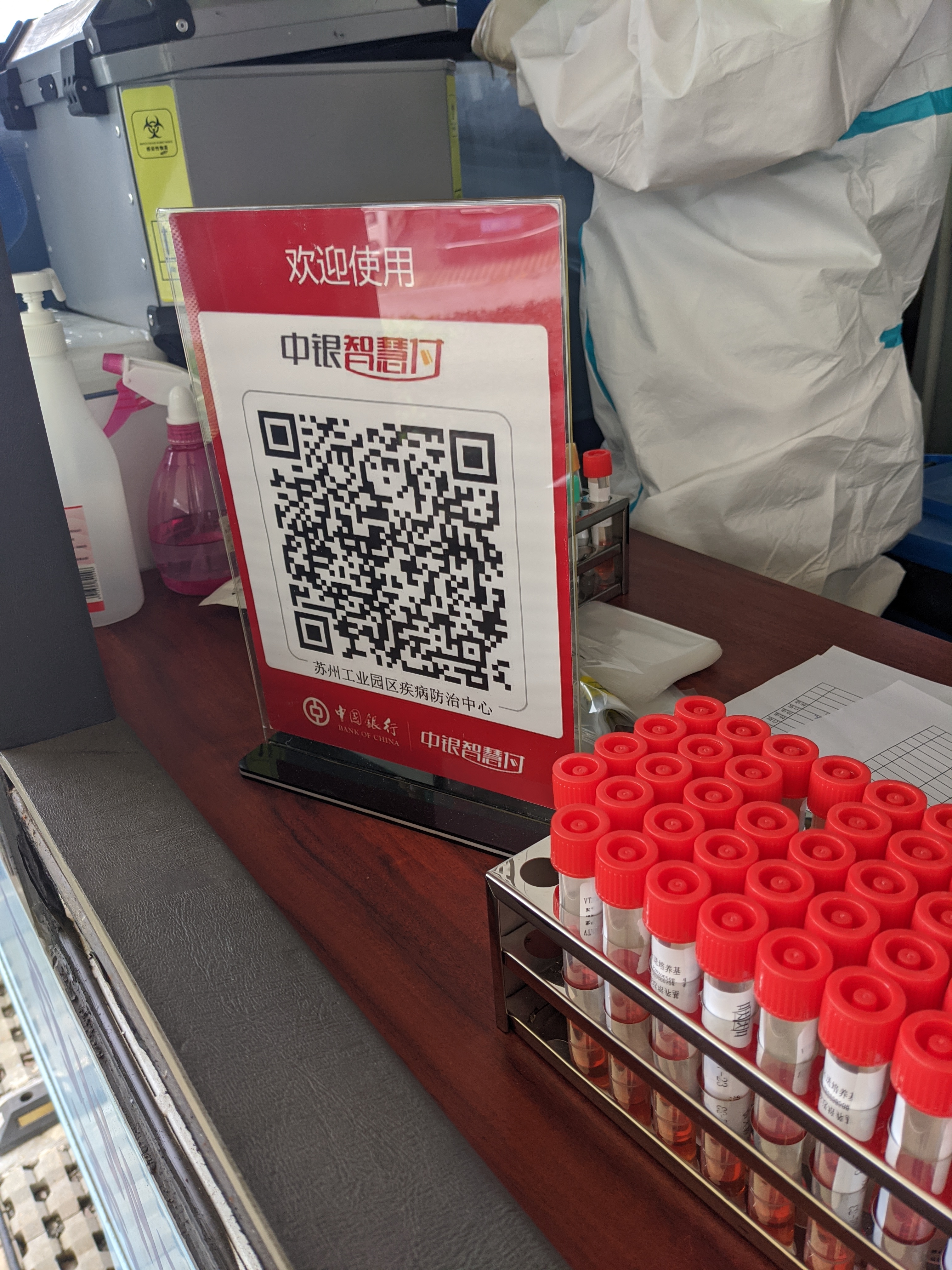
We opted for the throat swab instead of the blood tests (blood tests can tell you if you ever had the virus in the first place, and we’re fairly sure we haven’t). There was a huge line up when we arrived, but when we asked which line we should go to, we were taken out back to a bus that had been turned into a testing site. Sounds sketchy, I know, but it was all very sanitary and well organized.

The following day, we had our negative results. We were sure to take photos of them, as well as to take our physical copies on the trip. It’s always a good idea to carry photos of your passport, visa, last entry stamp and other important documents, either on your phone or in a USB. That way, if your passport goes missing, you have some sort of ID.

The process was simple and painless. It only cost about $20 CAD, and was very quick. Unfortunately, these tests are only considered valid for about a week, so they didn’t help much. Still, I was happy to have them.

Part 2: Masks

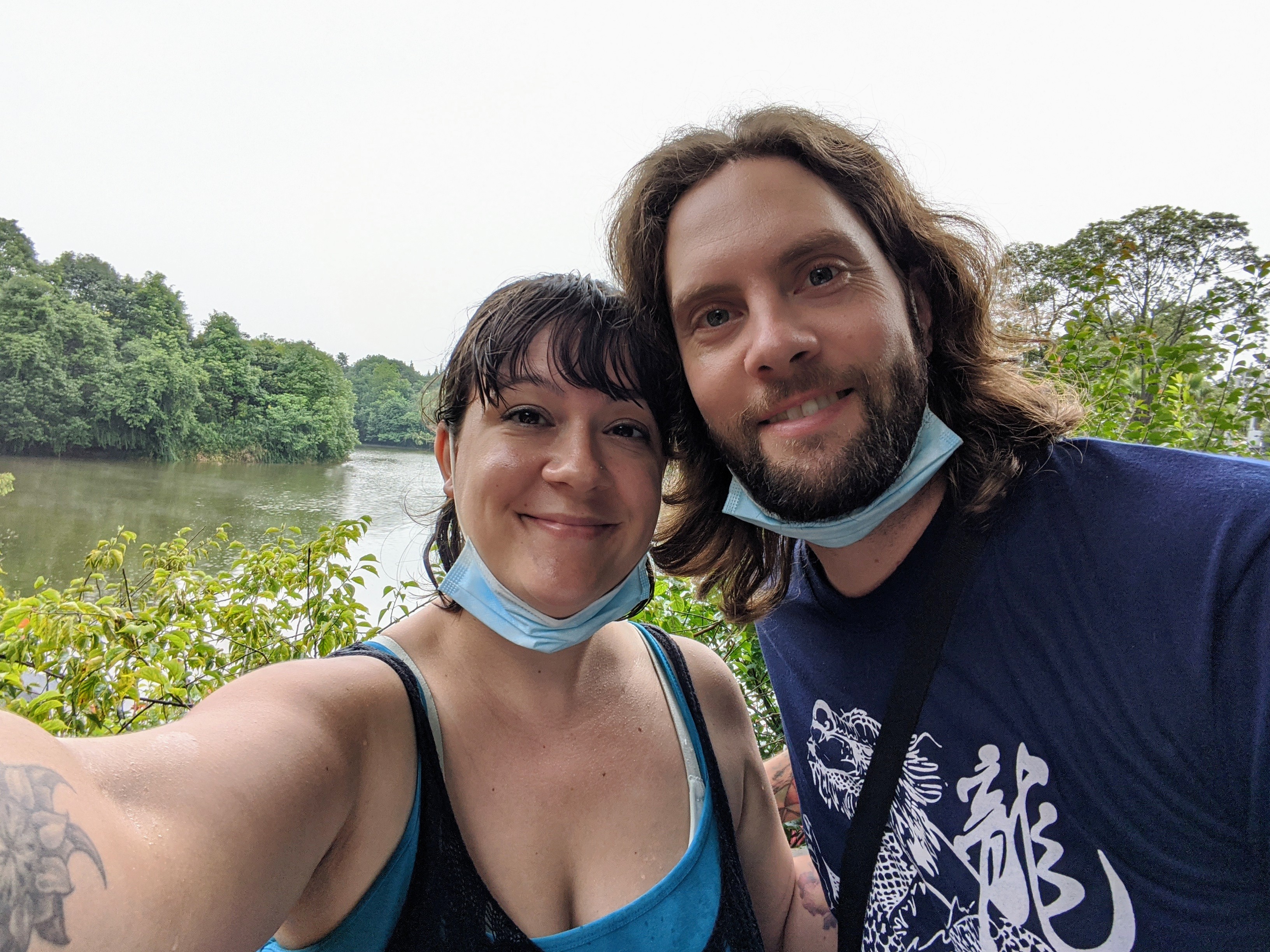
We don’t typically have our masks on over our faces if we’re outdoors, but we always had them with us.

Like it or not, masks are a part of the world’s new reality… But in Asia, they’ve actually been a reality for a long time. I read one conspiracy theory that said Instagram came out with mask filters 2 years before COVID, and the author of the meme stated that this is proof that the virus was planned. In reality…people in Asia wear masks for a variety of reasons. Air pollution, road dust and illness are all reasons people wear masks here, and I had all 3 types of masks in my apartment long before the virus came out. Now, of course, more people are wearing them more often… But they aren’t by any means a new concept here.

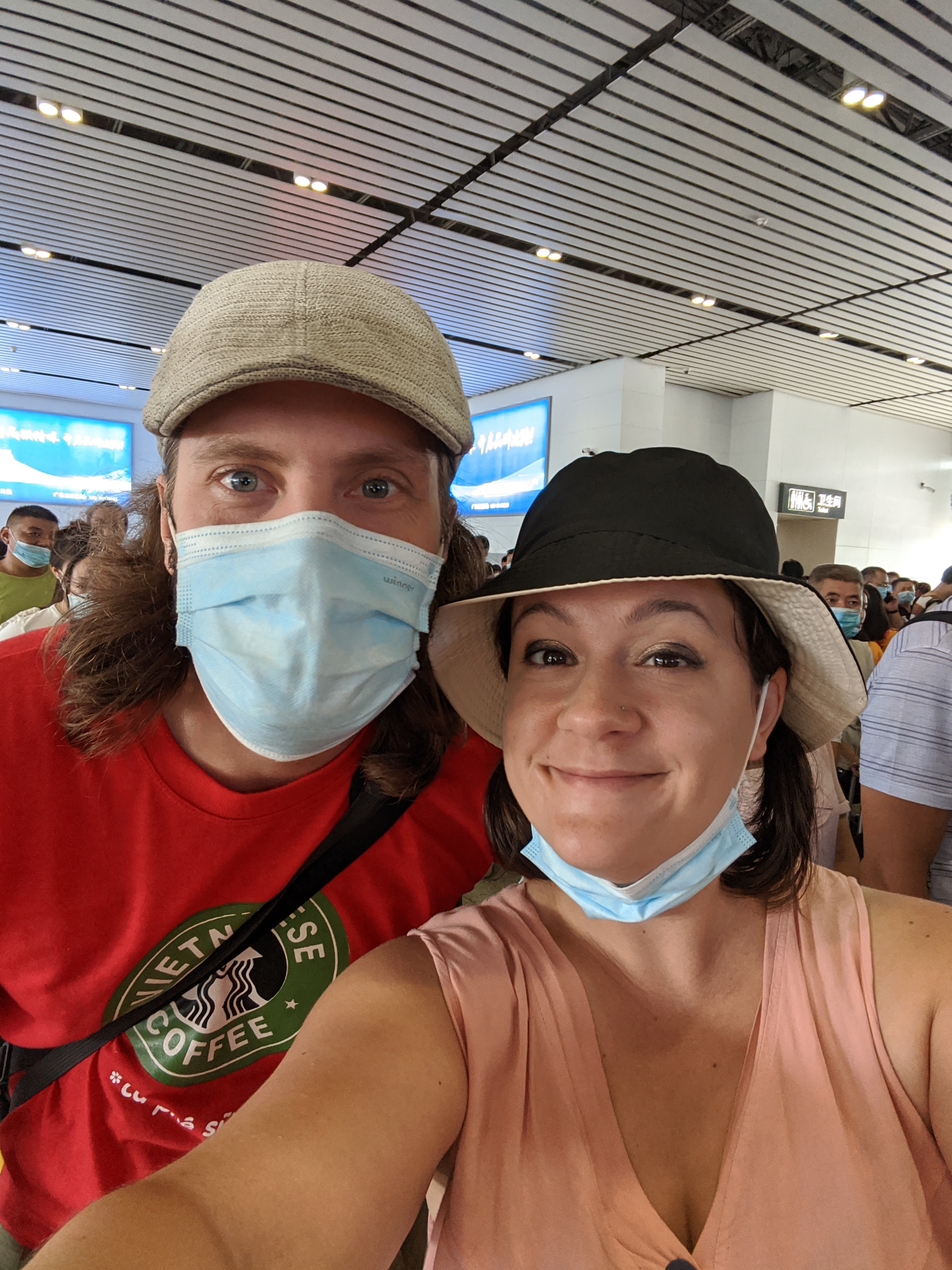
I really do hate wearing mine. They make my face sweaty and I often complain about wearing one. It’s not fun. But my comfort isn’t the only thing that matters (I put it right back up after the photo, because we were inside a busy building).

Part 3: Health Codes

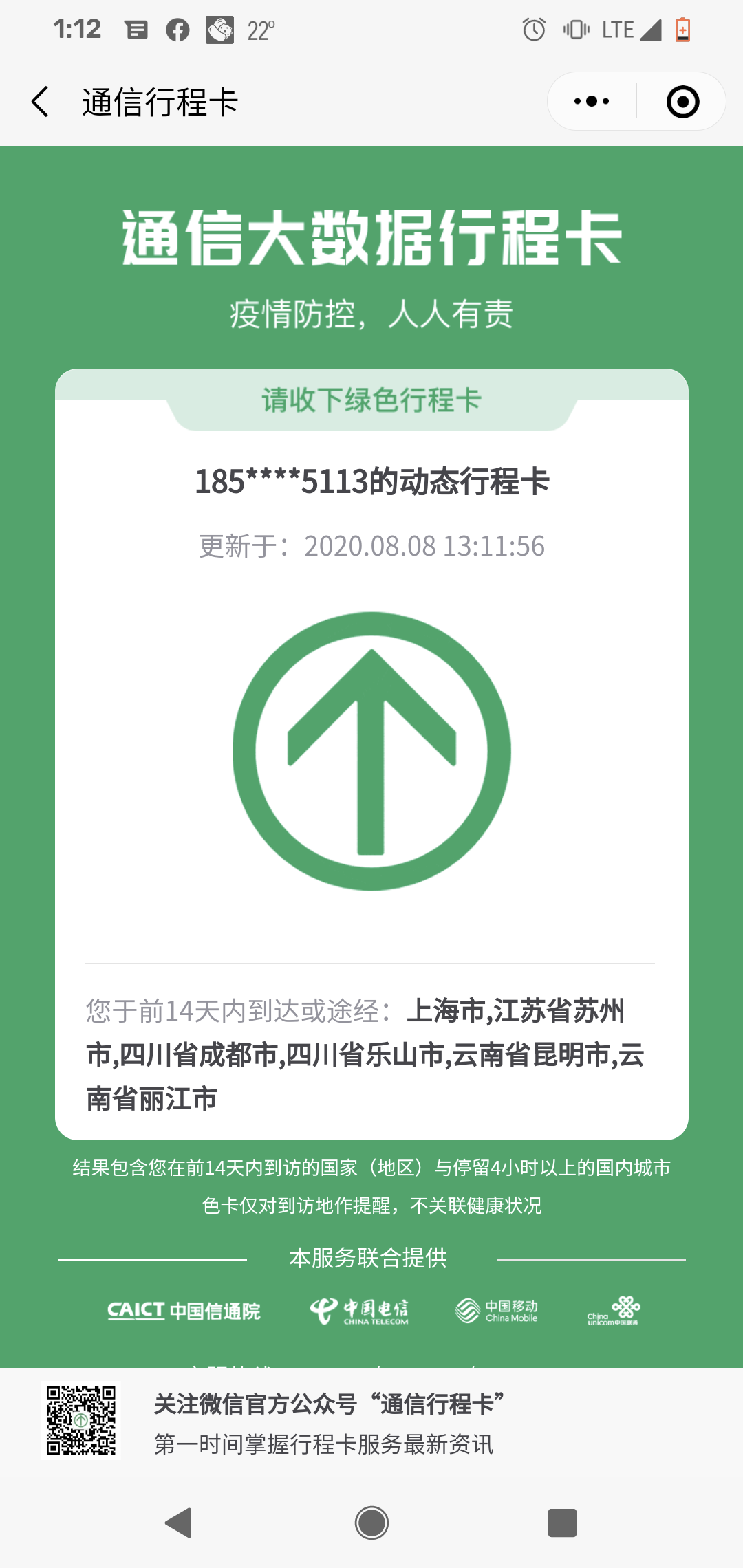
These codes ran our lives while we were on the road. Pro-tip for anyone traveling in China right now: bring a battery pack!!! If you can’t access your health code… You’re not getting in anywhere!!

In total, we downloaded 4 or 5 different health codes on our trip (I lost track). There was a different code for each province (it hasn’t been standardized nationally yet), and there were a couple of codes to show which areas you’ve been in over the last 2 weeks. Under the arrow on my code, you can see where I was for the last 14 days. Because every place I went to was ‘green’ (COVID-free), my own code is green. If I went anywhere where there was an outbreak in the last 14 days though… That code would be yellow or red, and I would have to stop my travels and get checked into a quarantine hotel.

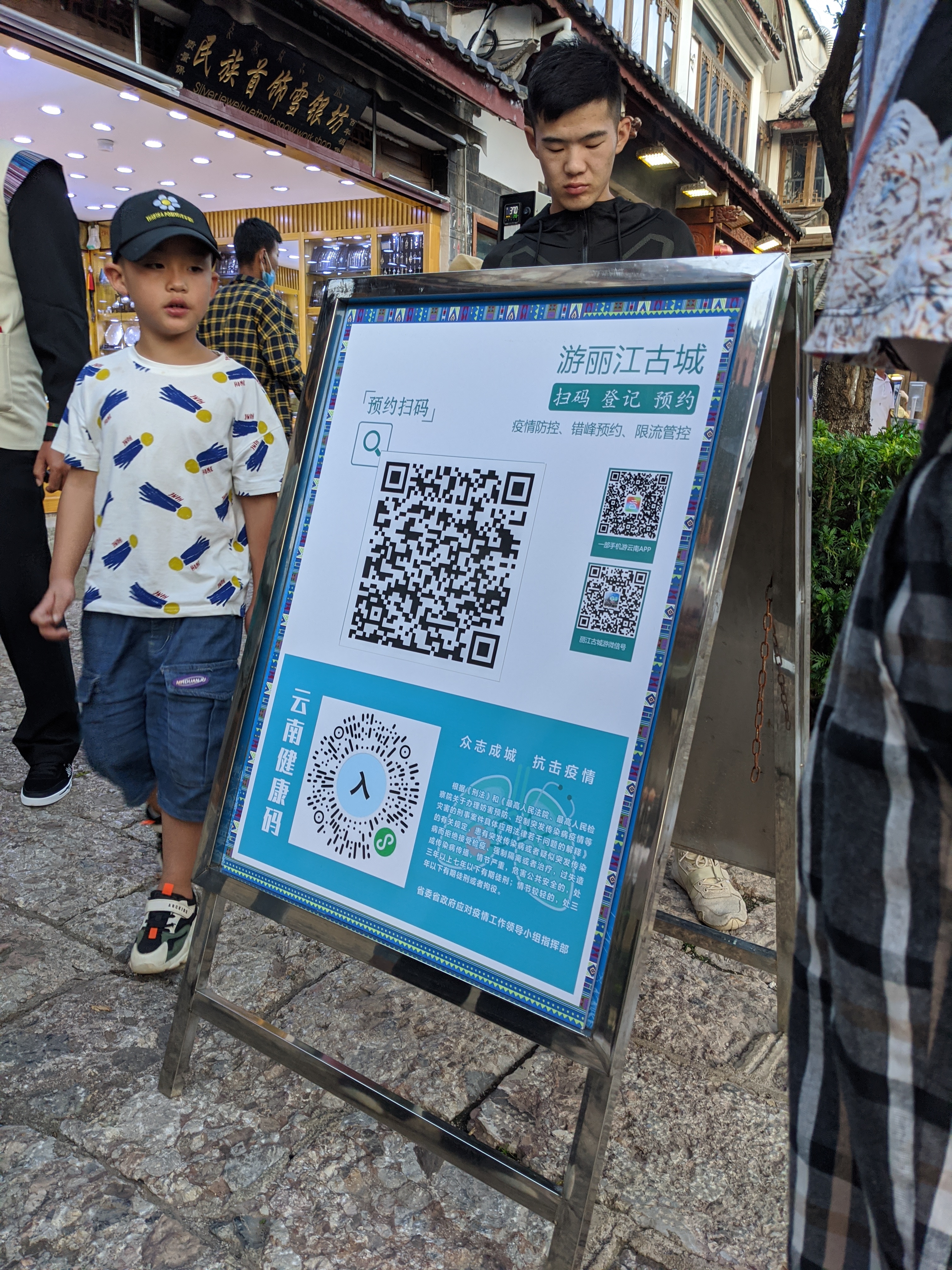
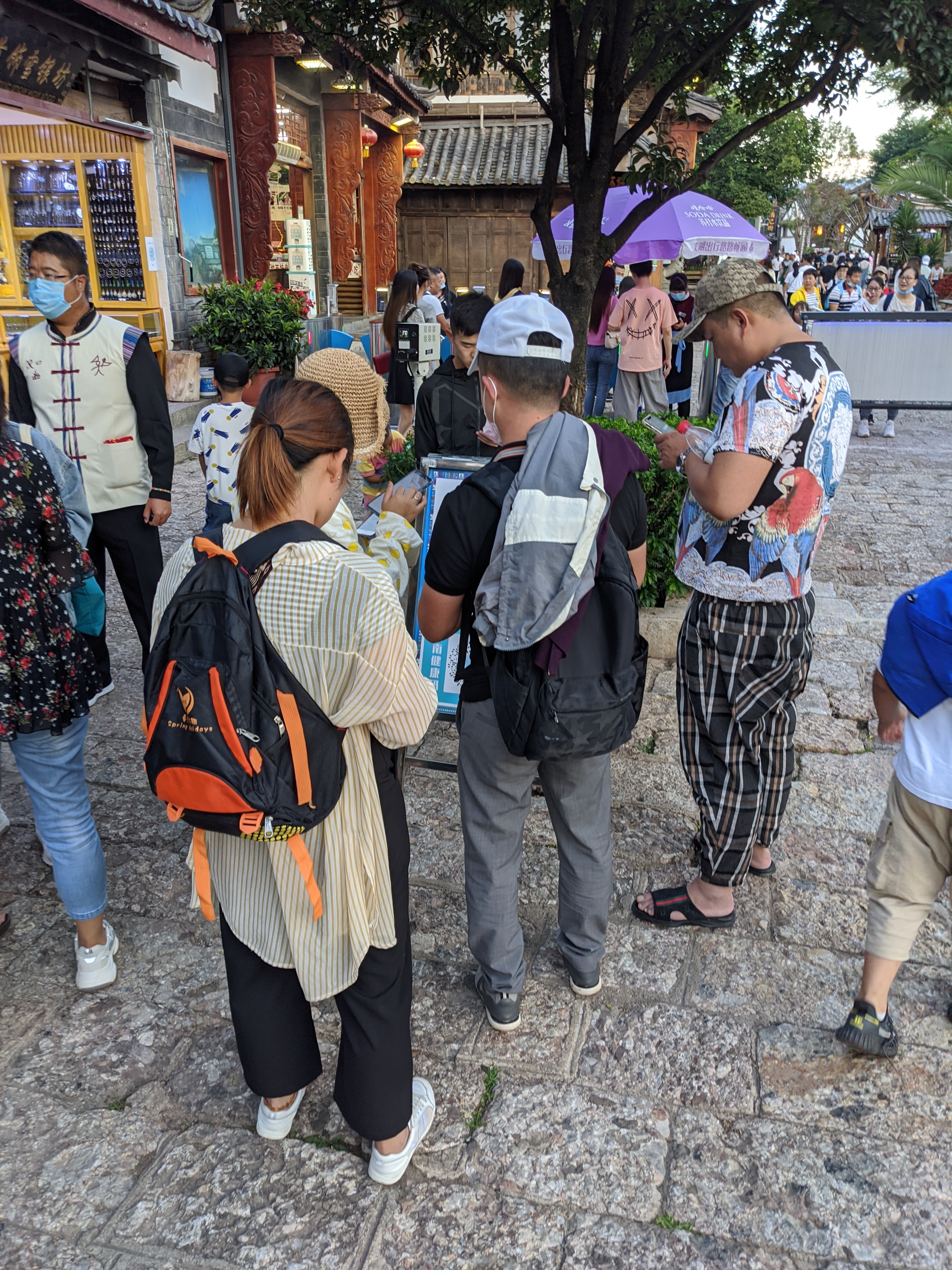
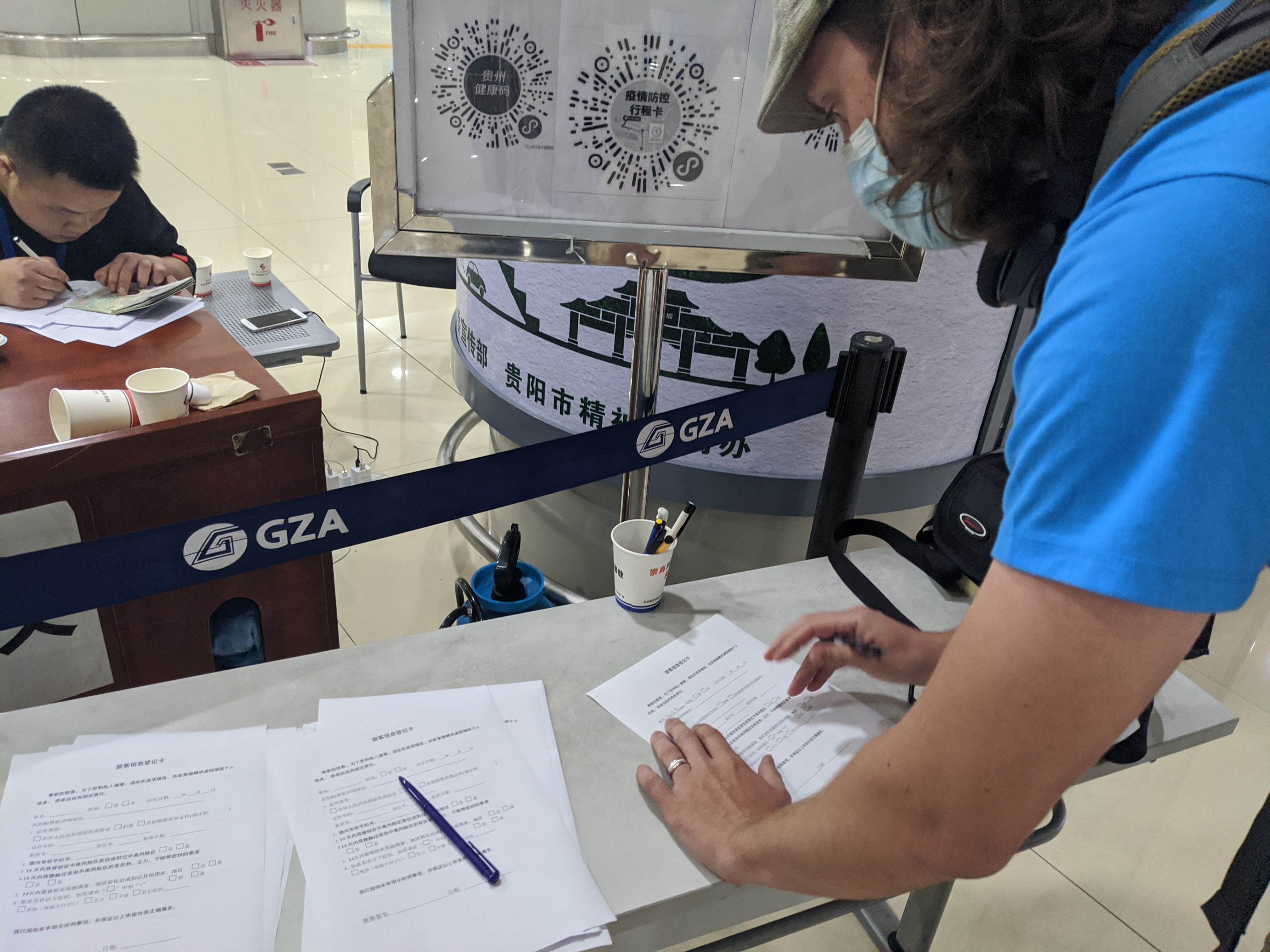
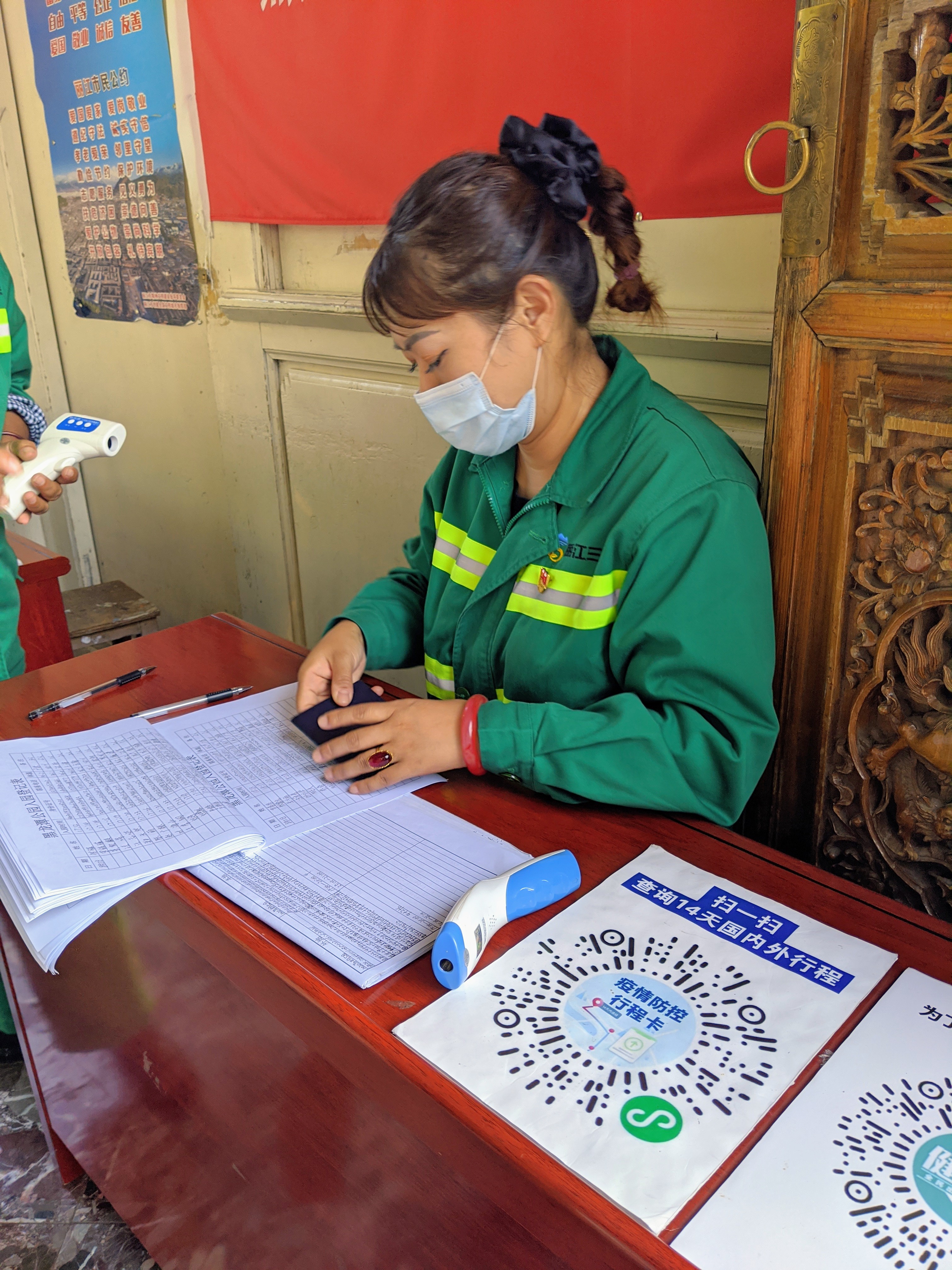
Don’t worry, at every train station, airport and tourist site, they have posters up with the QR you scan to get the code. It’s impossible to miss, because there are always people standing in front of the signs, filling in their info
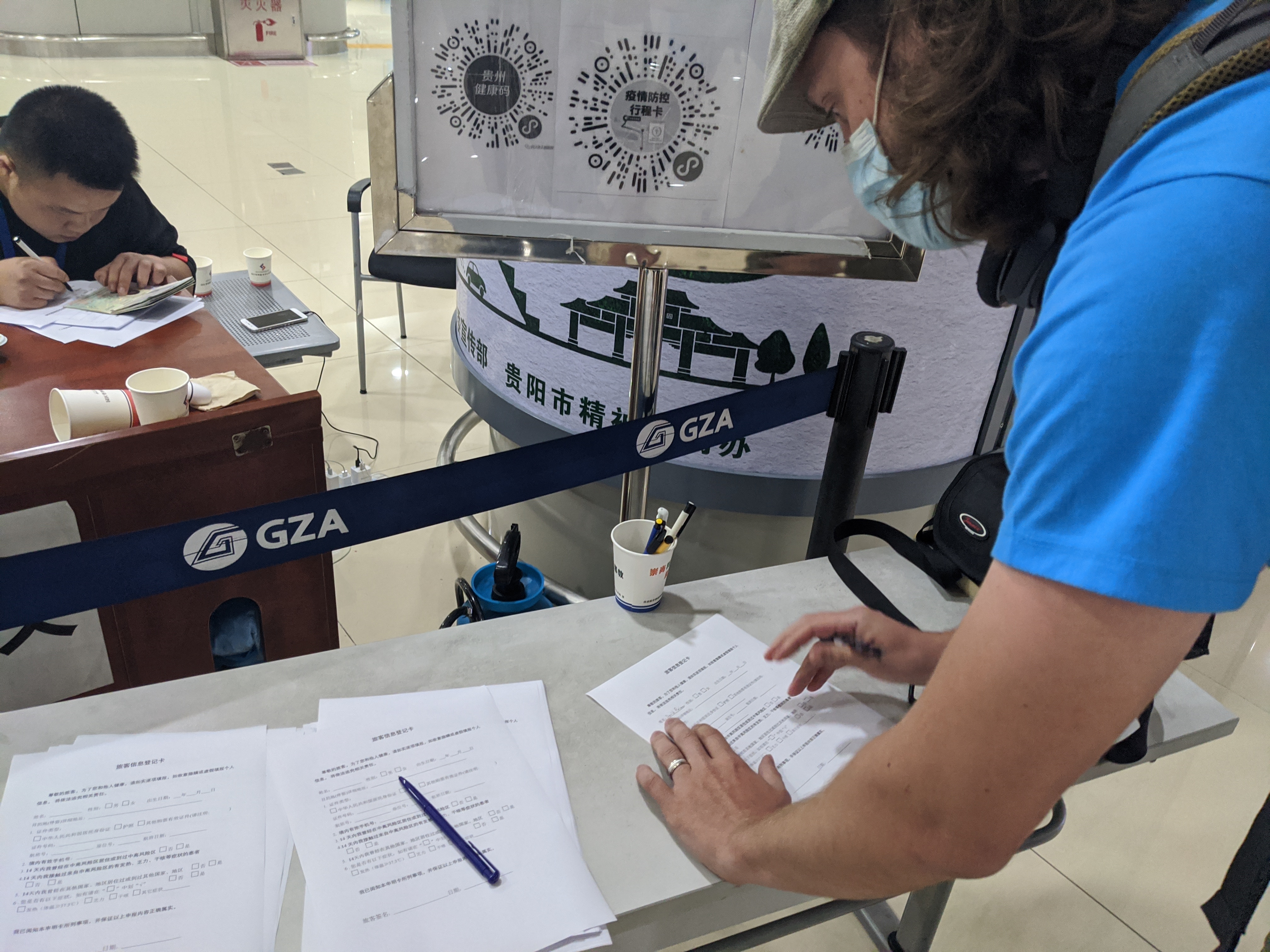
Like this!! The codes use your cell phone number to track where you’ve been. It seems creepy… But this is all happening anyway. Who needs microchips when everyone is walking around with portable tracking devices that they use willingly??? (Between selfies and privacy, selfies will always win!)

Part 4: Entry Forms

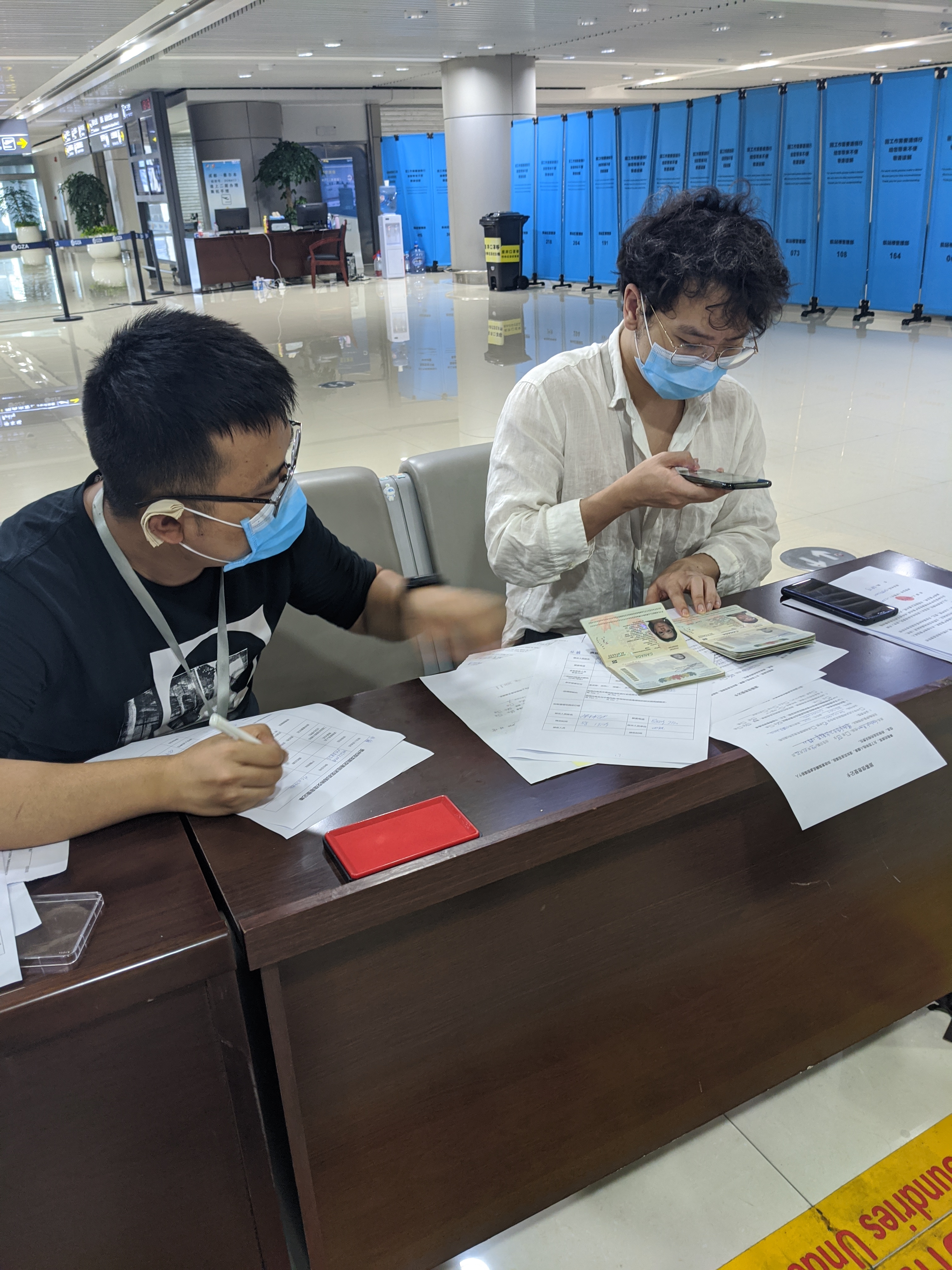
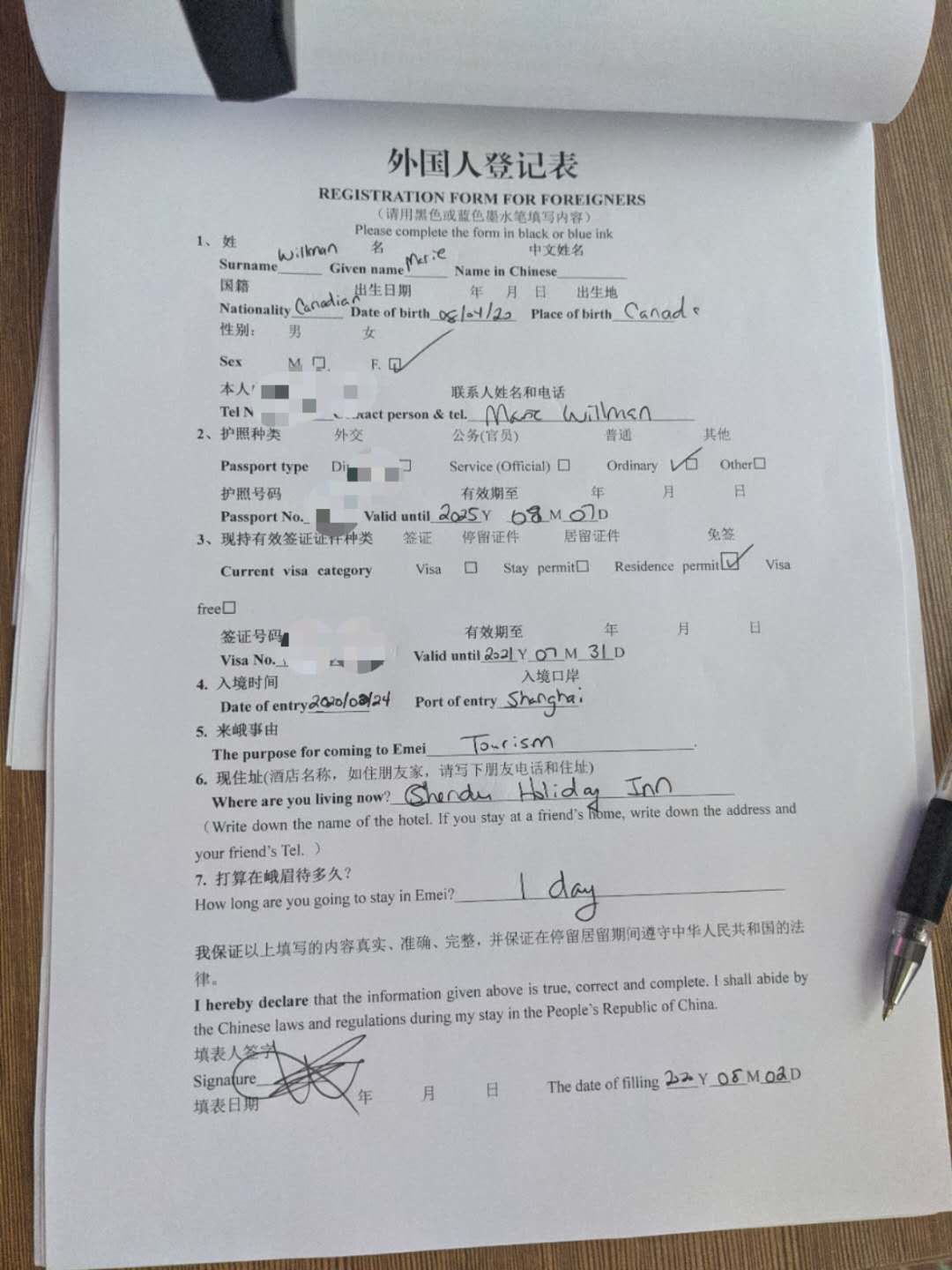
Wherever we went, we had to fill in forms with all sorts of information about our travel history and contact info. Some of the forms were pretty long and even required our visa numbers and job info. Most of them just wanted our: Names, phone numbers, passport numbers, hotel info and, of course, the date of our last entrance into China.

We had to enter this one just to enter Mount Emei. It was a bit excessive

Most places just had security guards doing this and almost none of them spoke English. If I had known all this ahead of time, I would have written out a little form with all my info in Chinese ahead of time to make things just a bit easier. By the end, we knew which questions were coming and we were prepared to answer them. The only place we needed help was at Mount Emei (different area than the form shown above). They mistook my visa for my latest entry stamp and they thought I’d only entered China in July (which is pretty much impossible…but, whatevs).

Sometimes they had us fill in the forms ourselves, which wasn’t easy either, because they were in Chinese. We could guess some of them based on Dave’s limited knowledge of characters (I have like 0 knowledge), but often we had to get them to read the forms to us (at least my listening comprehension is pretty good).

I should add that these forms actually do serve a rather important function. If there happens to be a breakout in a particular area, they quickly contact everyone who was in contact or in the vicinity of the sick people. Those people are then tested and kept under quarantine for 2 weeks to ensure the virus doesn’t spread. For locals, this is all tracked with their ID cards, in a big, national system. For foreigners, everything is done manually. It’s not a perfect system, but it does work. It prevents community transmission, which is the big threat in this pandemic.

I can’t lie..I would not want this job. To manually track every foreigner that comes into your city can’t be fun. The government could have easily said foreigners weren’t allowed to travel at all. This is an ok alternative, I’d say.

Part: Excessive Caution?

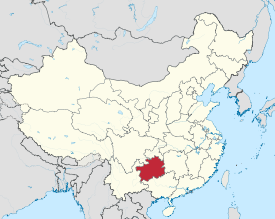
The only place where we really experienced any sort of difficulty was, unsurprisingly, Guizhou. This isn’t because Guizhou province is particularly bad (they have some of the best food in the world there!!). Guizhou simply sees fewer foreign tourists than other parts of China, so they aren’t quite sure what to do with us.

Guizhou is quite remote and far away from most of the biggest tourist attractions. It’s also a poor province.

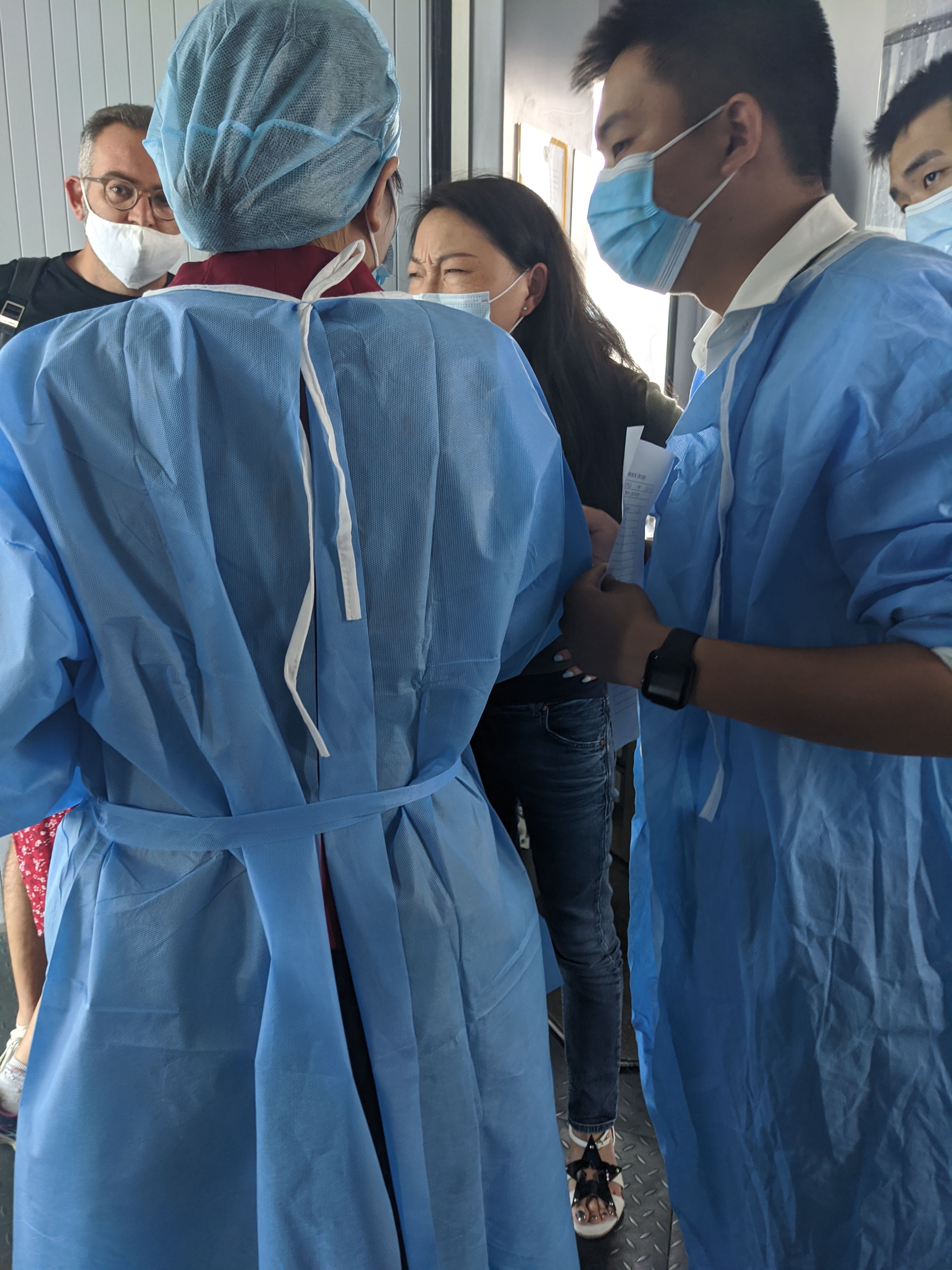
When we arrived at Guiyang airport, everyone got up to get out of the plane, as usual, but before we could start moving towards the exit, the flight attendants made everyone sit back down. Then, they made all the foreigners on the plane get up, and walk out of the plane first. It kinda felt like we were being arrested or like we’d done something wrong.

We were greeted by staff in surgical gear, telling us that our Nucleic Acid Tests didn’t matter and telling us to quickly follow them…

The process itself wasn’t much different from other cities, other than a few extra forms and a bit more time watching them fumble through our passports (even though we’d shown them our stamps), but the way it was done was pretty alarming. I couldn’t help but think that the whole ordeal further perpetuated a prejudice against foreigners currently in China. Somewhere through all this COVID stuff… (some) people here began thinking that it is foreigners bringing the virus back into China. In reality, it’s Chinese nationals coming back from trips abroad who are the biggest risk. Foreigners are still barred from the country, and have been since March, so we aren’t the ones coming and going.

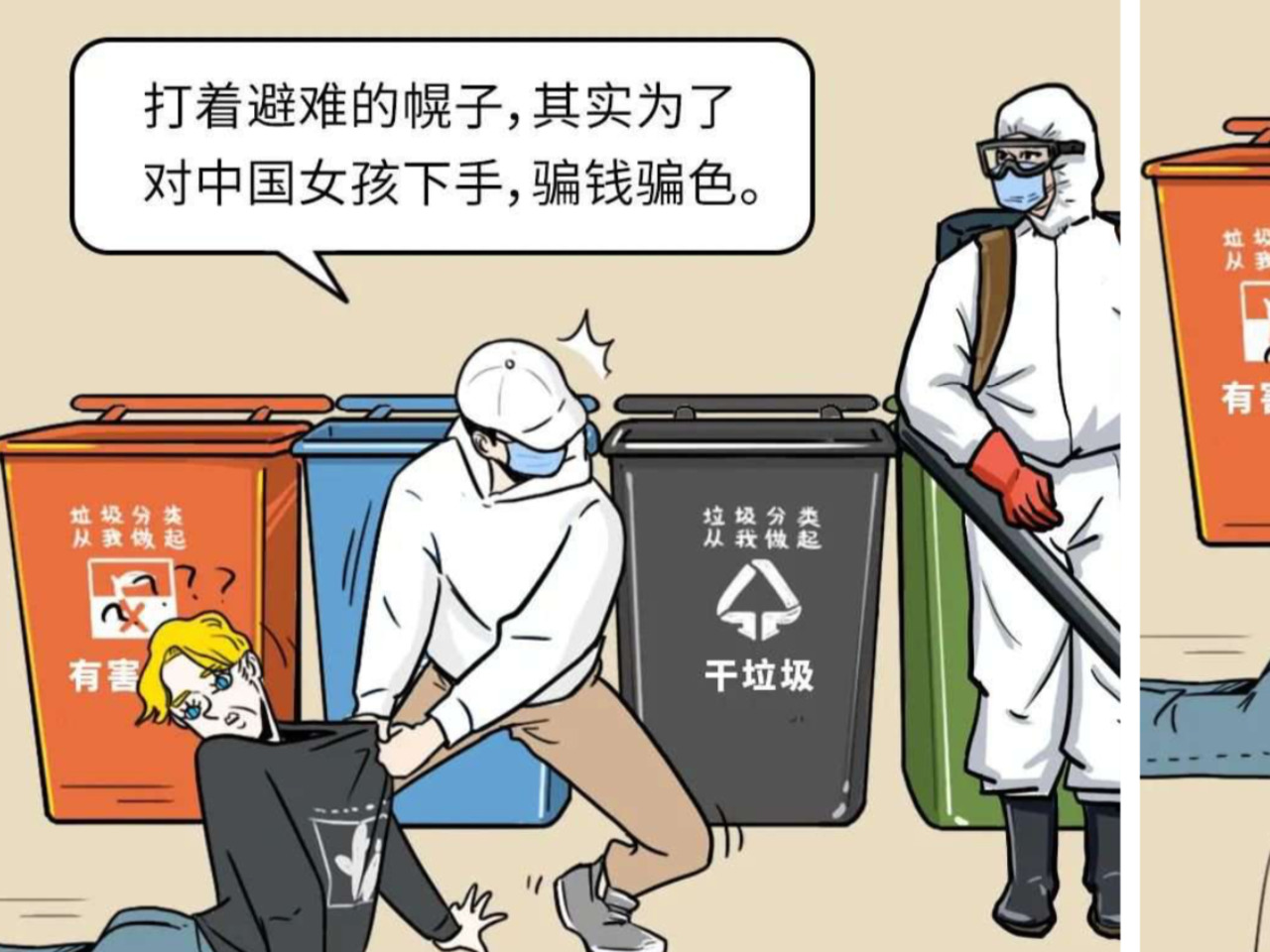
There were even some very racist comics released on the web about how China needs to clean up the country of ‘dirty foreigners’. These comics were met with backlash from both foreign and local netizens. The sentiment is there, but it’s not a sentiment that everyone in China shares.

A friend of mine had a similar experience to mine, also while in Guizhou province (not in Guiyang though). When he arrived by train, he and his Chinese girlfriend were taken by police car to the closest hospital for a mandatory nucleic acid test. This was in spite of their green codes, valid entry stamps and the tests they’d already done in Suzhou. When they arrived at the hospital, however, the doctors there told the police to ‘stop bringing them every foreigner that comes into town’. So obviously, not everyone in China thinks foreigners are a walking plague.

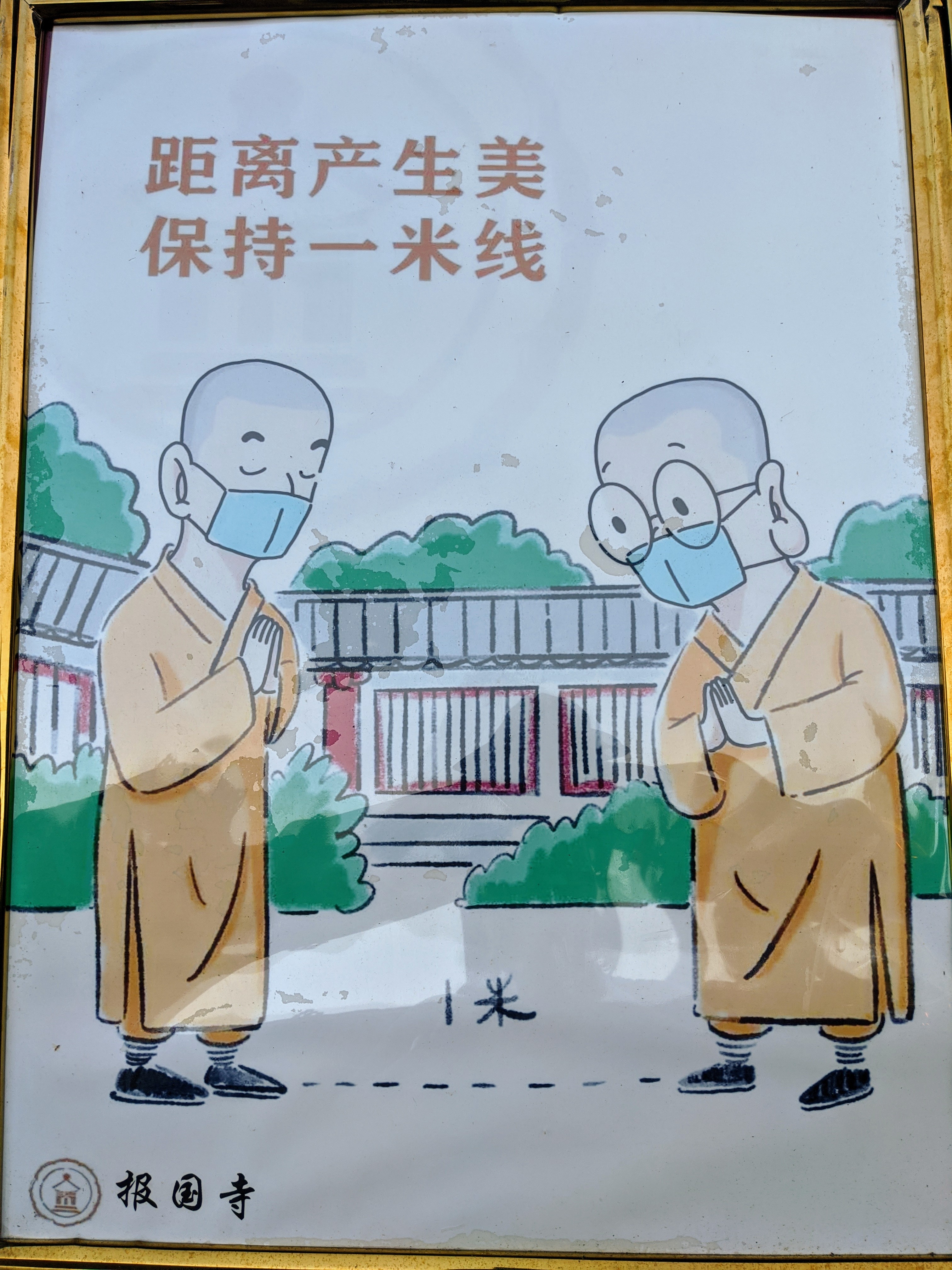
Temples were rather strict about mask wearing as well, but we noticed they would tell us to put our masks up (while we were outside), but let locals walk around without. Once more, these instances occured in remote areas.

To Summarize

Traveling in China at the moment is mostly safe, and only a minor inconvenience. If you plan to do it, I recommend that you bet prepared to be a bit more patient than usual. Most people are just trying to do their job and play their part in keeping China safe. You will meet the occasional racist, but that’s the case in all countries and all situations, so I wouldn’t worry too much.

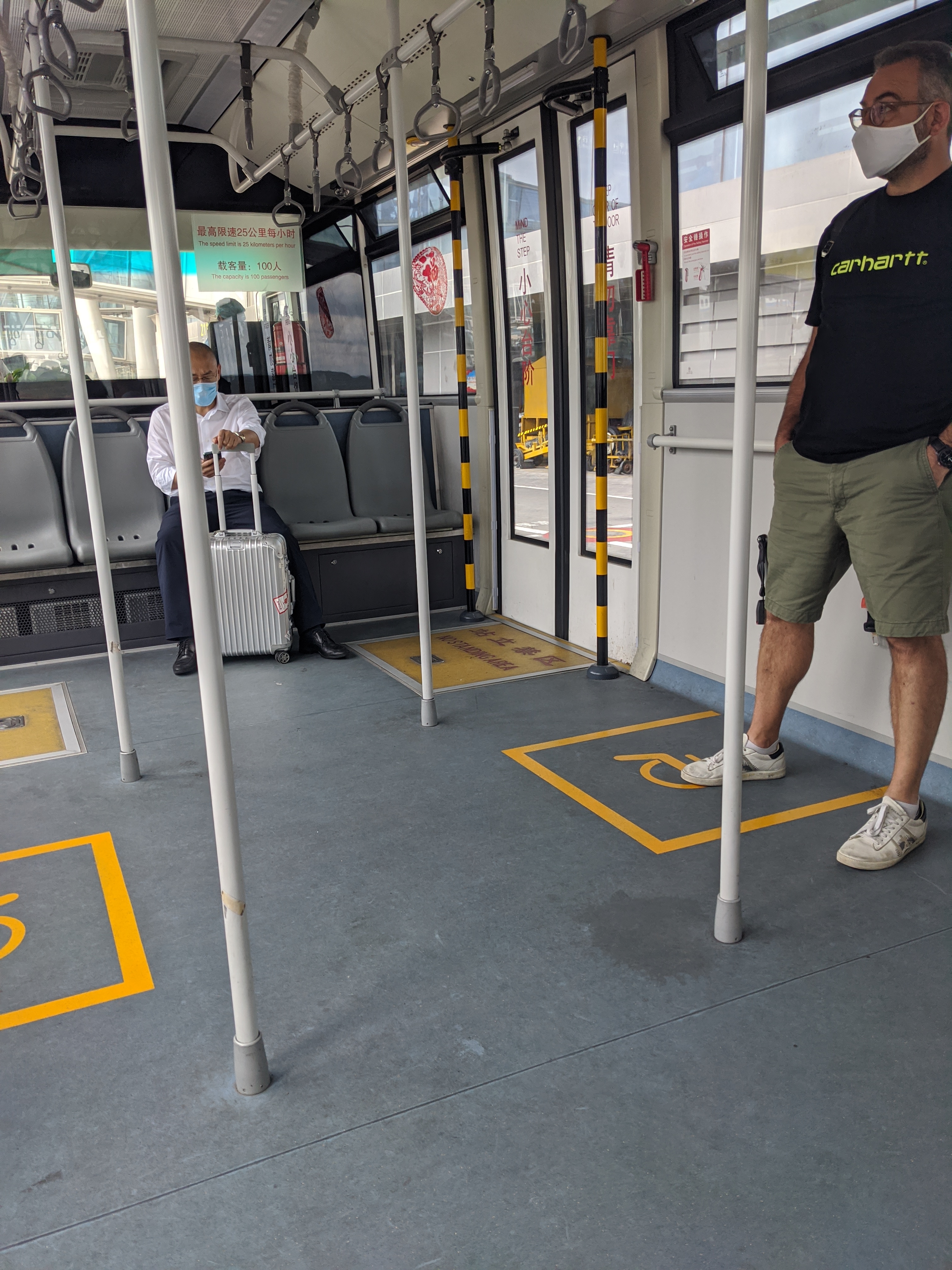
And hey… Look at the bright side… Sometimes the special rules put into place for foreigners get you a shuttle bus to yourself and a fast track out of the airplane!

I’ve got more to write about Yunnan & Guizhou! Check back soon!

Jagged little Jungle

During our first year in China, we visited Kunming for a short trip, but sadly never made it to the stone forest when we were there. Instead, we saw The West Hills, which was spectacular in its own way.

It was a lovely day spent up high, surrounded by trees and beauty.

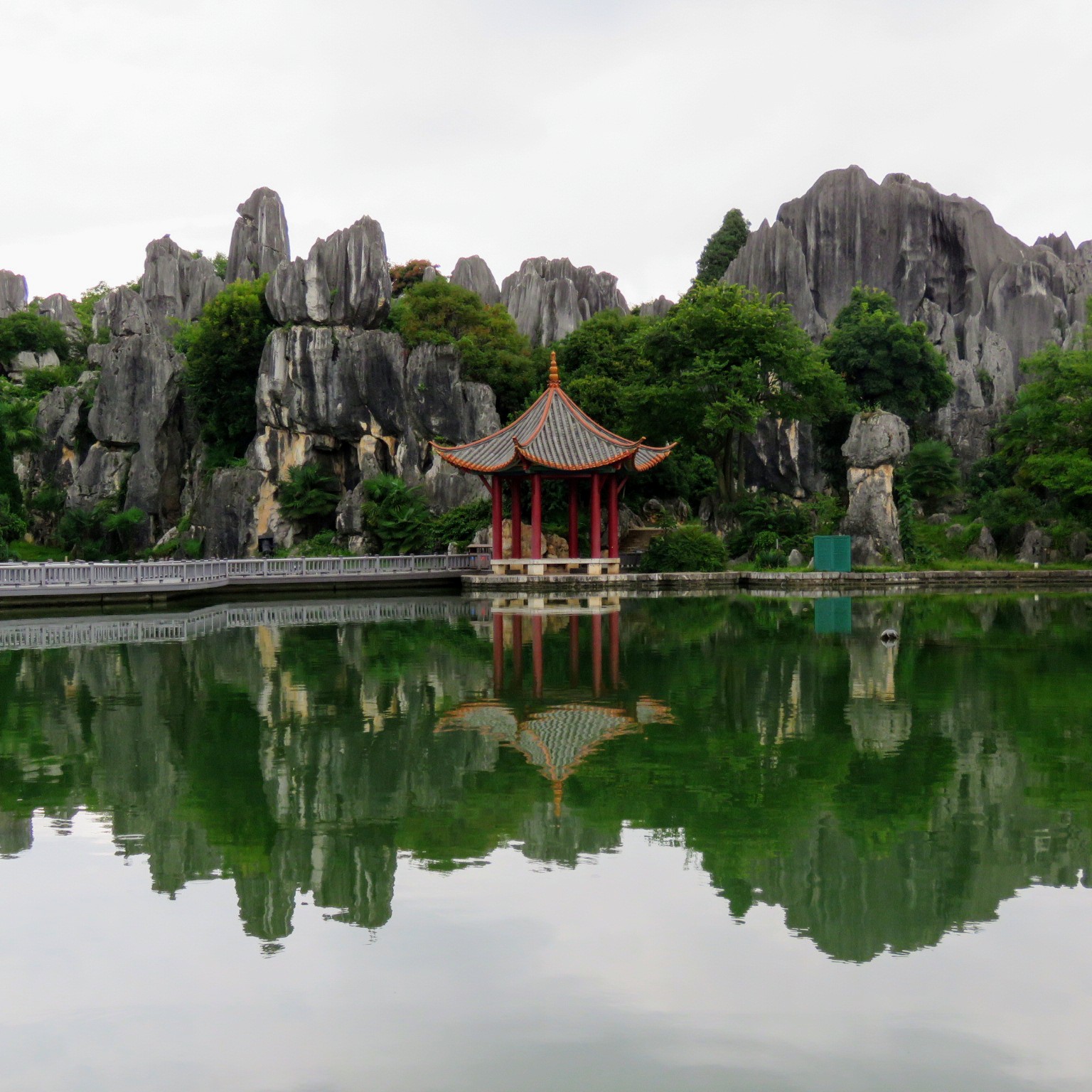
I’d always regretted not seeing the stone forest, so we planned it into this trip. The Stone Forest is a geological formation that was created about 270 million years ago. It started at the bottom of a lake, and gradually, wind and water carved this limestone into what it is today.

And today, it’s beautiful!
I got this shot just as we entered the park. The little boy was quite far away from the stones, but it can still see the way they tower over him.
This entire area was the product of nature. Is amazing what a bit of rain and water can do!!

The Stone Forest is an easy day trip from Kunmimg city. We booked tickets at the wrong train station, which added an hour to our journey, but if you take the high speed train from Kunmimg Station, which is centrally located, it only takes 60 minutes to get to Xilin, the closest station to the park. From there, take bus 99 for about an hour, until you reach the Stone Forest.

There are a few packages that include circus and dolphin shows and I was prepared to put up a fight if they tried to push us into paying for them (#emptythetanks!!!!), But it wasn’t actually even mentioned to us.  In total, it cost less than 100rmb per person to see the park, including the shuttle bus to the entrance gate.

The Greater Stone Forest is a labyrinth. We walked around for several hours, climbing up and down, checking out all the different viewpoints. Some sections of the park made me feel quite claustrophobic. The formations are so high and the paths are quite narrow in those parts.

I didn’t get pictures in the worst parts because I just wanted to get out. Picture this, but not being able to see the other side…. Just a never ending path that gets much more narrow in some parts.

We saw some really cool stuff in the stone forest, including some beautiful birds, cacti, and greenery.

We walked through the park, of course, and took our time appreciating all the lovely things there is to see. It was pretty warm by the time we made it to the other side, and we were pretty tired from all the walking, so we decided to take the shuttle back to the front of the park. We realized on the shuttle that we were surrounded by people who had never actually gone into the park. They ‘oohed’ and ‘ahhhed’ at some of the more basic formations. It’s good to know that people with disabilities can still see the park this way, but if you have the choice, definitely go in!

We were quite high up in this part of the park. We had to climb a lot of jagged rocks to get to the viewpoint. There were other viewpoints that were surely more accessible, but they were also crowded so we avoided them.
This was my favorite shot in the minor stone forest. This part of the park isn’t as grand as the major stone forest, but it certainly has some beautiful areas.
I loved the contrast between plant and stone.

The only complaints I had were the crowds, and the incessant notices that kept blasting all over the park. It felt like it could be such a peaceful place, if the space were just respected more. Instead, there was a lot of the usual Chinese tourism stuff: screaming children, adults shouting at each other from across the park and incessant announcements reminding everyone to be “safe”.

It looks empty because I’m patient and will wait for an area to empty so I can get a photo (and I’m quick, so I get it before others come along), but it was really quite crowded.

I did like the Stone Forest a lot, but I don’t think I’d dare go there during peak season. I’m sure it’s pure mayhem.

At least there doesn’t seem to be too much damage from tourism. The park is well maintained.

Next up, I have some posts about lovely Lijiang, which is also in Yunnan! Check back soon!

Magnificent Mount Emei

Sichuan’s geography varies depending on the area you’re in. In the eastern part of the province, you’ll find agriculture. In the west, there are beautiful mountains. For our final day in Sichuan, we headed south-west.

Mount Emei is located just west of the Leshan Buddha. You can take the high-speed train there. Book your ticket to Emei Shan, and then either hop on a bus, or hire a car to get to the next part of the mountain.

Unlike the rest of our trip so far, this activity wasn’t about learning or museums. This activity was purely scenic. Even from the parking lot, Mount Emei is stunning!

We decided to go about 1/3 of the way up the mountain, mostly because we didn’t want want to spend 5 hours in a car to get all the way to the top of this very high mountain. Maybe if we’d had more time we would have traveled to the summit, but even 1000m gave us a gorgeous view!
We chose to go as far as Wannian Temple. The peak itself is above the clouds. We both want to come back and go all the way to the summit on our next trip to Sichuan.

Once more, my leg stopped us from doing any hiking (hiking in China is just climbing stairs, which is especially hard for my leg), but the up side is that we took the cable car up and down the mountain and got quite the view!

A 10 minute ride up the mountain and we didn’t even have to share the car!
It was hot in the cable car, and I was happy I had my fan with me

At the end of the cable car, we took a little walk and enjoyed the clean air and beautiful scenery. It wasn’t long before we came across a beautiful area.

This wasn’t quite a temple. It was more like a place where people could write wishes or prayers and hang them.
There was writing on every piece of wood.

After following a lovely, green path, we found the temple we were seeking. Wannian might just be the nicest temple I’ve seen in China!

The stairs going up to the temple
One of the many beautiful Buddha’s there
So much colour!!
Beauty everywhere!!

The grounds were immaculately maintained by the monks that live there full time. Everything was pristine!

Beautiful trees everywhere. The whole area is so clean!!
I just loved all the colors!!!
Beautiful!
Everywhere you turned, there was something beautiful to see!

Eventually, we made our way back down the mountain, and on the way, the sun finally came back out again!!

Blue skies!!!
Beautiful sights on the way down!
Can’t get tired of this scenery!!!

After making it back down this part of the mountain, we took a shuttle bus to Baoguo temple for some more sites, and some dinner (we booked a late train back). Baoguo has a little town, as well as the temple, and there was plenty to see there.

Carvings into rock
Gorgeously carved murals
A lovely bell tower

We got there too late for the museum, but we had a half hour to see the temple before it closed. I’m really glad we did too, because this temple was also incredibly beautiful!!

And this time we had blue skies adding to the color!
We were a bit rushed but managed to get some photos
Temples are all about gardening!
Prayer candles. One thing every religion seems to have in common, is the ceremonial value of candles.

We enjoyed hot pot for our final dinner in Sichuan, and then the following night, we were off to Kunming, Yunnan!!

More on that later!

The Treasure of Sichuan

Everyone knows about the Great Wall of China and most people know about the terracata warriors in Xi’an, but ancient Chinese wonders don’t stop there. If the Leshan Buddha is the cultural masterpiece of ancient Sichuan, Dujianyang is the engineering masterpiece.

It might not look like much, but let me explain!

2200 years ago, this area of Sichuan was flooding badly. Huge amounts of water were coming down the mountains, and would get trapped in a slow moving area that had a lot of silt. The area couldn’t be dammed because it was an important route for trade. So they came up with an alternative plan: they created a levee… By hand.

I forgot to take a photo, so I had to steal this one from the internet. Thanks internet!!!

It took 10s of thousands of people 4 years to construct this levee. They did it by filling bamboo weaved baskets with rocks held up by 3 giant pieces of wood. They created a diversion in the water sending some of it down a canal dug out by heating and cooling stones until they cracked (this was done before dynamite!). After the rocks cracked, workers removed them by hand… One by one.

They slowly chipped away at the rocks to allow the water to move into a new area.

This levee did 2 awesome things. #1: it stopped the flooding that the area was experiencing. #2: it turned this area of Sichuan into the largest food-producing area of land in the country. The diverted water helped create and improve farmland. A true win-win!!!

It was raining, but we were prepared with our rain jackets!

The whole area is beautiful and we were lucky enough to finally experience some clear weather later on in the day. That’s when we really got to enjoy our day.

The rain DID give the area a very misty and surreal feel… But we were happy for the sun to come out!
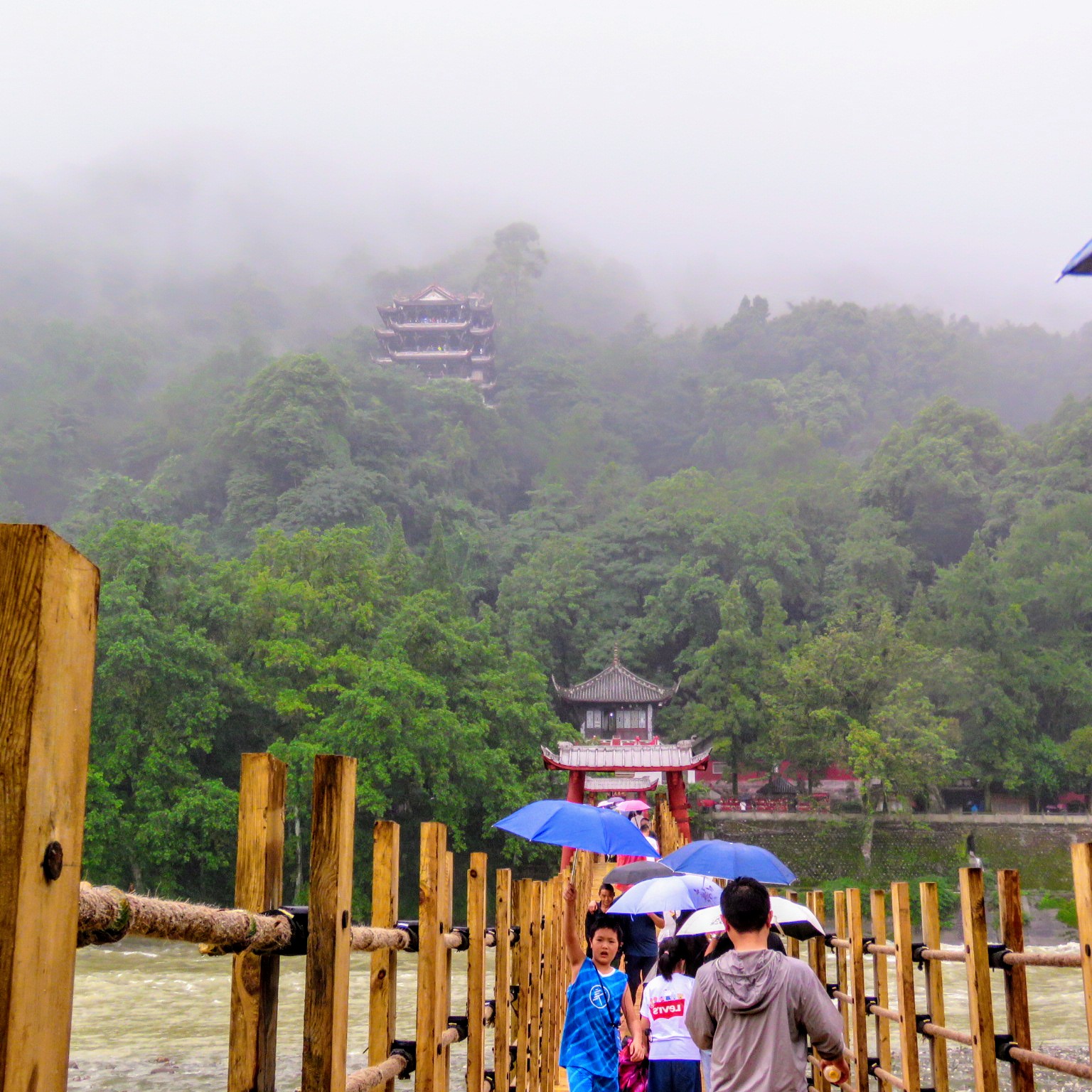
It turns out there are beautiful grounds surrounding the levee
There were plenty of beautiful trees to admire, as well as koi ponds and gardens
In the distance, there were pagodas, and of course, the river itself is beautiful (and VERY fast!!)

This was the first bit of nice weather we’d had on the trip so far, so we were pretty happy with it!

The raincoats came off!

We eventually found our way out of the park and ended up seeing a beautiful bridge that led us to a great little market.

That huge arch is actually the entrance to the bridge!
For a small donation, we got to take photos with the Monkey King
The market was full of Chili’s, beef jerky and some well priced souvenirs. When you’re used to East Coast prices, it’s a nice surprise when things cost less than you expect!

A tour of an irrigation area may not seem like all that much fun, but given that this structure is still here and being used 2200 years later (with some very good upgrades, of course…) – it’s probably worth a visit! Dujianyang is yet another incredible example of ancient Chinese brilliance!

And even in the rain… It’s a beautiful place to be!

I have 1 more post for Sichuan, and then we move onto Yunnan!!

Lovely Leshan

Leshan was somewhere I knew we had to go when I was reading about Sichuan. I’ve seen a lot of Buddhas during our time in Asia, but I knew this one was special.

After seeing Buddha growing out of a tree in Ayutthaya, I figured there wasn’t much left to impress me.

Leshan is located about an hour outside of Chengdu via bullet train. The town itself is a lot more developed than I was expecting, and had I known, we would have booked 1 night there and saved the time going to Emei (which is just 30 minutes past Leshan). Still, it was a beautiful train ride and not long enough to be a big deal.

The bullet train route from Chengdu to Emei

Didi’s (Chinese Ubers) can’t take you all the way to the mountain, so you get dropped off at the entrance of the park. It’s about 1km from the entrance to the ticket office. You get to walk through a lovely town though, and you can stop for food or drinks along the way. It’s a really nice walk!

The town itself is beautiful and well maintained. I suppose with COVID, fewer people were traveling, so we basically had the place to ourselves
We stopped for some food in town, and got this delicious dessert that we used to get in Guizhou all the time. It had a clear jelly in it, with a brown sugar sauce of some sort, and there are peanuts and dried fruit in it too. It’s very refreshing and very tasty!!
Lots of beautiful buildings to admire on your walk to the ticket office

Because my leg still causes me quite a few problems when it comes to ramps and stairs, we decided to skip climbing up the mountain to the top of the Buddha, and instead took a boat to see it from the front. Whether you want to take a boat or enter the park to climb the mountain, you’ll need to get tickets. For the boat, it was about 80rmb ($16 Canadian).

Low season = nap time!

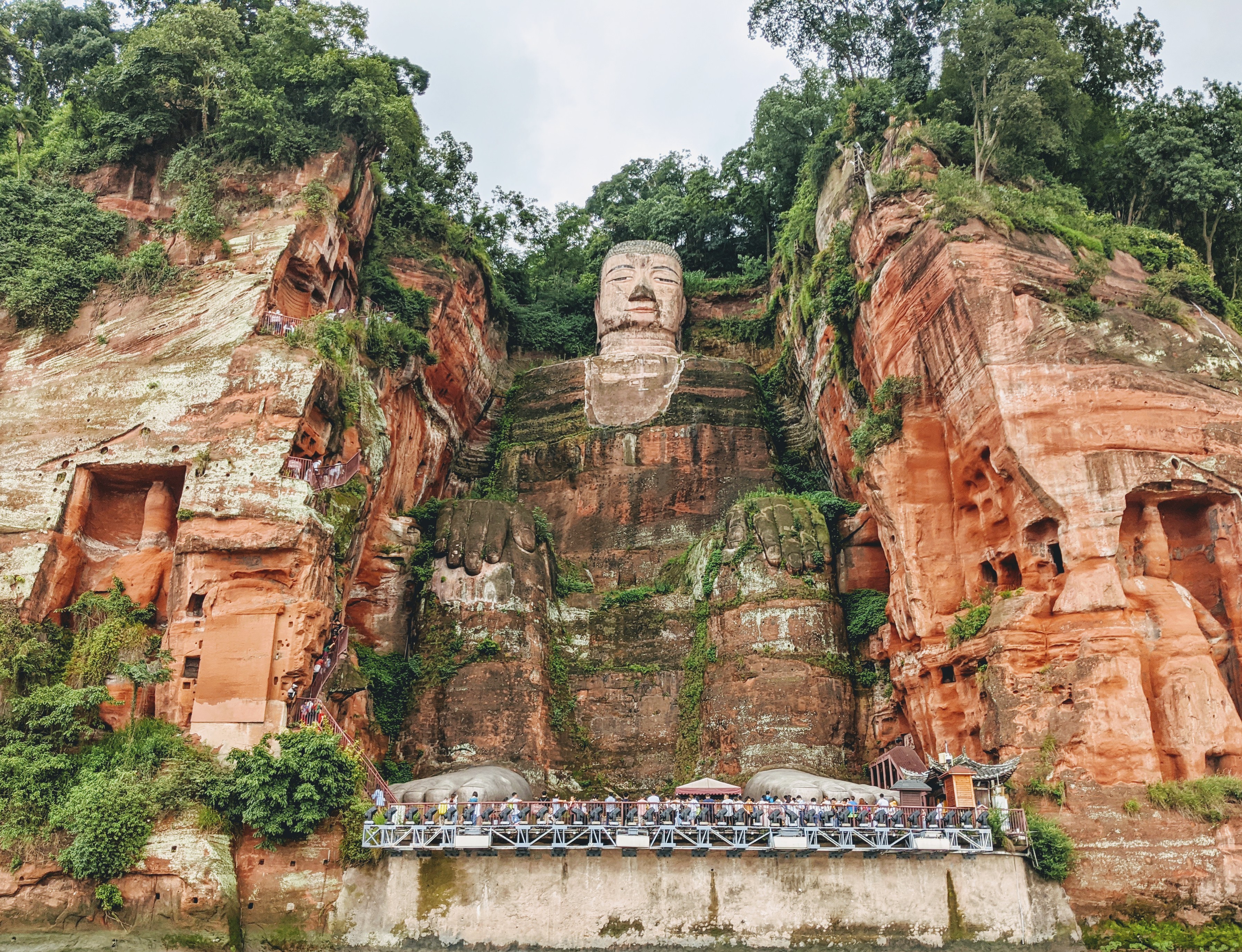
The view from the boat was spectacular! We were blown away by the size of the Leshan Buddha carving and the level of detail in it as well. The way you come up on it by the boat is truly something to see. Even if you want to hike the mountain, I’d suggest you do the boat tour as well.

This was created 1300 years ago, and took 100 years to complete.
You can see tourists walking around the Buddha to get a sense of scale

After marveling at this incredible feat of artistry and engineering, we wanted to learn more about its history and construction, so we walked back towards to museum that can be found near the entrance to the park.

There is so much to see in this museum, including art, reconstructions, photography and even a display showing all the different ticket designs for the park over the last 50 years.

At the museum, you can learn about the construction of the Buddha, as well as the maintenance that has been done to it over the last 1300 years. There were some great visuals there to help people understand the amount of work that went into this grand carving, and I left there with a better appreciation for the Leshan Buddha. We learned there is a Buddha carving in Hangzhou as well (though not as big) so we’re planning to visit that one next.

The three men who headed this 100 year long project.

I don’t think anyone should leave Sichuan without taking a trip to this beautiful mountain town, to see its incredible giant Buddha.

And while you’re at it… Take a lovely walk through a sweet little village

I’ll be back soon with more about some incredible engineering from ancient China!!!

A Multitude of Museums

We’ve been seeing a lot of rain on our trip, so on our second day of holidays, we decided to stay indoors and visit some museums.

I enjoy museums immensely.

The Jianchuan museum cluster is where we headed. It’s a unique little area with more than a dozen museums, all put together by one guy.

The museum has photography, sculptures and even pigs on display (more on that in a bit). (don’t worry… The pig is alive….)

The museum is divided into 4 themes: WW2, The 2008 Sichuan Earthquake, Cultural History and the Great Revolution. There are 15 museums within these huge grounds, and it’s a very affordable way to spend the day. It only cost about $12 Canadian for each of us, and was well worth the price.

We started with the WW2 era exhibits, because it’s something we both always wanted to learn more about. Everyone in Canada learns about the Holocaust, Pearl Harbour and D Day, but we don’t really learn about what happened in the far East.

FYI…. It wasn’t any better in China than it was in Europe….

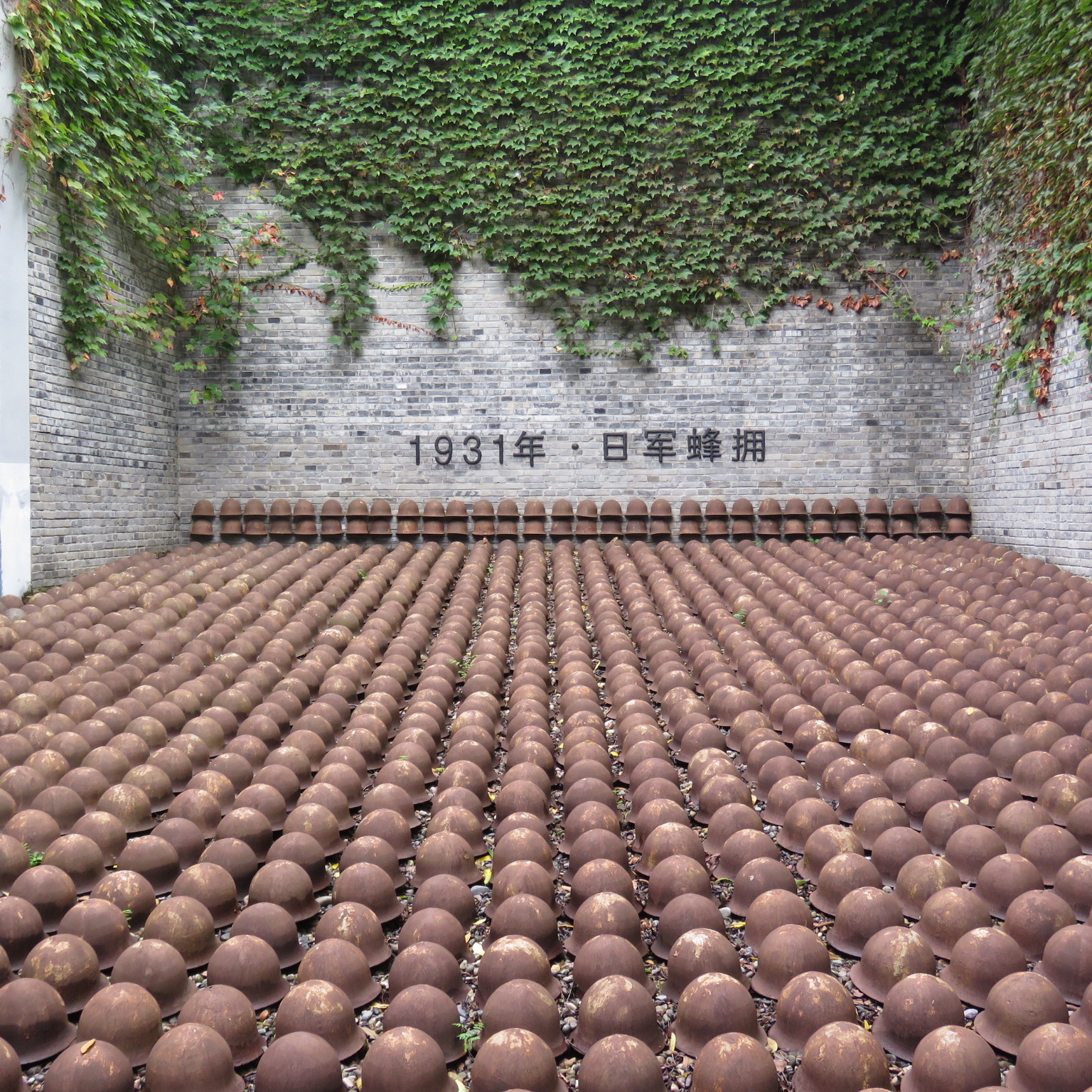
China’s part in WW2 actually started earlier than the rest of the war, and in fact, they don’t even call it WW2. Here, it’s called The Second Sino-Japanese War. Japan brutalized China from 1937-1945, killing millions, raping women and using biological warfare that caused disfigurement and death.

There were several wax displays depicting the war.

The museum put a lot of emphasis on the heroes that helped China in this time, including Americans, Russians and even Japanese people who fought for China’s freedom. The many sculptures in this area of the museum were impressive.

These are considered some of the greatest heroes of the war. Among them, there are women missionaries who hid women and children from the Japanese, British and Russian pilots who took part in important missions, and journalists who risked their lives to tell the truth about what was happening to people in China.
As you leave the museum, there are statues showing the Japanese soldiers leaving China after the surrender.
You have to walk between them as you leave, and it makes an impact.

We also learned about the heroic efforts of the Sichuan Earthquake cleanup crew. There were hundreds of photos showing the aftermath of the earthquake that killed nearly 90,000 people and injured many more.

The museum even has displays of cars that were wrecked by the earthquake and some of the debris left behind. One survivor is also present at the museum, and he in fact, calls the museum home. Meet Strong Pig….an earthquake survivor!!

Strong Pig survived under the rubble for 36 days, and as a result, became China famous! He is spending his golden years being guided around the park and even has his own little barn to live in.

Strong Pig… They like literal names in China
Tributes to the survivor
You can even get Strong Pig t-shirts

We didn’t give ourselves enough time at the museum, sadly, so near the end, Dave went to see some war exhibits (the space and airplane technology exhibit was closed, sadly), and I headed for what I thought was going to be a museum about Lotus inspired art. It was actually a museum all about Lotus (bound) feet.

In other words…. The practice of making feet more “beautiful” by mutilating them.

Foot binding was practiced in China for many years. From a very young age, girls’ feet were tightly bound in bands that slowly reshaped and broke the feet. The result was extremely painful and debilitating. The ‘upside’ was that women had ‘beautiful’ tiny feet. It was very fashionable.

There were different paterns for different needs. Some designs were said to bring good luck and fortune to the woman wearing them. Others were worn to bring more sons into the world.

The museum does a good job of showing the history of this Cultural practice in a fairly balanced way. The practice was banned in China more than 100 years ago because it disfigured women, was excruciatingly painful and often caused death (by infection). They also explained why it was done in the first place.

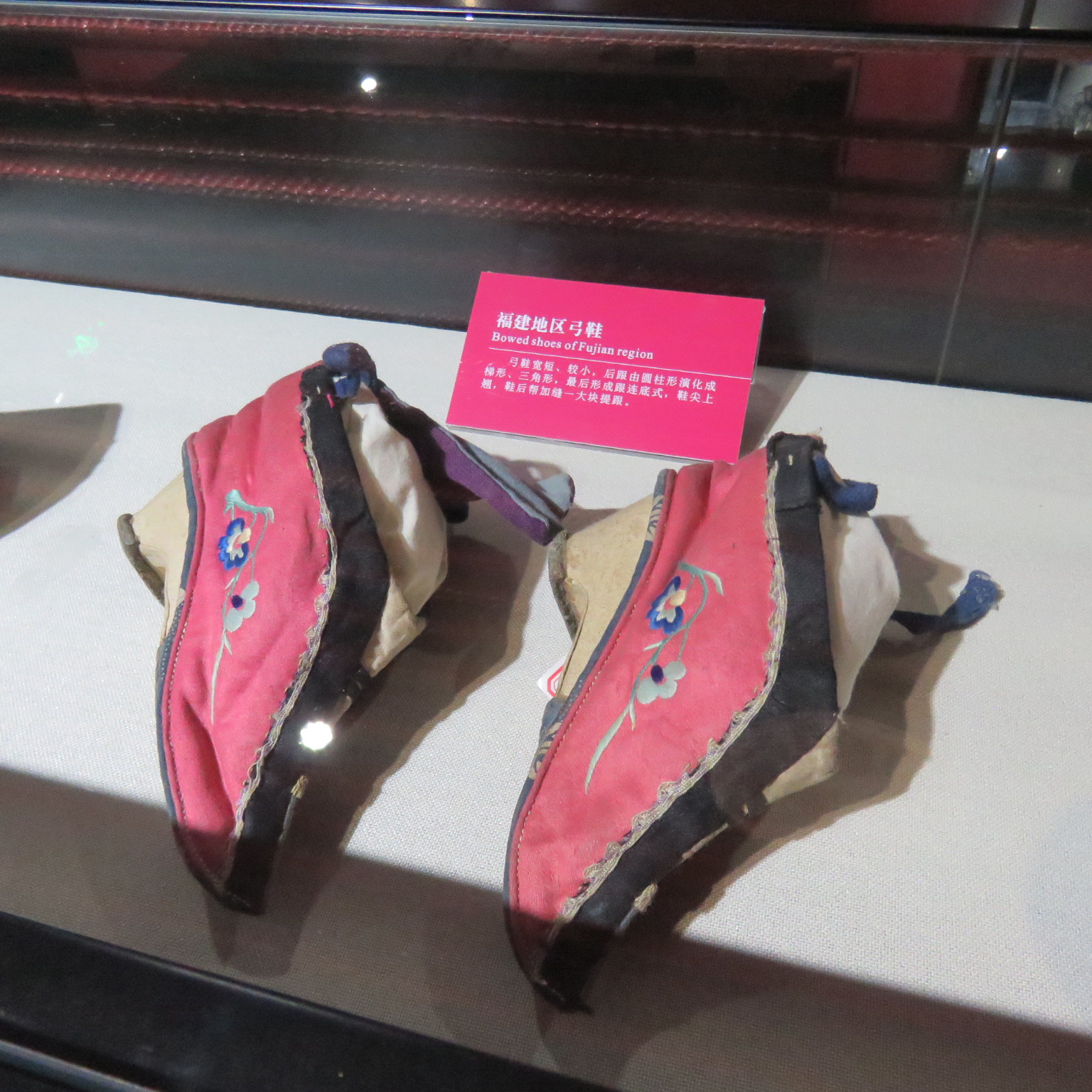
They have more than 500 pairs of shoes on display at the museum. You can see the difference in styles throughout the ages and even across China. Shoes from Sichuan weren’t the same as shoes from Jiangsu.

Mostly, foot binding was about status. If you could afford to have your feet bound, it meant you were wealthy enough to not have to work (these women couldn’t walk very well, after all …). There was also a sexual element to Lotus Feet (I fail to see how they look like lotuses…). Men apparently found the tiny feet beautiful. I’m just glad that the practice was outlawed.

I really liked the mural near the end showing women throughout the ages that impacted China and made it better. One of the reasons why foot binding was outlawed (aside from it being incredibly painful), was because as long as women were being disfigured in the name of fashion, they could never be an equal (or contributing) part of society. Banning the practice was good for women… And good for China.

There were too many for me to capture in one photo, but you get the idea.

If you’re thinking of visiting this museum, I strongly encourage you to do so. It’s very well maintained and has plenty for you to see. The variety of exhibits is very impressive and the number of artifacts is honestly too much to take in in just 1 trip.

There are some really great sculptures and carvings. This one depicts all the heroes from the Sichuan earthquake of 2008.

I have so much more to write about!! Check back soon!